
You’ve got a great career. You’re respected, you’re accomplished, and from the outside, your life looks pretty much perfect. But inside, there’s a different story playing on a loop. A constant, gnawing hum of anxiety you just can’t shake. It’s that phantom whispering doubts in your ear before a big presentation. It’s that tightness in your chest during a networking event that makes you want to find the nearest corner and disappear. It feels like a secret saboteur, slowly dismantling your focus, undermining your confidence, and stealing the joy from the very things you’ve worked so hard for. You feel trapped—successful on paper, but internally held back by a force you can’t seem to control.
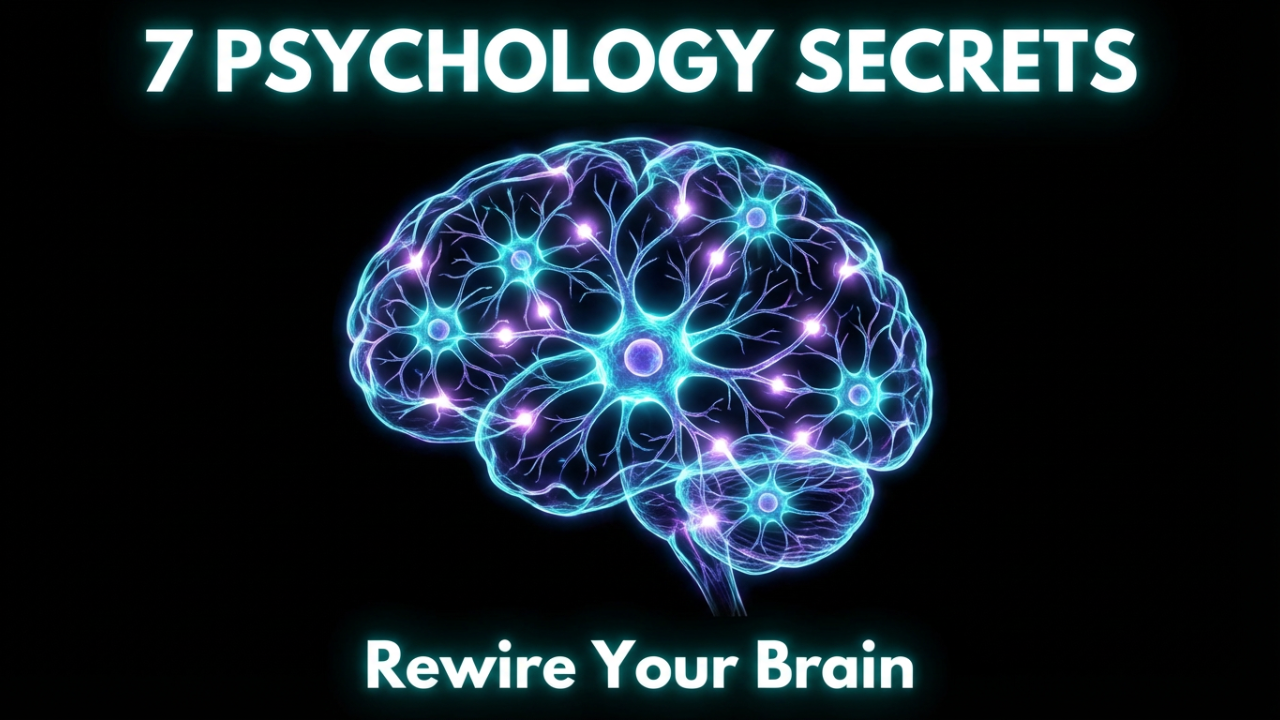
What if I told you that feeling isn’t a life sentence? What if that internal saboteur wasn’t a permanent part of who you are, but just a pattern your brain has learned? And what if, like any learned pattern, it could be *unlearned*? Better yet, what if you could use a few little-known, psychology-backed techniques to physically change your brain’s structure—to literally forge new pathways that lead not to anxiety, but to calm, focus, and real confidence? What if you could finally break free from anxiety’s grip, not by fighting it, but by rewiring the very organ where it lives? In this article , I’m going to share seven psychology secrets that will show you exactly how to do that. You’re going to learn how to become the architect of your own mind.

This book is scientific documentary of the Kingdom of God.
Let’s talk about a high-achieving professional we’ll call Alex. To everyone else, Alex is the person who has it all figured out. Stellar track record, corner office… the whole deal. But Alex had a secret. The night before a major client pitch, Alex wasn’t sleeping. They were wide awake, heart pounding, playing out every possible way things could go wrong. During team meetings, while appearing calm and collected, Alex’s mind was a storm of self-criticism, convinced every word they said was being judged. This wasn’t just stress; it was a constant, crippling state of high-functioning anxiety, and it was becoming unsustainable. Alex’s world was shrinking, opportunities started to feel like threats, and the passion that once drove them was being smothered by fear.
This story might sound familiar. It’s the silent battle so many high-achievers face: the pressure to keep up a flawless exterior while your internal world is in chaos. That anxiety can feel like a fundamental flaw, a permanent part of your personality. But here’s the revolutionary truth that changed everything for Alex, and can change everything for you: your brain is not set in stone. It is not hardwired for anxiety. In fact, your brain has a remarkable, lifelong ability to change and adapt. This ability is a scientific concept known as neuroplasticity.
The “What” & “Why”: Understanding Your Malleable Brain
Neuroplasticity is your brain’s power to reorganize itself by forming new neural connections, and it can do this your entire life. For decades, scientists thought the brain was pretty much fixed after you hit early adulthood. But with modern imaging, we can literally watch the brain change in response to our thoughts, behaviors, and experiences.
Think of your brain as a dense forest with billions of possible paths. Every time you have a thought or feel an emotion, you’re walking down one of these paths. When you repeatedly have anxious thoughts—worrying about the future, imagining the worst in social interactions, dwelling on mistakes—you are walking down the “anxiety path.” The more you walk it, the more that path becomes a well-worn, deeply rutted trail. Your brain gets so efficient at using this path that the anxious response becomes automatic—your default setting. This is why anxiety feels so powerful and involuntary; you’ve accidentally trained your brain to be an expert at it. The neural pathways for fear have become superhighways.
This process is largely run by a small, almond-shaped structure deep in your brain called the amygdala. The amygdala is your brain’s “fire alarm.” In someone with chronic anxiety, this fire alarm is hyper-vigilant. It’s been conditioned to go off not just for real dangers, but for perceived ones, like speaking in public or getting a critical email from your boss. Over time, this constant state of alarm actually strengthens the amygdala’s fear response and weakens its connection to the prefrontal cortex—the part of your brain that handles logic, reason, and calming the alarm down. This is how chronic anxiety physically reshapes your brain, creating an imbalance where the fear response is way too strong and your emotional control is weaker.
But here is the most powerful and hopeful part of this whole story. Just as you can carve a path for anxiety, you can intentionally forge a new one. Neuroplasticity means you can create and strengthen new neural pathways for calm, confidence, and resilience. You can, with deliberate practice, build a new superhighway your brain can travel down instead. You can effectively turn down the volume on your overactive amygdala and turn up the voice of your rational prefrontal cortex. In fact, studies show that effective therapies can lead to measurable changes, like a reduction in the amygdala’s gray matter and activity, which correlates directly with a drop in anxiety symptoms.
This isn’t just a nice metaphor. This is the biological foundation for real, lasting change. You have the power to actively participate in your brain’s rewiring process. The seven secrets we’re about to get into aren’t just coping mechanisms; they are targeted neuroplasticity exercises. They’re the tools you’ll use to dig the foundations for these new pathways and, with repetition, pave them into a new, calmer way of being. This process takes time and consistency—you’re retraining an organ, after all—but the changes are real, and they last.
Section 1: Secret #1 – The Thought Architect (Cognitive Reframing)
Our first secret is all about becoming the architect of your own thoughts. It’s a core technique from Cognitive Behavioral Therapy, or CBT, called Cognitive Reframing, and it’s one of the most powerful ways to directly weaken those overused anxiety pathways.
Our thoughts are incredibly powerful. An anxious brain is a master storyteller, but it only tells one kind of story: the worst-case scenario. It takes a simple situation—a coworker not saying hello in the hallway—and spins a whole narrative of rejection and failure. This automatic negative thought triggers the amygdala, the fire alarm blares, and the physical feelings of anxiety follow. This loop happens so fast, we often don’t even realize the thought was the trigger.
Cognitive reframing is how you consciously interrupt this loop. It’s about catching those automatic negative thoughts and challenging them, not with blind positivity, but with balanced, evidence-based reasoning. When you do this, you stop reinforcing the anxiety path and start building a new, more realistic one. You’re engaging your prefrontal cortex—your logical brain—and telling the amygdala, “False alarm.”
This is how Alex, our high-achiever, got started. Alex’s biggest trigger was a fear of being judged in meetings. The automatic thought was always, “Everyone thinks my ideas are stupid. I’m going to embarrass myself.” That thought was a well-traveled neural highway. To build a new path, Alex began a three-step process.
First, **Notice the Thought.** You can’t change a thought you’re not aware of. Alex started by simply observing their internal monologue without judgment, like a scientist of the mind. When that familiar dread popped up before a meeting, Alex would identify the specific thought: “There it is. The ‘everyone thinks I’m an idiot’ thought.”
Second, **Challenge the Thought.** This is the core of reframing. Alex would play detective and look for evidence, asking critical questions:
* “What’s the actual evidence that everyone thinks my ideas are stupid?” (Answer: None. In fact, Alex’s ideas were often used).
* “Is there another, more balanced way to see this?” (Alternative: “They’re busy and focused on their own stuff. They might disagree with an idea, but that doesn’t mean they think I’m stupid. It’s just part of the process.”).
* “What would I tell a friend who had this thought?” (Answer: “I’d tell them they’re highly competent and that their value isn’t defined by one person’s opinion.”).
* “Realistically, what’s the worst that could happen if I share my idea?” (Answer: “Someone might disagree. The project goes a different way. I’ll survive.”).
Third, **Replace the Thought.** After poking holes in the old thought, Alex would consciously create a new, more balanced one. The old thought, “Everyone thinks my ideas are stupid,” was replaced with, “I’m well-prepared, and I have valuable insights to share. It’s my job to share them. The outcome of this discussion doesn’t define my worth.”
At first, this felt fake. The old anxiety path was still strong. But Alex did this every single time the thought showed up. Before meetings, after meetings, whenever that voice of self-doubt whispered. Slowly but surely, something remarkable happened. The new thought started feeling more automatic. The act of questioning the old one robbed it of its power. Alex was physically weakening the old neural connection and strengthening a new one. The dread before meetings started to fade, replaced by a sense of focused readiness. Studies on CBT back this up, showing it can reduce amygdala hyperactivity, leading directly to lower anxiety. You’re not just thinking happier thoughts; you’re actively remodeling your brain.
Section 2: Secret #2 – The Mindful Observer (Meditation and Mindfulness)
The second secret is about stepping out of the chaotic storm of anxiety and becoming the calm, clear-eyed observer in the center of it all. This is the practice of meditation and mindfulness. You’ve probably heard about meditation for stress relief, but its benefits go way beyond simple relaxation. It’s a potent neuroplasticity exercise that physically changes your brain for the better.
When you’re anxious, your mind is basically a time-traveler. It’s either jumping into a disastrous future or ruminating on a painful past. Mindfulness is the practice of gently, and without judgment, pulling your attention back to right now. Meditation is the formal workout for this skill. By sitting for just 10-15 minutes a day and focusing on a single anchor, like your breath, you’re performing a mental workout with profound effects on your brain.
Research has shown that a consistent meditation practice can lead to incredible changes. It can increase gray matter density in the prefrontal cortex—your hub for emotional regulation and decision-making. At the same time, it has been shown to reduce the size and activity of the amygdala, your brain’s fear center. In short, meditation strengthens the parts of your brain that keep anxiety in check and quiets the parts that generate it. It’s like upgrading your brain’s braking system while turning down the sensitivity of its alarm.
For Alex, the professional we’ve been following, the idea of sitting still and “doing nothing” was almost laughable. Life was about *doing*. But the constant internal buzz of anxiety was exhausting. So, Alex gave it a shot, starting with just five minutes a day using a guided meditation app.
The first few sessions were frustrating. The mind wandered constantly—worries about work, to-do lists, replayed conversations. It was tempting to call it a failure. But the instruction was simple: when you notice your mind has wandered, gently and without criticism, just guide it back to your breath. That’s the “rep” in your mental gym. Each time you notice the distraction and return your focus, you’re strengthening the neural circuits for attention and weakening the ones responsible for mind-wandering and worry.
Alex committed to ten minutes every morning. After a couple of weeks, a subtle shift happened. The space between a trigger and a reaction started to get wider. During a stressful negotiation, instead of an immediate jolt of panic, there was a moment of awareness. Alex could feel their heart rate start to rise, could notice the thought “this is going badly,” but there was a new distance from it. Alex was the observer, not the victim of the feeling. That “buffer” is a direct result of mindfulness training. It gives you the power to respond to a situation thoughtfully, rather than reacting from a place of fear.
To start, you don’t need a special cushion or a silent retreat. Just find a quiet spot, set a timer for five or ten minutes, and close your eyes. Bring your attention to the physical sensation of your breath—the air moving in and out, the rise and fall of your chest. When your mind wanders, because it will, just notice where it went and gently guide it back. That’s it. That’s the whole practice. With every gentle return to the breath, you’re telling your brain, “I’m in control of my attention. I choose calm.” You’re actively rewiring your brain for peace, one breath at a time.
Section 3: Secret #3 – The Body’s Reset Button (Physical Exercise)
The third secret to rewiring your brain is maybe the most accessible and immediately effective: moving your body. Physical exercise isn’t just for your physical health; it’s one of the most powerful promoters of neuroplasticity we know of. It’s a biological reset button for an anxious brain.
When you’re anxious, your body is flooded with stress hormones like adrenaline and cortisol. This is your fight-or-flight response, prepping you for a physical threat that, in our modern world, rarely shows up. Exercise gives you a way to use that pent-up energy. It effectively completes the stress cycle, signaling to your brain that the “threat” has been handled.
But the effects of exercise go much deeper, right down to the chemical level of your brain. When you get moving, especially with aerobic exercise like running, swimming, or brisk walking, your brain releases a flood of helpful neurochemicals. You get endorphins, the famous “runner’s high” chemicals that act as natural mood elevators. But just as important for neuroplasticity, exercise boosts a protein called Brain-Derived Neurotrophic Factor, or BDNF.
Think of BDNF as miracle-gro for your brain. It helps your existing brain cells stay healthy and encourages the growth of new ones and new connections. It’s fundamental to learning, memory, and, crucially, mood regulation. Higher levels of BDNF create the perfect environment for neuroplasticity, making it easier for your brain to form those new, calm neural pathways you’re working on. Regular exercise essentially fertilizes your brain, making it more adaptable and resilient.
Our professional, Alex, used to see exercise as just another chore on an endless to-do list, often sacrificed for more work. But reframing it as a non-negotiable part of their mental health toolkit was a game-changer. Instead of forcing grueling gym sessions, Alex started with a 30-minute brisk walk during lunch.
The effect was immediate. The mental fog from a stressful morning would start to lift. The looping, anxious thoughts would quiet down as the focus shifted to the rhythm of walking. It became a form of moving meditation. Alex even found that some of their best ideas came during these walks, as stepping away and oxygenating the brain unlocked new perspectives.
The key here is consistency. Aim for at least 30 minutes of moderate-intensity exercise most days of the week. This doesn’t mean you have to run a marathon. It could be:
* A brisk walk outside.
* Cycling.
* Dancing around your living room.
* A team sport.
* Yoga, which combines movement with breath and mindfulness.
* Swimming.
The best exercise for you is the one you’ll actually do. Find something you genuinely enjoy so it becomes a sustainable habit, not a chore. The next time you feel that wave of anxiety rising—the restlessness, the shallow breathing, the racing thoughts—see it as a signal from your body. It’s a signal to move. Go for a quick walk. Do some jumping jacks. Put on a song and dance. Even a few minutes can be enough to hit that reset button and break the anxiety loop.
Section 4: Secret #4 – The Novelty Engine (Learning a New Skill)
Our fourth secret for rewiring an anxious brain is to fire up its novelty engine by learning a completely new and challenging skill. An anxious brain loves to get stuck in rigid, repetitive loops of worry. Introducing something new and complex is like throwing a wrench in that machine. It forces your brain to create entirely new neural pathways and distracts it from its old anxious habits.
When you learn something new—a musical instrument, a language, how to juggle—you’re giving your brain a focused workout. This intense focus demands brainpower that would otherwise be hijacked by anxiety. You simply can’t learn a new guitar chord while you’re also ruminating about a mistake from yesterday. The act of learning pulls you firmly into the present moment and engages different parts of your brain.
From a neuroplasticity standpoint, learning a new skill is a direct catalyst for brain change. When you practice, you’re myelinating the new neural pathways for that skill. Myelin is a fatty substance that insulates nerve fibers, making signals travel faster and more efficiently. The more you practice, the thicker the myelin gets, and the more automatic the skill becomes.
You’re essentially taking the same process that made your anxiety pathways so strong and applying it to something positive and constructive. This doesn’t just build the new skill; it makes your brain better at changing in general.
Alex, our professional, was all about skills related to work. The idea of learning something “just for fun” felt unproductive. But seeing the psychological benefit, Alex decided to try learning a new language on a mobile app for 15 minutes during their daily commute.
At first, it was hard and humbling. A brain so used to being an expert was now a fumbling beginner. But this was part of the therapy. It broke the cycle of perfectionism. It was okay to make mistakes; in fact, it was the only way to learn. This cultivated a “growth mindset”—the belief that you can develop abilities through hard work. That mindset started to spill over into other parts of life. A setback at work was no longer a catastrophe; it was just a learning opportunity. The focused concentration was a welcome escape from the free-floating anxiety.
The key is to pick something that’s both challenging and fun for you. It needs to be tough enough to demand your full attention but not so hard that you give up. Ideas include:
* **Learning a musical instrument.**
* **Learning a new language.**
* **Taking up a craft like knitting, painting, or pottery.**
* **Learning to juggle or do magic tricks.**
* **Doing puzzles like Sudoku or crosswords.**
* **Even trying to write with your non-dominant hand.**
Pick one thing that sparks your curiosity. Dedicate a small, consistent amount of time to it. Embrace being a beginner. By intentionally engaging your brain’s novelty engine, you divert its energy from the worn-out paths of anxiety and prove to yourself, on a deep, neurological level, that you are capable of growth and change.
Section 5: Secret #5 – The Vagal Nerve Activator (Deep Breathing)
The fifth secret is a tool you have with you at all times, and it’s the fastest way to manually override your body’s anxiety response in the moment. It’s the simple, yet profound, act of deep, diaphragmatic breathing. This isn’t just some folksy “take a deep breath” advice; it’s a direct biological hack that activates your body’s built-in calming system.
When you feel anxious, your breathing automatically gets shallow, rapid, and comes from your chest. This is part of the “fight-or-flight” response. This type of breathing screams “danger!” to your brain, which reinforces the feeling of anxiety, creating a vicious cycle. Short breaths equal a stressed brain.
Deep, diaphragmatic breathing—or belly breathing—does the exact opposite. It directly stimulates the vagus nerve, a major player in your “rest-and-digest” system. When the vagus nerve is stimulated, it sends a signal to your brain that you’re safe. It slows your heart rate, lowers your blood pressure, and stops the production of stress hormones. It is, quite literally, the antidote to fight-or-flight.
By consciously changing the rhythm and depth of your breath, you’re sending a powerful message from your body back to your brain, telling it to stand down.
For Alex, this technique became an in-the-moment lifesaver. Before walking into a big presentation, the familiar tightening in the chest would begin. The old response was to panic about the panic. The new response was to find a quiet space, even a bathroom stall, for just two minutes.
Here is the technique Alex used, which you can use anytime you feel anxiety creeping in:
1. **Get comfortable.** Sit or stand. Place one hand on your chest and the other on your belly.
2. **Inhale slowly through your nose for a count of four.** As you breathe in, focus on making your belly expand like a balloon. The hand on your belly should rise, while the hand on your chest stays pretty still.
3. **Hold your breath gently for a count of four.**
4. **Exhale slowly through your mouth for a count of six.** Make the exhale longer than the inhale. As you breathe out, feel your belly fall.
5. **Repeat this cycle for 5 to 10 breaths.**
Alex would do this right before a presentation, and the effect was profound. The racing heart would slow to a steady rhythm. The mental chatter would quiet. Alex was able to walk into that room not from a place of panicked survival, but from a place of grounded calm.
This isn’t just for big moments. Practice it when you’re stuck in traffic, when you read a stressful email, or just for a few minutes each day. The more you practice when you’re calm, the more effective it will be when you’re anxious. It’s a simple, discreet, and powerful tool that lets you manage anxiety whenever and wherever it strikes.
Section 6: Secret #6 – The Deceptive Brain Message (Relabel and Reattribute)
Our sixth secret is a step-by-step method for detaching from the tyranny of anxious thoughts. Developed by Dr. Jeffrey Schwartz, this four-step method teaches you to stop fighting with your anxious thoughts and instead, see them for what they are: deceptive brain messages.
Anxiety feels so real because we buy into the thoughts it creates. If the thought says, “You’re a failure,” we believe it. This process creates critical space between you—the real you—and the faulty, automatic firing of your brain’s anxiety circuits.
**Step 1: Relabel.** The first step is to recognize the intrusive thought and give it a label. Instead of getting swept away by it, you simply and non-judgmentally label it. You might say to yourself, “This is an intrusive thought,” or “This is just anxiety.”
For Alex, who often struggled with imposter syndrome, the thought “You don’t deserve this, you’re a fraud” was a common one. Using Step 1, the moment that thought popped up, Alex would mentally say, “Relabel: This is an imposter syndrome thought. A deceptive brain message.” This simple act immediately creates distance. It shifts you from being a participant in the thought to an observer of it.
**Step 2: Reattribute.** Next, you attribute the thought to its real cause. You remind yourself *why* this is happening. You say, “This thought feels so intense because of my brain’s wiring. It’s a habit, a symptom of anxiety.”
So, Alex would continue: “Reattribute: The reason this feels so real is because my anxiety pathways are overactive. It’s not me; it’s my brain.” This step is crucial because it removes self-blame. You understand that these thoughts aren’t a character flaw; they’re a biological process. You aren’t your anxiety; you are *experiencing* anxiety.
**Step 3: Refocus.** This is where you take action. After relabeling and reattributing, you must deliberately shift your attention to a different, constructive activity for at least a few minutes. This is the key to forging the new pathway. You’re actively choosing not to engage with the faulty signal.
Dr. Schwartz suggests a “5-minute rule.” When the anxious thought hits, you choose a positive behavior and commit to it for just five minutes. For Alex, if the imposter syndrome thought struck at their desk, they would get up and talk to a colleague, organize a bookshelf, or listen to an engaging piece of music. The goal is to “work around” the anxious thought, proving to your brain you don’t have to obey its false commands.
**Step 4: Revalue.** This step happens almost on its own as you practice the first three. Over time, you begin to revalue the anxious thought. You start to see it for what it is: a meaningless, powerless piece of mental noise. It’s like a car alarm going off down the street—it’s annoying, but it has nothing to do with you, and you learn to tune it out.
After practicing this for a few weeks, Alex found that the imposter syndrome thought still popped up, but it no longer had the same emotional sting. It was just… a thought. Alex could see it, acknowledge it (“Oh, there’s that old deceptive message again”), and let it float by without getting hooked. Its value had been downgraded from an urgent truth to irrelevant static.
Section 7: Secret #7 – The Courage Builder (Gradual Exposure)
The seventh and final secret is maybe the most courageous, and ultimately, the most liberating. It’s the technique of Gradual Exposure. Anxiety thrives on avoidance. Every time you avoid something you fear—a speech, a social event, a difficult conversation—you get a quick hit of relief. But in that moment, you’ve sent a powerful message to your brain: “That situation *was* dangerous, and avoiding it kept me safe.” This reinforces the anxiety, causing your world to get smaller and smaller over time.
Gradual exposure systematically reverses this. It involves facing your fears in small, manageable, repeated steps. By intentionally putting yourself in a feared situation and, crucially, *staying there* until the anxiety naturally goes down, you teach your brain a new lesson. You teach it, through direct experience, that the situation isn’t actually a threat. This process is called habituation. Your brain learns to connect the trigger with safety instead of danger, and the fear response gets rewired.
For Alex, one of the biggest sources of anxiety was networking events. The fear of awkward small talk was overwhelming. The old pattern was to either say no to the invitation or go and hide in a corner on their phone. Using gradual exposure, Alex created a “fear ladder.”
**Step 1: The Fear Ladder.** Alex listed out steps, from mildly anxiety-provoking to the ultimate goal. The ladder looked something like this:
* Rung 1: Attend a virtual networking event with the camera off.
* Rung 2: Attend a virtual event with the camera on, but don’t speak.
* Rung 3: Ask one question in the chat of a virtual event.
* Rung 4: Go to an in-person event with a friend and agree to stay for only 15 minutes.
* Rung 5: Go to an event alone and stay for 30 minutes.
* Rung 6: Initiate one conversation with one new person.
* Rung 7: Stay for the whole event and aim for three brief conversations.
**Step 2: The Exposure.** Alex started at Rung 1 and practiced it until it wasn’t a big deal. Then, and only then, did they move to Rung 2. The key is to lean into the discomfort. When practicing a rung—like staying at an event for 30 minutes—the rule is to stay in the situation until your anxiety level drops by about half. For most people, anxiety will peak and then naturally start to subside after 20-30 minutes if you don’t run away. Leaving early teaches your brain that escape is the answer. Staying proves you can handle it.
When Alex first tried to initiate a conversation (Rung 6), the internal alarm was screaming. Heart pounding, palms sweating. But they had made a commitment. The conversation was a bit awkward, but it lasted two minutes. And then… it was over. Alex survived. Walking away, they felt not relief from escape, but a surge of pride. A feeling of, “I did it.”
That feeling is the reward that strengthens the new “courage” pathway. Each successful exposure, no matter how small, is a win. You’re giving your brain irrefutable proof that you’re more capable than your anxiety says you are. If you try this, start small. The goal isn’t to eliminate fear, but to prove to yourself that you can act even when you feel afraid. Courage isn’t the absence of fear; it’s acting on your values despite it.
The Transformation
Let’s check back in with Alex a year later. Life looks different. Not just on the outside—the career is still thriving—but on the inside, where it really counts. The constant, nagging hum of anxiety is gone. It’s been replaced by a quiet confidence.
Before a big presentation, Alex still feels a flutter of nerves, but it feels like excitement now, not dread. That energy gets channeled into performance instead of worry. In meetings, Alex speaks with clarity, focused on the ideas, not on what others might be thinking. And at networking events, Alex moves through the room with ease, genuinely curious to connect with people, no longer a prisoner of self-consciousness.
This change wasn’t magic. It was the result of consistent, intentional work. It was the daily practice of challenging thoughts, the ten minutes of morning meditation, the lunchtime walks, the evening language lessons, the deep breaths before a tough phone call, and the courageous, step-by-step facing of old fears.
Each of those acts was a small vote for a new way of being. Each one was a single footstep forging a new neural pathway. Over time, those single steps created a well-worn path to calm, and the old, overgrown trail of anxiety is now barely visible. Alex didn’t just learn to cope with anxiety. Alex rewired it. The brain that was once an anxiety-making machine has become an engine for resilience. This transformation isn’t a fantasy. It’s the scientifically-supported promise of neuroplasticity.
So, let’s recap the seven secrets we’ve covered to take back control from anxiety by physically rewiring your brain.
We started with **#1: The Thought Architect,** using Cognitive Reframing to challenge the negative stories your anxious brain tells you.
Then came **#2: The Mindful Observer,** using meditation to create a calm space between a trigger and your reaction.
**#3 was The Body’s Reset Button,** harnessing physical exercise to flood your brain with growth-promoting chemicals.
With **#4, The Novelty Engine,** we saw how learning a new skill breaks your brain out of anxious loops.
**#5, The Vagal Nerve Activator,** gave us deep breathing to manually switch on your body’s calming system.
In **#6, The Deceptive Brain Message,** we learned a four-step method to detach from anxious thoughts and rob them of their power.
And finally, with **#7, The Courage Builder,** we used Gradual Exposure to prove to your brain that you can face your fears.
The core message here is one of profound hope: your brain is not fixed. Your struggle with anxiety is not a life sentence. You can be an active participant in your own healing. The anxiety you feel today is simply the result of well-practiced neural pathways. With consistency and self-compassion, you can create new ones. This journey takes patience, but every time you use one of these techniques, you’re laying another stone on your new path to peace. You have the tools. You have the power. You can change your brain, and when you do that, you change your life.