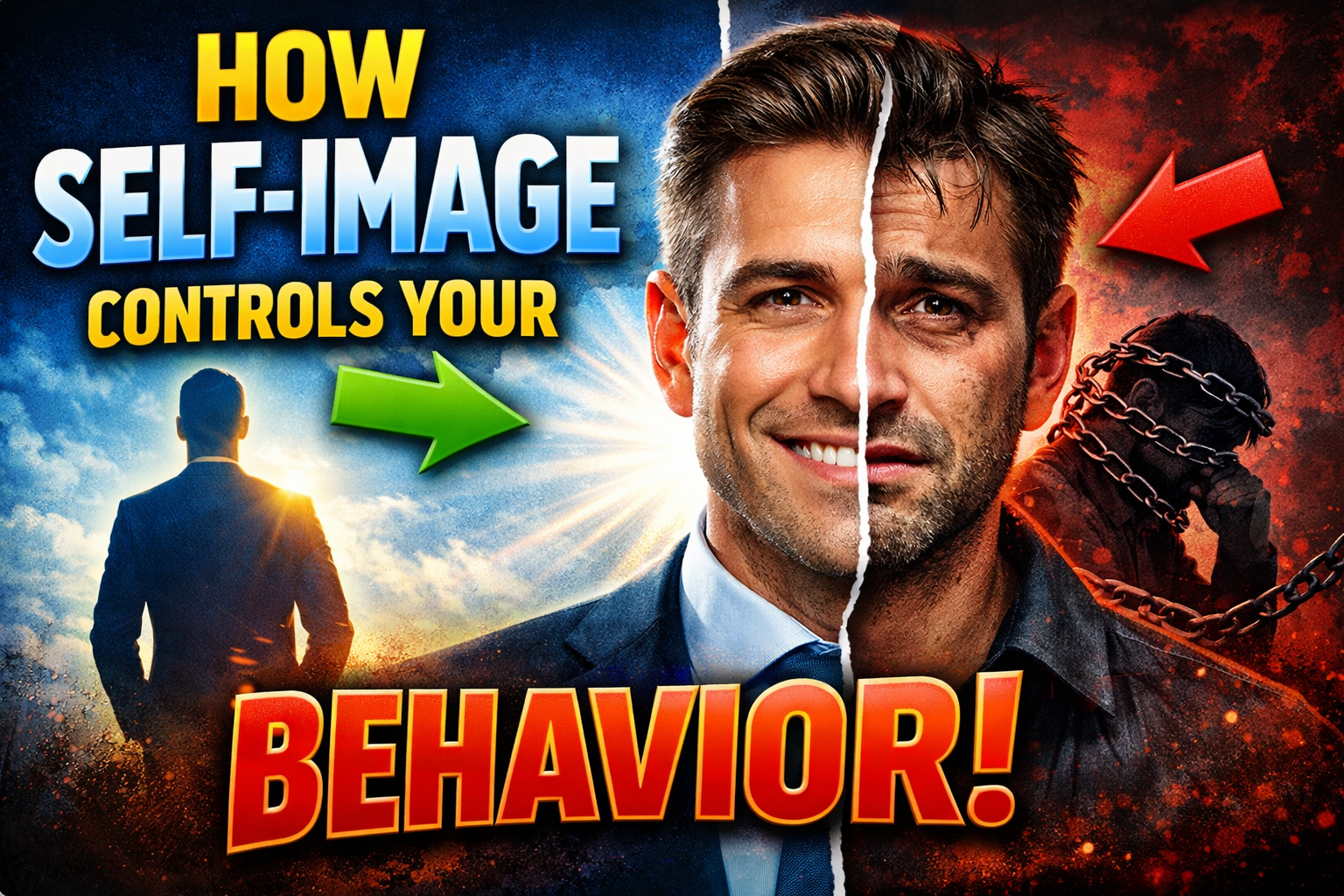

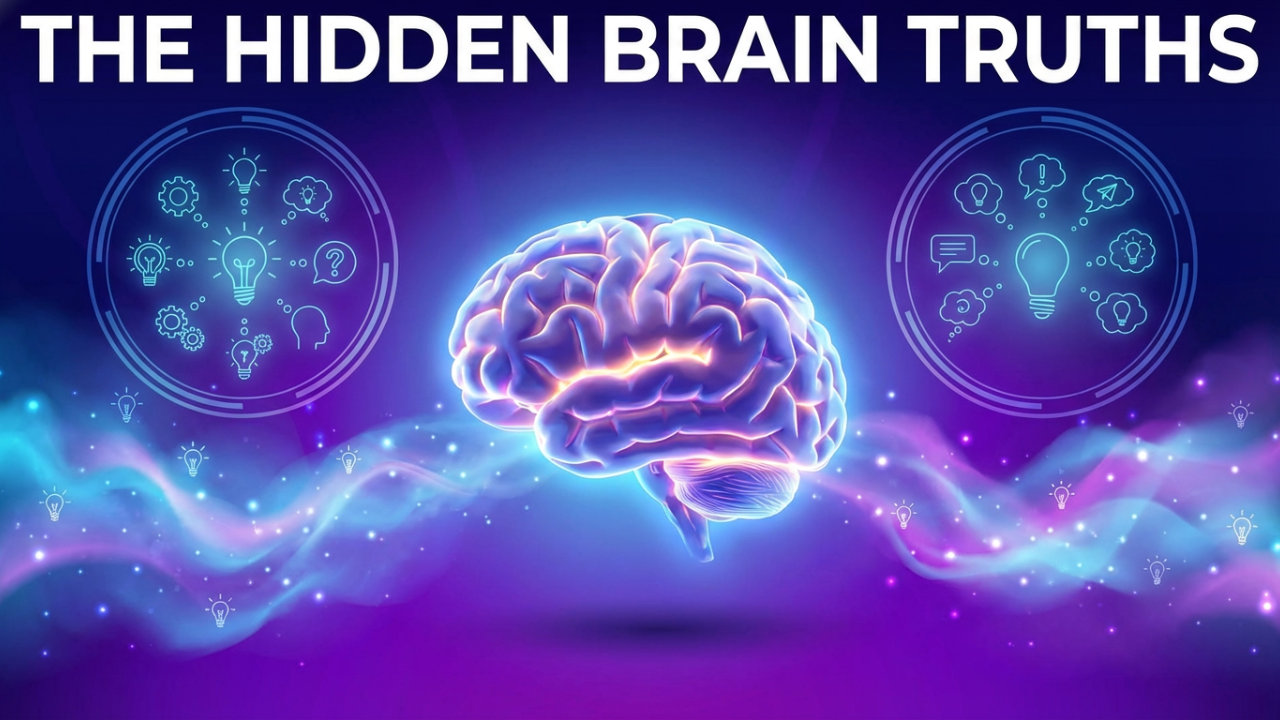
Have you ever felt like you’re fighting a battle against yourself? You consciously decide you’re going to wake up early, eat healthier, or stop procrastinating… but then, day after day, you fall back into the same old patterns. It’s as if an invisible force is pulling the strings. You want one thing, but you do another. It’s frustrating, it’s demoralizing, and it makes you question your own willpower. But what if I told you this internal conflict isn’t a sign of weakness? What if it’s just a sign that you haven’t been introduced to the real pilot of your life? There is a hidden layer of your mind that controls the vast majority of your habits, emotional reactions, and automatic behaviors, all without your focused attention. This is your subconscious mind. And for most of your life, it’s been running on a program you probably didn’t even know was installed.
In fact, groundbreaking research from neuroscientists suggests that the decision-making process in your brain begins long before you are consciously aware of it. In a famous study led by Dr. John-Dylan Haynes, researchers used fMRI brain scans and found they could predict which button a person would press seven to ten seconds *before* the person was aware of having made a choice. For those few seconds, a hidden part of your mind appears to be in control, and your conscious awareness is just catching up. This isn’t just a quirky brain fact; it’s a profound revelation about who is truly in the driver’s seat. Today, we’re not just going to show you the scientific proof of this hidden power… we’re going to reveal the secrets to taking back the wheel.

SON OF LORD
Section 1: The Inner Conflict – The Conscious vs. The Subconscious
So, let’s talk about that feeling of inner conflict, because it’s one of the most common human experiences there is. You set a goal with your conscious mind. Your conscious mind is the part of you that’s listening to this right now. It’s the part that analyzes, thinks critically, and sets intentions. It’s the CEO of your life, the one that says, “Okay team, from now on, we’re saving 20% of our income,” or “This is the year we finally write that book.” It operates with logic and reason. You *know* that saving money is good for your future. You *know* that writing the book will bring you fulfillment.
But then, another part of you kicks in. The part that sees an ad for a new gadget and feels an almost irresistible urge to buy it. The part that sits down to write, only to find itself scrolling through social media for two hours. This is your subconscious mind at work. If your conscious mind is the captain on the deck of a ship, thoughtfully observing the horizon and plotting a course, your subconscious mind is the massive, powerful engine room below, executing commands and keeping the ship running. It controls your heartbeat, your breathing, your digestion—all the vital functions you don’t have to think about. But it also stores your ingrained habits, your deep-seated beliefs, and your automatic emotional responses.
Popular psychology often uses the analogy of an iceberg, and for good reason. The small tip you can see above the water is your conscious mind. Many cognitive neuroscientists have suggested that only about 5% of our cognitive activity—our decisions, emotions, and actions—is conscious. The other 95%, the enormous mass hidden beneath the waves, represents the subconscious. It is the repository of your life experiences, the words you’ve heard, and the emotions you’ve felt, especially those from your most formative years. It’s a vast database of programs that run automatically.
This is why willpower alone so often fails. When your conscious mind declares a new goal that contradicts a subconscious program, you’re like a 100-pound captain trying to manually turn a 50,000-ton supertanker. The engine room—the subconscious—has a program that says “spend money for immediate gratification” or “avoid potential failure by seeking distraction.” That program is powerful and automatic. The engine will simply overpower the captain every time, not out of malice, but because it’s just running its code.
This conflict isn’t your fault. It’s a conflict of systems. Your conscious mind wants a new destination, but your subconscious autopilot is still programmed for the old one. The secret isn’t to fight harder; it’s to go down into the engine room and update the code.
It’s also helpful to quickly distinguish the subconscious from the *unconscious*. While often used interchangeably in lay terms, many psychological models make a distinction. The subconscious holds accessible information and automated programs, like the memory of how to ride a bike. The deeper unconscious is often seen as the storehouse for repressed memories, instincts, and primal drives, like the fight-or-flight response that makes you slam on the brakes before you’ve even consciously processed the danger ahead. For our purposes, we’re focusing on that powerful, programmable layer that dictates so much of our daily lives.
Section 2: The Reveal – How Your Mind Was Programmed
So, how did these programs get installed in the first place? Why do you have a subconscious program for procrastination while someone else has one for relentless action? The answer lies in the earliest years of your life.
Many psychologists and neuroscientists, like cell biologist Dr. Bruce Lipton, emphasize that a significant portion of our core subconscious programming is installed during the first seven years of life. During this period, a child’s brain isn’t operating in the same way an adult’s brain does. An awake, alert adult brain primarily operates in a beta brainwave state, associated with active, analytical thinking. But a young child’s brain operates predominantly in slower brainwave states, particularly theta.
The theta brainwave state is the state of imagination, deep meditation, and hypnosis. It’s a state of high receptivity where information can bypass the critical filter of the conscious mind and flow directly into the subconscious. From ages zero to seven, you were essentially living in a state of hypnosis—a walking, talking, super-absorbent sponge, downloading beliefs about the world and yourself without a filter to question them.
These beliefs came from everywhere:
* **From your parents:** Their words, behaviors, reactions to stress, and beliefs about money, love, and success. If you repeatedly heard phrases like, “Money doesn’t grow on trees,” it wasn’t processed as an opinion; it was downloaded as a fundamental truth.
* **From your experiences:** Being laughed at in class could install a program that says, “It’s not safe to speak up.” Being praised for being quiet could install a program that says, “My value comes from pleasing others.” A single, emotionally charged event can write a powerful line of code that runs for a lifetime.
* **From repetition:** Hearing something over and over is one of the most effective ways to install a belief. If you were consistently told you were smart, you developed a belief in your own competence. If you were consistently told you were clumsy, your subconscious learned to operate in a way that proved that belief true.
These downloaded programs form your self-concept. Your subconscious mind then has one primary directive for the rest of your life: to run its programs and ensure your external reality always matches your internal blueprint. It doesn’t judge the programs as “good” or “bad.” It just executes them.
This is why you might consciously desire wealth, but if your subconscious was programmed with the belief that “rich people are greedy,” it will create behaviors that sabotage your financial success to keep you aligned with your core programming. It’s the root of self-sabotage, which isn’t self-hatred, but rather the subconscious mind’s misguided loyalty to its original programming.
The scientific picture is clear: our brains are constantly engaged in processing that shapes our judgments and actions, often before we’re consciously aware of it. The mystery of why you can’t stick to your goals is solved. You aren’t fighting yourself. You are fighting an old, deeply embedded program running on autopilot. To change your life, you need to stop fighting the program and start rewriting it.
Section 3: The “How To” – The Secrets to Reprogramming Your Mind
This is where your power truly lies. The same mechanisms that created your current programming—repetition and altered states of consciousness—are the very tools you can use to consciously install new, empowering beliefs. This is possible because of neuroplasticity, the brain’s ability to reorganize itself by forming new neural connections throughout your life.
Let’s explore four potent techniques, grounded in both timeless wisdom and modern science, to access the engine room of your mind and become the architect of your new reality.
**Technique 1: Strategic Affirmations in the Theta State**
You’ve probably heard of affirmations, but most people do them wrong. They repeat “I am wealthy” during the day, while their analytical mind immediately fires back: “No, you’re not. Look at your bank account.” This creates conflict, and the affirmation is rejected.
The secret is not just *what* you say, but *when* you say it. The most powerful time to use affirmations is when your brain is naturally in the theta state—that same receptive, hypnotic state of early childhood. This occurs in two key windows: the moments just as you are falling asleep, and the moments just as you are waking up. In these moments, the guard at the gate—your critical, conscious mind—is drowsy.
Here’s the method:
1. **Craft Your Affirmation in the Present Tense.** The subconscious mind takes things literally and primarily understands the present. “I will be confident” tells the subconscious that confidence is in the future, so it keeps you in a state of *wanting* it. Instead, you must state it as if it is already a fact: “I am confident and calm in social situations.”
2. **Enter the Drowsy State.** As you lie in bed at night, on the verge of sleep, or in the morning, before you’ve fully woken up, bring your affirmation to mind. Repeat the phrase gently, over and over, like a soft lullaby.
3. **Feel the Feeling.** Emotion is the language of the subconscious. As you repeat your phrase, try to evoke the feeling of what it would be like to have your desire. How would it feel to walk into a room feeling completely confident? How would it feel to see that desired income in your bank account? This feeling acts like a magnetic charge, impressing the idea more deeply.
4. **Let Go and Drift Off.** Repeat the phrase until you fall asleep or become fully awake. Don’t analyze whether it’s “working.” Your only job is to gently introduce the new idea to your subconscious.
By doing this every night and every morning, you’re using the exact mechanism of repetition in a receptive brain state that formed your original beliefs, but now you are in control.
**Technique 2: Vivid Visualization and Mental Rehearsal**
The subconscious mind thinks in pictures. It doesn’t always distinguish between a real experience and a vividly imagined one. This is a secret that elite athletes, surgeons, and high-performers have used for decades. It’s called mental rehearsal.
Scientific studies have shown that when an athlete mentally rehearses their performance, the brain activity patterns are remarkably similar to those during the actual physical practice. When you visualize an action, your brain fires the same neural pathways, strengthening those circuits. You are literally building the neurological hardware for success without moving a muscle.
Here’s how to apply this:
1. **Get Specific and Detailed.** Don’t just “visualize success.” What does it look like? If your goal is to ace a job interview, close your eyes and mentally walk through the entire experience. See yourself picking out your outfit, walking into the room with a confident smile, and shaking the interviewer’s hand firmly. Hear yourself answering questions articulately. Feel the sense of connection.
2. **Engage All Your Senses.** Make it as real as possible. What do you see, hear, smell, and feel? If your goal is financial, don’t just see a number on a screen. Imagine opening your banking app. Feel the weight of the phone in your hand. Feel the surge of relief, security, and joy. The more sensory detail, the more real it becomes to your subconscious.
3. **Focus on the Desired Outcome.** During your mental rehearsal, always see yourself performing perfectly and achieving your goal. If your mind wanders to mistakes, gently redirect it back to the successful scenario. You are programming a pattern of success.
4. **Practice Consistently.** Dedicate 5 to 10 minutes each day to this. Like physical exercise, the consistency of mental rehearsal is what builds the neural “muscle.”
By repeatedly running these mental movies, you are familiarizing your nervous system with a new reality. When the time comes to perform, it won’t feel new or scary. It will feel familiar.
**Technique 3: Altered States and Brainwave Entrainment**
Beyond the natural theta state of sleep, we can use tools to help guide our brain into more receptive states. Meditation is the most ancient and proven method, quieting the analytical mind and moving from busy beta brainwaves into calmer alpha and theta states.
A modern tool that has gained attention, though the science is still developing, is brainwave entrainment using binaural beats. The principle is simple: two slightly different sound frequencies are played into each ear through headphones (e.g., 200 Hz left, 210 Hz right). Your brain perceives an auditory illusion—a third rhythmic pulse at the difference between the two frequencies (in this case, 10 Hz), which falls in the alpha brainwave range. The theory is that your brain’s own electrical activity may start to synchronize with this perceived frequency.
While some studies show promise for using binaural beats to reduce anxiety or improve sleep, the overall evidence on their effectiveness for brainwave entrainment is inconsistent and contradictory.
If you choose to experiment with this:
1. **Find the Right Frequencies.** For relaxation and receptivity, look for binaural beats designed for theta (4-7 Hz) or alpha (8-12 Hz) states.
2. **Use Headphones.** This technique requires stereo headphones to work.
3. **Combine with Other Techniques.** The potential power of this method is in combination. While listening, practice your visualizations or repeat your affirmations. Think of it as a tool to potentially aid relaxation and focus during your reprogramming sessions, rather than a magic bullet on its own.
**Technique 4: Reprogramming Your Internal Filter (The Reticular Activating System)**
In your brainstem, there’s a network of nerve pathways called the Reticular Activating System, or RAS. One of its crucial jobs is to act as a filter for the massive amount of sensory information bombarding you every second. It helps your brain decide what to pay attention to and what to ignore. It’s why you can be in a loud room but instantly hear your name from across it.
Your RAS filters reality based on what it believes is important to you—and what it believes is important is determined by your dominant thoughts and beliefs. If you believe “Life is hard and I never get good opportunities,” your RAS will dutifully filter your reality to show you evidence that supports this. It will highlight the traffic, the difficult boss, and the missed chances, while ignoring the potential opportunities right in front of you.
From a neurological perspective, this is the secret behind concepts like the “law of attraction.” You don’t magically attract things to you; you program your brain to finally *perceive* the opportunities that were already there.
You can consciously train your RAS. Here’s how:
1. **Set Clear Goals.** Writing down your goals and reviewing them daily is an act of programming. You are telling your RAS, “This is important. Pay attention to anything related to this.”
2. **Practice Gratitude Deliberately.** Gratitude is a powerful RAS reprogramming tool. When you actively look for things to be grateful for, you are training your brain’s filter to find the positive. At the end of each day, write down three specific things you are grateful for. Soon, your RAS will get the message and start actively highlighting positive things throughout your day *as they happen*.
3. **Use Visual Reminders.** A vision board or images of your goals (a dream home, a travel destination, a career symbol) acts as a constant, passive instruction to your RAS. Every time you glance at it, you’re reminding your brain what to look for.
By consciously directing your focus, you are upgrading your RAS software from a “problem-finding” program to an “opportunity-finding” program. You’ll start to notice “coincidences” and stumble upon solutions. These things were likely always there, but now, your filter is calibrated to bring them to your conscious awareness.

This book is scientific documentary of the Kingdom of God.
Section 4: The Proof – The Story of Transformation
Let’s imagine someone we’ll call Alex. For years, Alex consciously wanted to be healthy. But Alex’s subconscious was running on old programs: “You have to finish everything on your plate,” and a belief from an embarrassing gym class moment that “I’m just not athletic.”
Every January, Alex would start a diet and gym routine with immense willpower. By February, the subconscious programs would take over. Alex would feel an overwhelming urge for junk food after a stressful day and find a dozen “logical” reasons to skip the gym, reinforcing the belief, “I’m not athletic.”
Then, Alex learned these secrets and started working *with* the subconscious mind.
Every night, as Alex drifted off to sleep, the mantra was, “I am healthy, strong, and I love moving my body.” For ten minutes each day, Alex sat quietly and did a vivid mental rehearsal, imagining hiking in a beautiful forest, feeling light, energetic, and proud at the summit. Alex also started a simple gratitude journal, writing down one thing their body did for them each day. “I’m grateful for my legs that carried me to work.”
The changes weren’t instantaneous. But slowly, something remarkable happened. The urge for junk food lessened, replaced by a growing desire to go for a walk. The thought of exercise no longer felt like a chore. Alex started noticing healthy recipes and found a local hiking group. These opportunities had always been there, but now Alex’s RAS was pointing them out. Within a few months, without the usual struggle, Alex was living the healthy lifestyle that had felt impossible. The conscious goal and subconscious programming were finally aligned.
Conclusion
The story of Alex isn’t a fantasy. It’s a demonstration of the power you hold. For too long, you may have felt like a passenger in your own life. Today, you’ve been handed the keys to the cockpit. You’ve learned that the invisible forces guiding you are programmable. You have learned that your brain is most receptive in the moments between waking and sleeping, that a vividly imagined experience is as real to your brain as a physical one, and that you can train the filter that determines what you notice in the world.
But knowledge without action is just entertainment. The secret is not in knowing, but in *doing*. So here is your call to action: Choose just ONE of the techniques we discussed today.
Maybe it’s repeating an affirmation as you fall asleep. Maybe it’s five minutes of visualization each morning. Maybe it’s starting a one-sentence gratitude journal.
Commit to that one practice, every single day. The old myth says it takes 21 days to form a habit, but that idea was a misinterpretation of a surgeon’s observations from the 1960s. More recent research, like a 2009 study from University College London, found the average time to form a new habit is closer to 66 days, and it can vary widely from 18 to 254 days depending on the person and the behavior. So don’t fixate on a magic number. Focus on consistency. The journey to rewiring your brain is a process of laying down new neural pathways, repetition by repetition.
You are the programmer. Your thoughts are the code. Your life is the printout. The biggest secret of the subconscious mind is that it is waiting for your direction. It is a profoundly powerful and obedient servant, ready to execute whatever program you give it. Stop letting it run on outdated software. Step up, take the controls, and begin consciously creating the program for the life you truly desire. Your transformation begins now.