

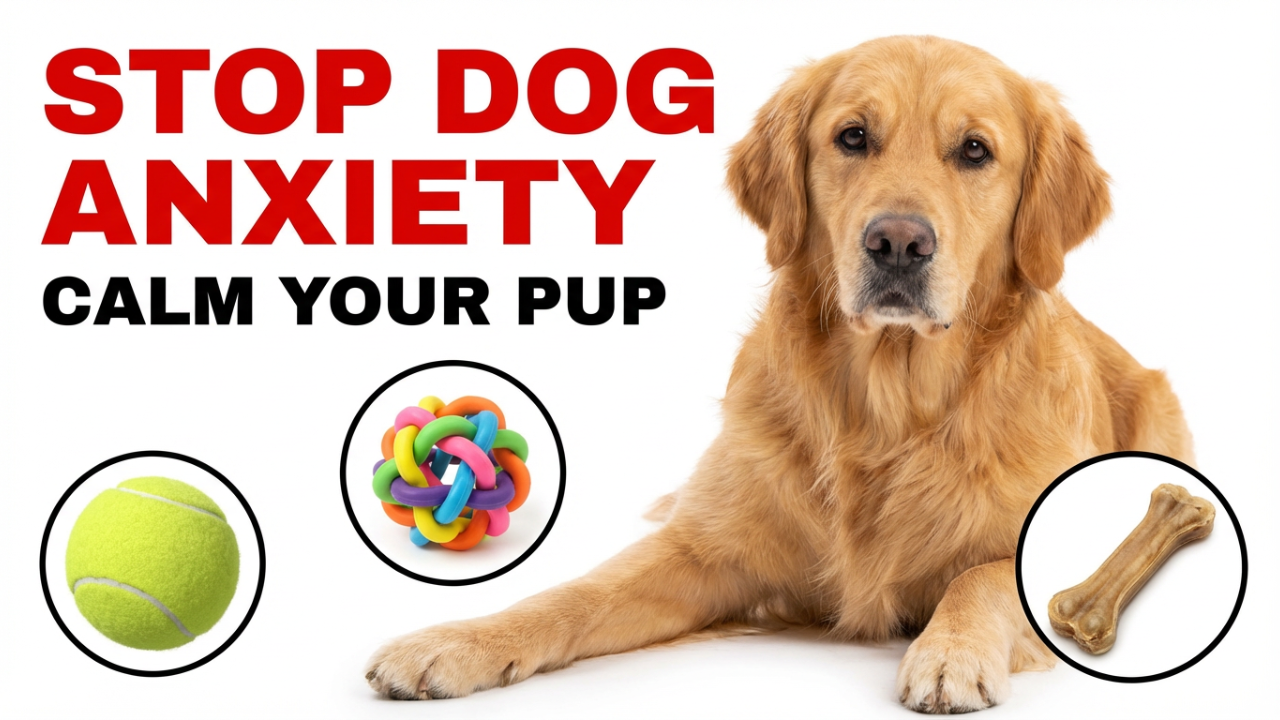
You walk in the door, and that’s what you see. The sofa cushion has been completely gutted, its fluffy white insides thrown across the living room like a freak snowstorm. Those new shoes you were so excited to wear are now covered in frantic teeth marks. And in the corner, your best friend, your dog, is trembling, panting, maybe whining… their entire body screaming distress. Your heart just sinks. It looks like total chaos, but if you look closer, past the mess, you’ll see this isn’t a “bad dog.” This isn’t revenge for you leaving. It’s not bad behavior; it’s a panic attack. Your dog is suffering from a very real, very terrifying fear of being alone.
What if you already have everything you need to help them? What if the answer wasn’t in some expensive gadget or medication, but in understanding, patience, and a few simple, powerful techniques you can start using today, right from home? This isn’t just about managing the destruction. This is about giving your dog the one thing they’ve lost: the confidence to feel safe and calm, even when you’re not there. It’s about turning their fear into confidence, and your frustration into a bond that’s stronger than ever. Stick with me, because we’re going to walk through this together, step-by-step.

SON OF LORD
Section 1: The ‘Why’ – Understanding the Panic Behind Separation Anxiety
Before we can fix this, we have to understand what’s really going on. The most important thing to realize is this: Separation anxiety is a phobia, just like a human’s fear of spiders or heights. It’s an irrational, overwhelming panic that floods your dog’s system when they’re left alone. They aren’t choosing to destroy your stuff; their panic response takes over, and they start chewing, barking, and digging in a desperate attempt to cope with that intense fear. Punishing them when you get home just adds another layer of anxiety. They learn to fear your return on top of fearing your departure.
I’ve dedicated my work to helping owners understand that they’re not enforcers; they’re coaches. You are your dog’s safe space, and our goal is to teach them that the world doesn’t fall apart the moment that door closes.
So, why does this happen? The truth is, the causes aren’t always clear. For some dogs, it’s a history of being abandoned or rehomed, which creates a deep fear of being left again. For others, often called “Velcro dogs,” it might be a case of hyper-attachment where they never learned how to be confident on their own. Sometimes a big change—a new work schedule, a move, a family member leaving home—can trigger it. And for some dogs, there’s no obvious reason at all. It’s just how they’re wired.
It’s also really important to know the difference between true separation anxiety and simple boredom. A bored dog might get into a little mischief, maybe chew a shoe because it’s there and it’s interesting. But a dog with separation anxiety shows a cluster of symptoms that are all rooted in distress. We’re talking about barking or howling that just doesn’t stop. We’re talking about destruction that’s often focused on doors and windows, as they try to escape to find you. You might see drool or panting so excessive their chest is soaked. They might pace in frantic circles or even have accidents in the house, even if they’re perfectly house-trained.
Understanding this difference is the first step. It moves you from being frustrated to being compassionate. Your dog isn’t giving you a hard time; your dog is having a hard time. And now, we’re going to build the framework to help them through it.
Section 2: The Foundation – Setting the Stage for Success
Before we jump into the active training, we need to create an environment that encourages calm. Think of it like preparing the soil before you plant a garden. We’re going to focus on two things: making their home feel like a sanctuary and making sure their basic needs are met. This helps lower their overall anxiety, which makes them much more ready to learn.
**First: The Home Environment as a Sanctuary**
Your home should be a predictable, safe place, not a minefield of scary triggers.
Start by creating a designated “safe space.” This isn’t about locking them away; it’s about creating a spot that they associate with pure comfort. It could be a cozy dog bed in a quiet corner or a crate, if your dog already sees it as a happy place. You want to fill this space with good things: their favorite blankets, a great chew toy, and maybe an old t-shirt that smells like you. The rule is that this space is *never* for punishment. It is only for good things.
Next, let’s talk about sound. An anxious dog is constantly on high alert. Every car door slam can send their anxiety spiking. Sound therapy is a super simple but effective home remedy. You can play calming classical music—studies show it can have a relaxing effect on dogs—or use a white noise machine to create a steady, soothing backdrop. This helps mask those sudden outside noises that put a nervous dog on edge. Some people even play audiobooks; the constant, low drone of a human voice can be really comforting.
Finally, think about pressure. Just like a weighted blanket can help an anxious person, pressure vests like a Thundershirt can have a wonderfully calming effect on some dogs. The gentle, constant pressure feels like a hug and can soothe their nervous system. It doesn’t work for every dog, but for many, it’s another great tool to have. Just be sure to introduce it during calm times first, so they don’t connect the shirt itself with being stressed.
**Second: Proactive Wellness – A Tired Dog is a Calm Dog**
An under-exercised dog has a ton of pent-up nervous energy just looking for a place to go. For an anxious dog, that place is often your sofa or their own vocal cords. Daily physical activity is non-negotiable. And I don’t just mean a slow walk around the block. We need structured exercise that works their body *and* their brain.
Try to get in at least 30 minutes of solid aerobic exercise before you plan to leave. This could be a brisk run, a fast-paced game of fetch, or playing with a flirt pole in the yard. The goal is to leave them physically tired and mentally satisfied. A tired dog is far less likely to have the energy for anxious pacing and chewing.
But physical exercise is only half the battle. Mental stimulation is just as important, if not more so. A bored mind is an anxious mind. Enrichment gives your dog a job to do, focusing their brain on a task, which builds confidence. In fact, just 15-20 minutes of intense brain work, like using a puzzle toy, can tire a dog out more than a 30-minute run.
This is where enrichment toys become your new best friend. Puzzle toys, snuffle mats, and lick mats aren’t just toys; they are tools for mental health. They encourage natural behaviors like sniffing, foraging, and licking, all of which are naturally calming for dogs. Instead of feeding your dog from a bowl, start feeding all of their meals from these toys. This one simple switch turns a 30-second meal into a 15-minute brain game that builds focus and independence.
By setting up these two things—a calming space and a solid routine of exercise and brain games—you’re lowering your dog’s overall stress. You’re filling their cup, so when we start the real training, they’re in the best possible headspace to succeed.

This book is scientific documentary of the Kingdom of God.
Section 3: The Step-by-Step Protocol – Your Action Plan for a Confident Dog
Okay, with our foundation set, it’s time for the real work. This is where the magic happens. We’re going to use two techniques called **Systematic Desensitization** and **Counter-Conditioning**. They sound technical, but the idea is actually really simple.
**Systematic Desensitization** just means we gradually expose your dog to what they fear—being alone—at such a low level that it doesn’t trigger panic. We start with super short periods and build up slowly, always keeping them below the point where they feel anxious.
**Counter-Conditioning** is how we change your dog’s emotional response. We pair the scary thing (you leaving) with something they absolutely love (like a fantastic treat). The goal is to change their mind from “Oh no, they’re leaving!” to “Oh boy, they’re leaving! I get my favorite thing in the world!”
I’ve broken this down into a step-by-step plan. Remember, every dog is different. Some fly through these stages, others take more time. The golden rule is to always watch your dog, not the clock. If you see signs of stress, you’ve moved too fast. Just go back to the last step where they were successful and try again. Progress isn’t always a straight line. There will be good days and bad days, and that’s perfectly normal.
**Step 1: Make Departures and Arrivals Boring**
Our first goal is to take all the emotion out of you coming and going. Right now, these moments are probably filled with anxiety and excitement, which just amps up your dog’s feelings. We want to make them as boring as possible.
So, for at least 15 minutes before you leave, try to ignore your dog. This sounds mean, but it’s so important. No eye contact, no talking to them, no big flurry of goodbye pets. Your body language is telling them that you leaving is not a big deal. When you’re ready to go, just calmly give them their special “alone time” treat (we’ll get to that next) and walk out the door. No drama. No “Be a good boy, I’ll miss you!”
The same rule applies when you get home. This is often the hardest part. You walk in, and your dog is going wild with excitement. Your first instinct is to match that energy. Don’t. Walk in calmly, put your stuff down, and ignore your dog until they have all four paws on the floor and are calm. Once they’re relaxed, you can greet them quietly. You’re teaching them that your return isn’t a huge event either, and that being calm is what gets them your attention.
While you’re doing this, you’re also going to become an expert at making special treats. This is where the counter-conditioning really starts. You need to find a food puzzle toy that is so amazing, so irresistible, that for a moment, it’s more interesting than the fact you’re leaving. A classic Kong toy is perfect for this.
Your job is to create what I call “Kong-sicles.” You can start simple: smear some dog-safe peanut butter or plain yogurt inside. As they get good at it, start layering things: some kibble, some mashed sweet potato or pumpkin, maybe some shredded chicken. Then, pop it in the freezer. A frozen Kong lasts way longer and is a much better challenge.
Here’s the key for this step: you give your dog this amazing treat, and then you *don’t* leave. Give it to them in their safe space and then go sit in another room for a few minutes. Or give it to them while you’re just hanging out in the kitchen. We’re building a powerful new association: this incredible toy appears, and I get to enjoy it. The stress of you leaving isn’t even in the picture yet.
**Step 2: Take the Power Away from Triggers**
Your dog is a detective. They know the little things you do before you leave, and their anxiety starts building long before you touch the doorknob. The jingle of your keys, putting on your shoes, grabbing your bag—each of these is a small sign that builds their panic. Our goal here is to make those signs totally meaningless.
So, throughout the day, when you have no plans to leave, just do those things randomly.
Pick up your keys… and then go sit on the sofa. Jingle them for a second, then put them down. An hour later, put on your coat, walk to the kitchen to get some water, and then take it off. Put your shoes on, walk to the mailbox, and come right back inside.
Every time you do this, you’re breaking the connection. You’re teaching your dog that “keys jingle” doesn’t always mean “I’m about to be abandoned.” It might just mean nothing at all. Do this dozens of times a day. At first, your dog might get a little anxious. Just ignore it. When they see you put the keys down and relax, their anxiety will fade. You’re slowly making these triggers nothing more than background noise.
**Step 3: The Gradual Goodbyes**
This is it. This is the heart of the whole process. Now that we’ve done all the prep work, we can start practicing actual absences. The single most important rule here is that you must always return *before* your dog panics. You are building on success, not pushing through fear. To do this, you absolutely need a way to watch your dog. A simple pet camera, a laptop with a webcam, or a baby monitor is non-negotiable. This is how you’ll know what your dog can handle.
We’re going to build up absences slowly, starting with ridiculously short times.
**The Absence Ladder:**
1. **Start with the Door:** Walk to your door. Touch the doorknob. Let go and walk away. If your dog stayed calm, praise them. Repeat that a few times.
2. **Turn the Knob:** Now, go to the door, turn the knob, and let go. Walk away. Repeat.
3. **Open and Close:** Next, open the door just an inch, then close it right away. Walk away. Repeat.
4. **The First Step:** Now, we bring in the big guns—the frozen Kong. Calmly give it to your dog on their bed. As they start licking, walk out the door and close it behind you. Count to **one second**. Immediately open the door and come back inside.
5. **The Boring Return:** When you come back in, act bored. Don’t make a big deal. Casually take the Kong away, pop it back in the freezer for next time, and go about your day. The amazing treat only happens when you are gone.
6. **Climb the Ladder:** This is where your camera is your best friend. The next time you practice, stay outside for **three seconds**. Watch the camera. Did your dog keep licking the Kong? Did they stay lying down? Success! If they stopped and stared at the door looking worried, three seconds was too long. Next time, go back to two seconds.
You’ll continue this process, session by session, day by day, slowly adding more time. It might look like this: 1 second, 3 seconds, 5 seconds, 2 seconds (it’s good to mix it up!), 8 seconds, 12 seconds, 5 seconds, 20 seconds. The increases should be tiny. The goal is for your dog to be so focused on their delicious treat that they barely even notice you’ve left. You are literally re-wiring their brain to believe that you leaving is safe, predictable, and even a little bit awesome for them!
This part takes a ton of patience. It might take weeks just to get to 30 seconds. It could take months to get to 30 minutes. That is okay. We are healing a phobia, and we have to move at the dog’s pace, not ours.
**Step 4: Building Real-World Confidence**
Once you can consistently leave for 5-10 minutes without your dog showing any anxiety, you can start increasing the time in slightly bigger steps—a minute at a time, then five minutes at a time. Keep watching on the camera. Look for signs that your dog is settling, like finishing their Kong and then letting out a sigh and lying down. That’s a huge win!
The biggest challenge here is managing real life while you’re training. For the first few weeks of this process, it is critical that you *never* leave your dog alone for longer than they can handle. Every time you leave and they have a full-blown panic attack, it’s a major setback. This might mean using doggy daycare, hiring a pet sitter, or asking friends and family for help. It’s a short-term sacrifice for a long-term solution.
As your dog gets more confident, you can start mixing it up. Try leaving through the back door. Leave at different times of day. Do a few short trips where you don’t give the Kong, just to make sure they’re truly okay with being alone. The end goal is a dog who is confident and relaxed, no matter what.
Section 4: Common Pitfalls and When to Ask for Help
Even with the best plan, you can hit a few bumps in the road. Knowing the common mistakes can help you stay on track.
**The #1 Pitfall: Going Too Fast.** This is the main reason people struggle. They get impatient, see a little success, and jump from 30 seconds to 10 minutes. This almost always pushes the dog over their limit and makes their fear worse. If your dog has a setback, don’t worry. Just take a breath, go back to a time they were 100% successful, and build back up from there.
**The Consistency Trap:** Everyone in the house has to be on the same page. If one person is doing calm departures but another is giving dramatic, tearful goodbyes, the dog gets mixed signals and the training won’t work. Consistency is what creates that feeling of safety.
**The “Second Dog” Myth:** This is a common belief. While some dogs might like having a canine friend around, separation anxiety is a fear of being away from a specific *person*. In many cases, you don’t solve the problem—you just end up with two anxious dogs.
**When to Ask for Professional Help:**
You can make amazing progress on your own. But for some dogs, the anxiety is so severe that it’s like trying to teach math to someone in the middle of a panic attack—their brain just isn’t able to learn.
If you’ve been following these steps carefully for several weeks and see zero progress, or if your dog is at risk of hurting themselves, it’s time to call in a professional. Look for a Certified Separation Anxiety Trainer (CSAT), a board-certified veterinary behaviorist (DACVB), or another certified professional who specializes in this issue. They can provide a customized plan based on your dog’s specific needs. Many of them even work remotely, which is very effective for this particular problem.
You should also talk to your veterinarian. In severe cases, anti-anxiety medication can be an essential tool. The medicine doesn’t “fix” the problem on its own, but it can lower your dog’s anxiety enough for the training to actually work. Think of it as a life raft that keeps them afloat while you teach them how to swim.
Conclusion
Fixing separation anxiety is a marathon, not a sprint. It takes a huge amount of patience, empathy, and commitment. But seeing your dog, who once panicked when you picked up your keys, now sleeping peacefully while you’re gone is one of the most rewarding feelings you can have.
You’re not just stopping a bad behavior. You are healing a phobia. You are changing your dog’s entire emotional world and giving them the gift of quiet confidence. You are replacing their panic with peace.
Just remember the core ideas:
First, shift your mindset. This is panic, not bad behavior, so meet it with empathy.
Second, build a solid foundation. A calm environment and plenty of physical and mental exercise are key.
And third, follow the plan. Go slow, make your departures and arrivals boring, and use those amazing treats to change your dog’s mind about being alone.
This journey will test you, but it will also deepen the bond you share with your dog in ways you can’t even imagine. You are their advocate, their coach, and their safe place. You absolutely have the power to help them.