
What if your brain had an ‘update’ button for anxiety? What if you could install new software that automatically runs programs for calm and confidence, effectively deleting the old, anxious ones for good? It might sound like science fiction, but the science of neuroplasticity shows us this isn’t just possible—it’s something you can start doing today. In this article, we’ll break down how simple auto-suggestion can literally rewire your brain’s anxious pathways.

SON OF LORD
Section 1: The “Magic” Concept – Unpacking Neuroplasticity
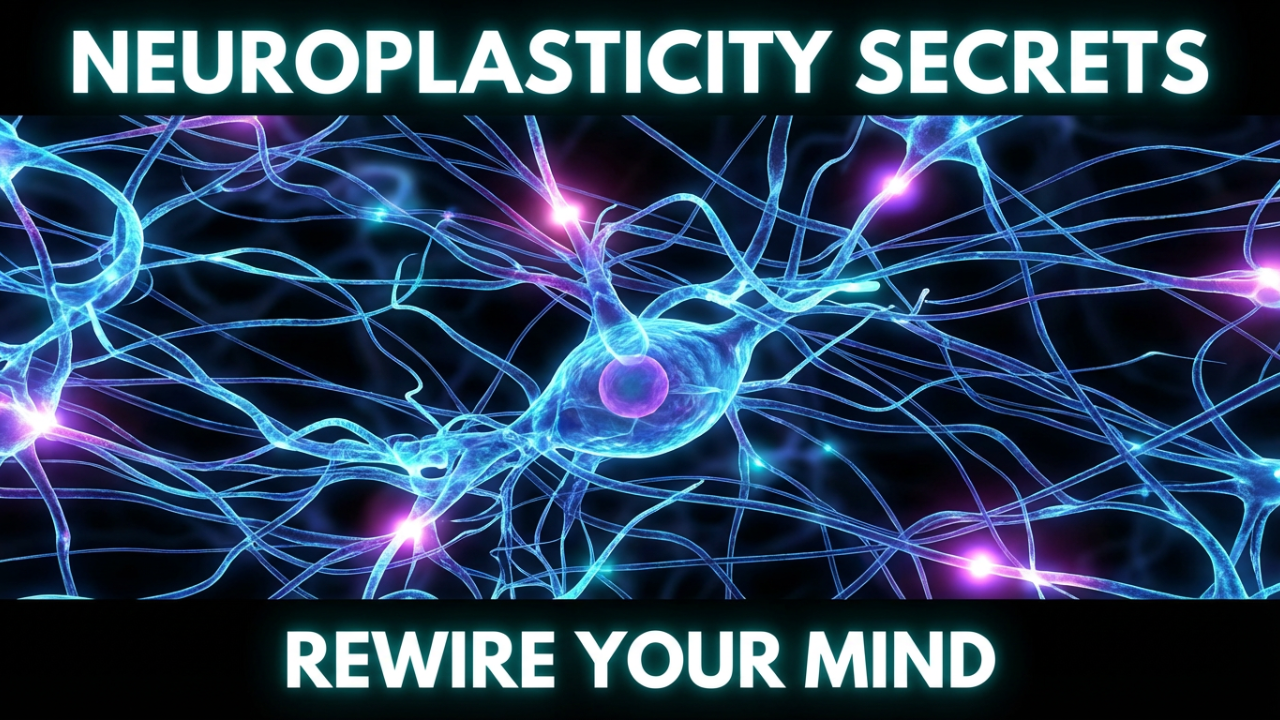
For decades, so many of us believed a myth: that the adult brain is fixed, hardwired, and unchangeable. We thought if you were prone to anxiety, that was just your lot in life—a permanent feature of your mental hardware. But over the past twenty years, a revolution in neuroscience has completely shattered that myth. And that revolution is built on one powerful concept: neuroplasticity.
So, what is it? Simply put, neuroplasticity is the brain’s incredible, lifelong ability to change and reorganize itself by forming new neural connections. Think of your brain not as a rigid computer chip, but as a dynamic, living material, like clay, that can be reshaped by your experiences, your thoughts, and your habits. Every time you learn something new, practice a skill, or even just think a new thought, you are physically changing your brain’s structure and function.
Here’s a simple way to picture it. Imagine a dense forest. The first time you walk through it, there’s no path. You have to push through the undergrowth, and it’s slow, difficult work. But what happens if you walk that same route every single day? At first, a faint trail appears. Soon, it becomes a well-trodden path. With enough repetition, it can become a wide, clear road. Neural pathways in your brain work exactly the same way. The thoughts and behaviors you repeat are the paths you reinforce. The more you use a pathway, the stronger, faster, and more automatic it becomes.
This isn’t just a hopeful metaphor; it’s a documented biological fact. Groundbreaking studies using brain scans have shown that therapies like Cognitive Behavioral Therapy (CBT) create measurable physical changes in the brain. For instance, successful CBT for anxiety has been shown to dial down the *activity* and sensitivity of the amygdala, the brain’s fear center. At the same time, it strengthens and can even thicken the prefrontal cortex, the part of your brain responsible for rational thinking and emotional regulation. You’re not just changing your mind; you are literally changing your brain.
This leads to an even more empowering idea: “self-directed neuroplasticity.” This concept, pioneered by researchers like Dr. Jeffrey M. Schwartz, argues that we aren’t just passive passengers in our own minds. We can consciously use our attention and focus to drive these changes ourselves. You are in the driver’s seat. By choosing what you focus on and by repeatedly practicing new ways of thinking, you can become the architect of your own neural landscape.
You have the power to let the old, overgrown paths of anxiety fade away from disuse, while you intentionally carve out new super-highways to calmness and confidence. This is the fundamental promise of neuroplasticity: change is always possible. The question is, how do we do it? To answer that, we first need to understand what’s actually happening inside the anxious brain.

This book is scientific documentary of the Kingdom of God.
Section 2: The Problem – Understanding the Anxious Brain
Before we can start reprogramming, we need to understand the software that’s currently running. What exactly is the “anxiety program,” and why does it feel so automatic? The experience of anxiety isn’t just “in your head”; it’s a complex loop between different parts of your brain that feeds itself.
At the heart of this cycle is a tiny, almond-shaped structure called the amygdala. Think of the amygdala as your brain’s hypersensitive smoke detector. Its job is to scan for threats and, when it spots one, to sound the alarm, triggering the fight-or-flight response. This is an ancient, essential survival mechanism. If a tiger jumps out at you, you want that alarm to go off instantly.
In chronic anxiety, however, this alarm system is way too sensitive. It’s like a smoke detector that goes off not just for a fire, but every single time you make toast. A minor work email, the thought of a party, or a strange physical sensation can be misinterpreted by the overactive amygdala as a life-threatening danger. When this false alarm rings, it floods your body with stress hormones like adrenaline and cortisol. This is what causes the racing heart, shallow breathing, tense muscles, and that churning in your stomach. Your body is gearing up for a fight that doesn’t actually exist.
Now, your brain has another key player: the prefrontal cortex. It’s right behind your forehead and acts as the brain’s CEO or rational control center. Its job is to look at a situation logically and regulate your emotional responses. A healthy prefrontal cortex can hear the amygdala’s alarm and say, “Hey, easy there. That’s not a tiger, it’s just toast. We’re safe.” It can then send signals to quiet the amygdala and shut off the fight-or-flight response.
But in the anxious brain, there’s an imbalance of power. The emotional, reactive amygdala is screaming, while the rational prefrontal cortex is struggling to get a word in. The communication line between them gets weak, meaning the “all-clear” signal doesn’t get through. You get stuck in a state of high alert.
This creates a vicious cycle. The amygdala fires, and you feel the physical symptoms. Your thinking brain then notices your racing heart and tight chest and interprets *them* as proof that something is terribly wrong. “My heart is pounding, I must be in danger!” This thought acts as more fuel, firing up the amygdala even more, which releases more stress hormones, creating more physical symptoms, which create more anxious thoughts. And around and around it goes.
Every time you complete this anxiety loop, you are strengthening those neural connections. You are paving the “anxiety highway.” Over time, this pathway becomes so efficient that your brain travels down it automatically. A trigger pops up, and before you even have a chance to think, you’re already in a full-blown anxiety response. It becomes a deeply ingrained habit, a default program that runs without your permission.
The feeling of being “stuck” in anxiety is real because, on a neural level, you are. You’re on a neurological super-highway your brain built through repetition. But remember neuroplasticity. No road is permanent. Our job isn’t to try and bulldoze this highway—that just leads to a fight with yourself. Our job is to build a new, better one right alongside it: a “calmness highway.” And the tool we’ll use to build it is auto-suggestion.
Section 3: The Solution Part 1 – Auto-Suggestion, Your Reprogramming Tool
So, we have an anxious brain running on automatic, defaulting to old, worn-out neural pathways. We also know the brain is plastic and can build new ones. The big question is: how? How do we give the brain the blueprint for this new, calm pathway? The answer is a simple, yet profound technique called auto-suggestion.
Auto-suggestion is basically the process of intentionally guiding your own thoughts by repeating specific phrases or mental scripts. It was popularized back in the early 20th century by Émile Coué, who figured out that by consciously and repeatedly introducing an idea to the mind, you could influence your subconscious and, in turn, your physical and emotional state.
Now, let’s be clear: this is not just “positive thinking.” So many people are skeptical because they’ve tried to just “think positive” and failed. They’ve stood in a mirror and said, “I am a confident, successful person,” while their brain screamed back, “No, you’re not!” That’s because they were trying to argue with a deeply ingrained program without doing the work to install a new one.
Auto-suggestion isn’t about arguing with the old program. It’s about systematically installing a new one. It works directly with the principle of neuroplasticity. Remember, “neurons that fire together, wire together.” When you deliberately and repeatedly focus on a new thought—your auto-suggestion—you are causing specific, new sets of neurons to fire together. The first time, the connection is weak. But with each repetition, it gets a little stronger. You are actively directing the wiring of your brain. You are laying the foundation for that new neural highway.
This is already at the heart of the most successful anxiety therapies. Cognitive Behavioral Therapy (CBT), for example, relies heavily on a form of auto-suggestion. In CBT, you learn to spot an automatic negative thought, question it, and then replace it with a more balanced statement that you practice and repeat. You’re essentially creating an auto-suggestion to counter the old, anxious code.
So, how do we craft suggestions that the brain will actually accept? There are a few key rules that make the difference between an empty affirmation and a powerful neuroplastic tool.
First, keep your suggestions brief, concrete, and believable. The brain learns best with simple, clear instructions. “I am capable of handling this calmly” is way more effective than “I will endeavor to summon the internal resources required to navigate forthcoming challenges with equanimity.”
Second—and this is a game-changer—frame your suggestions in the positive and in the present tense. Your subconscious mind doesn’t really process negatives. If you say, “I will not panic,” the main ideas your brain latches onto are “I” and “panic.” You’re accidentally reinforcing the very thing you want to avoid. Instead, state what you *do* want. Instead of “I won’t be anxious,” use “I am feeling calm,” or “I am safe.” Using the present tense (“I am” instead of “I will be”) signals to your brain that this state is accessible *right now*, making it feel more like a current reality.
Third, connect your suggestion to a feeling. The brain prioritizes information that has an emotional tag. As you repeat your phrase, try to evoke the *feeling* of what you’re saying. If your phrase is “I am grounded and steady,” try to actually feel your feet on the floor and the stability in your body. This combination of thought and sensation creates a much stronger neural pathway.
And finally, the most important rule: repetition and consistency. You didn’t build that anxiety highway overnight, and you won’t build the calmness highway overnight either. This is a training process, like going to the gym for your brain. You’re training a new mental muscle.
Auto-suggestion is the code you’re writing for the new software you want to run. Now, let’s get into the practical, step-by-step guide on how to use this tool, and a few others, to build your complete neuroplasticity toolkit.
Section 4: The “How-To” Tutorial – Your Neuroplasticity Toolkit
This is where theory meets practice. We’re going to walk through seven powerful, evidence-based techniques you can use to actively rewire your brain. Think of this as your personal workshop for building a less anxious mind.
**Technique 1: Cognitive Restructuring + Auto-Suggestion (The CBT Power Combo)**
This is your frontline strategy for tackling the anxious thoughts that fuel the anxiety cycle. The goal is to intercept automatic negative thoughts and install a new, more helpful response. By repeatedly challenging and reframing a thought, you weaken its power to trigger your amygdala and build a new pathway to a calmer state.
Here’s your four-step practice:
Step 1: Identify the Hot Thought. The next time you feel a spike of anxiety, hit pause and ask yourself: “What thought just went through my mind?” Be a detective. These thoughts can be fast and sneaky, like a prediction (“I’m going to fail”) or a judgment (“Everyone thinks I’m awkward”). Write it down. Getting it out of your head creates immediate distance.
Step 2: Challenge the Evidence. Look at that thought like a lawyer. What’s the actual evidence *for* this thought? What’s the evidence *against* it? Are you confusing a feeling with a fact? What’s a more realistic way to see this? If the thought is “Everyone thinks I’m awkward,” the evidence against it might be all the times people have been friendly or asked for your opinion. The goal isn’t to pretend everything is perfect, but to see things more clearly.
Step 3: Create Your Corrective Auto-Suggestion. Based on your challenge, create a new, balanced statement. This is your auto-suggestion. It shouldn’t be a huge leap from “I’m a failure” to “I’m the greatest,” because your brain won’t buy it. Find the believable middle ground. If the hot thought is “I can’t handle this,” a great corrective suggestion is, “This is challenging, but I can handle it one step at a time,” or “I’ve handled tough things before, and I can handle this too.”
Step 4: Repeat and Reinforce. This is the neuroplasticity part. You have to repeat your new statement. Research suggests saying it 10-20 times a day, especially when you’re calm, to start carving that new pathway. Say it aloud, write it down, and use it as your mantra the next time the old hot thought appears. You’re teaching your brain to run this new program instead.
**Technique 2: Mindfulness + Focused Re-labeling (“Name It to Tame It”)**
If the first technique is about changing your thoughts, this one is about changing your *relationship* to them. This practice is incredibly powerful for strengthening your prefrontal cortex—your brain’s regulation center—and calming down your reactive amygdala.
The idea is to cultivate an “observing self.” Instead of being fused with your anxiety, you learn to step back and watch the thoughts and feelings come and go without getting swept away. Dr. Jeffrey Schwartz calls this “relabeling.” You learn to see anxious thoughts not as truth, but as “deceptive brain messages”—just temporary, predictable noise from an overactive part of your brain.
Here’s the practice:
Step 1: Daily Mindfulness Practice. Commit to just 5-10 minutes of mindfulness meditation a day. Sit comfortably, close your eyes, and bring your attention to the physical sensation of your breath.
Step 2: Label and Return. Your mind *will* wander. That’s the whole point. When you notice you’re lost in a thought, just gently label it. You can say to yourself, “worrying” or “thinking.” Don’t judge it or fight it. Just label it, and then gently guide your attention back to your breath. Every time you do this, you’re doing one rep of a mental push-up, strengthening your prefrontal cortex’s ability to direct your focus.
Step 3: Apply “Name It to Tame It” in Real-Time. When you feel a wave of anxiety during the day, pause and label the experience internally. “Ah, this is anxiety.” “This is a deceptive brain message.” “This is my amygdala firing.” This simple act creates space. It reminds you that *you* are not your anxiety; you are the one *aware* of the anxiety. This shift in perspective dramatically reduces its power.
**Technique 3: Graded Exposure with New Response Learning**
This technique is for anxiety tied to specific situations—like public speaking, flying, or social events. The goal is to systematically and safely teach your brain that the things it fears are not actually dangerous.
This works through something called “inhibitory learning.” You’re not erasing the old fear memory, but creating a powerful new memory of safety that competes with and eventually overrides the fear. You’re proving the amygdala’s alarm wrong, again and again, until it learns to quiet down.
Here’s the step-by-step guide:
Step 1: Create Your Fear Ladder. Write your ultimate fear at the top of a page (e.g., “Giving a 30-minute presentation”). Then, brainstorm all the smaller, less scary steps that lead up to it. For public speaking, the bottom rung might be “Thinking about the presentation.” A little higher might be “Jotting down some notes,” then “Practicing alone in my room,” “Practicing for a friend,” “Speaking for 30 seconds in a small meeting,” and so on, all the way to the top.
Step 2: Start at the Bottom. Begin with the lowest step on your ladder. Your task is to engage with that step until your anxiety naturally comes down. And here’s the secret: you have to stay in the situation long enough for your brain to learn that the catastrophe it predicted isn’t happening.
Step 3: Activate Your New Programming. This is where you combine exposure with your other tools. As you approach the situation, use your calming breathing. While you’re in it, repeat your corrective auto-suggestions, like, “I feel anxious, and I can handle this feeling. I am safe.” You are consciously pairing the feared situation with a new, calm response.
Step 4: Record Your Wins. After you complete a step, take a moment to acknowledge it. Write it down. This strengthens the new learning and builds momentum. Once a step feels manageable, move up to the next one.
**Technique 4: Behavioral Activation and Physical Exercise**
This might be the single most powerful thing you can do to support all your other brain-rewiring efforts. Physical exercise is like a miracle fertilizer for neuroplasticity.
It works by boosting a protein called Brain-Derived Neurotrophic Factor, or BDNF. You can think of BDNF as “Miracle-Gro for the brain.” It helps neurons survive and encourages the growth of new neurons and connections. When you exercise, your brain pumps out more BDNF, making it more plastic and receptive to change. It primes the brain for learning, making all the other techniques more effective.
Here’s your prescription: Aim for 20 to 40 minutes of moderate-intensity aerobic exercise, 3 to 5 times per week. This could be a brisk walk, jogging, cycling, or dancing. The key is to get your heart rate up and be consistent. Exercise also has immediate benefits: it burns off excess stress hormones like cortisol and adrenaline, making you more resilient to stress in the long run. Think of it as non-negotiable maintenance for your brain.
**Technique 5: Mind-Body Breathing & Interoceptive Retraining**
This is your emergency brake for the fight-or-flight response. While other techniques work on your thoughts, this one works directly on your body. Controlled breathing is the fastest way to manually tell your nervous system to calm down.
The magic here involves the vagus nerve, which connects your brain to your heart and lungs. When you intentionally slow your breathing, especially your exhale, you stimulate this nerve. This activates the “rest and digest” system—the physiological opposite of “fight or flight.” It slows your heart rate and tells your brain the threat has passed. By practicing this, you’re teaching your brain what physiological calm feels like.
Here is the practice—Box Breathing:
1. Gently exhale all the air from your lungs.
2. Inhale slowly through your nose for a count of four.
3. Hold your breath for a count of four.
4. Exhale slowly through your mouth for a count of four.
5. Hold at the bottom for a count of four.
6. That’s one cycle. Repeat this for 3 to 5 minutes.
Practice this a couple of times a day when you’re already calm to build the skill. Then, the moment you feel anxiety creeping in, use it immediately to stop the cycle before it gains momentum.
**Technique 6: Positive-Experience Absorption (“Taking in the Good”)**
Our brains have a built-in “negativity bias.” For survival, our ancestors were better off remembering the one time they saw a snake by the river than the hundred times they didn’t. This bias makes our brains like Velcro for bad experiences and Teflon for good ones. This technique, from neuropsychologist Dr. Rick Hanson, is designed to consciously reverse that.
The mechanism is simple: you deliberately focus on and savor small, positive experiences, forcing your brain to encode them more deeply. Over time, this builds up an internal library of positive feelings, creating a more balanced and resilient mind.
Here’s the HEAL practice:
1. **H**ave a Positive Experience. Notice the tiny good moments in your day—the taste of your coffee, a nice comment from a coworker, the feeling of the sun on your skin.
2. **E**nrich it. Instead of moving on, stay with that good feeling for 20-30 seconds. This is the crucial step. Really let it land. What does it feel like in your body?
3. **A**bsorb it. Imagine the positive feeling sinking into you, like water into a sponge. Feel it becoming a part of you.
4. **L**ink it (Optional, Advanced Step). Once you’re good at the first three steps, you can let this positive feeling touch any old, lingering negative feelings, helping to soothe and re-wire them.
Do this several times a day. You’re actively fighting your brain’s default programming and building a new one that’s wired to notice and integrate goodness and safety.
**Technique 7: Novel Skill Learning and Enrichment**
This last tool is about keeping your brain agile. Learning a new, complex skill is a fantastic way to stimulate neuroplasticity and build “cognitive reserve.” Think of it as cross-training for your brain. A brain that’s busy learning is less likely to get stuck in old, rigid ruts like chronic worrying.
Novelty and challenge trigger the release of chemicals that promote learning across the entire brain. It forces your brain to build new pathways and become more adaptable.
Here’s the practice: Pick an enjoyable skill that is genuinely new and challenging for you. Great examples include learning an instrument, a new language, juggling, painting, or even a new dance style. Commit to practicing for a short period several times a week. It’s not about becoming an expert; it’s about the process. The struggle and the small improvements are a powerful neuroplasticity workout.
Section 5: Putting It All Together – Your Daily Reprogramming Routine
We’ve covered seven powerful techniques. The idea of doing all of them might seem overwhelming, but the key isn’t intensity; it’s consistency. The goal is to weave these into the fabric of your life. Here’s a sample blueprint you can adapt for yourself:
**Morning (10 Minutes):**
* **Mind-Body Breathing (5 mins):** Before checking your phone, sit on the edge of your bed and do 5 minutes of Box Breathing. Start your day by activating your calm-down system.
* **Auto-Suggestion (5 mins):** While making coffee, repeat your chosen corrective auto-suggestion for the day. Say it, feel it, and set your mental intention.
**Mid-day (20-30 Minutes):**
* **Behavioral Activation (20-30 mins):** Go for a brisk walk on your lunch break. This is your BDNF boost.
**Afternoon (15 Minutes):**
* **Novel Skill Learning (15 mins):** Dedicate a short, focused block to your new skill—a quick language lesson on an app or 15 minutes with your guitar.
* **Positive Absorption:** At some point, notice one small positive moment and take 30 seconds to really “take in the good.”
**Evening (10 Minutes):**
* **Mindfulness & Labeling (5-10 mins):** Before bed, do a short mindfulness meditation. Notice the thoughts of the day, label them (“thinking”), and let them go.
* **Identify and Challenge:** If a worry pops up, take two minutes to jot down the “hot thought” and your “corrective suggestion” in a journal to prime your brain for a better response tomorrow.
This routine adds up to less than an hour a day, in small chunks. The cumulative effect of this daily practice, week after week, is profound. You are systematically de-powering the old anxiety circuits and building new, resilient ones.
Section 6: Realistic Timelines, Expectations, and When to Seek Help
As you start this journey, it’s absolutely vital to have realistic expectations. This isn’t an overnight fix. You’re working to reshape a physical organ that has been practicing its current patterns for years. Patience and self-compassion are non-negotiable.
So what’s a realistic timeline? While some people feel a shift in a couple of weeks, most research suggests that noticeable, stable reductions in anxiety often take several weeks to a few months of consistent practice. Brain imaging studies typically measure physical changes after multi-week programs, like an 8-week course of mindfulness or CBT.
Your progress will not be a straight line. You will have good days and bad days. You’ll have days where you feel in control, and days where the old anxiety program runs with full force. This is normal. It is not a sign of failure. When you have a bad day, the most important thing is to simply return to your practices the next day. A setback is just a setup for a comeback.
And the goal isn’t the complete elimination of anxiety. Anxiety is a normal human emotion that serves a purpose. The goal is to reduce its intensity and frequency so it’s an occasional visitor, not a permanent resident. The goal is for *you* to be in charge, not the anxiety.
Finally, it’s so important to know when to ask for help. These tools are incredibly powerful for mild to moderate anxiety. But if your anxiety is severe—if it’s seriously impacting your work or relationships, if you’re having frequent panic attacks, if it’s coupled with deep depression, or if you have any thoughts of harming yourself—it is crucial that you seek help from a qualified professional. A licensed therapist or psychiatrist can provide a proper diagnosis and a structured treatment plan. Think of these tools as a powerful partner to professional care, not a replacement for it when it’s needed.
Conclusion
The single most important message to take away from all of this is that you are not broken, and you are not stuck. Your brain is designed to change, and you have the power to direct that change. By combining intentional auto-suggestion with consistent, science-backed practices, you can literally rewire the circuits of anxiety. You can let those old paths of fear fade away while you build a super-highway to a state of calm and resilience.
This journey takes commitment, patience, and practice. But every time you choose to label a thought instead of being consumed by it, every time you take one small step up your fear ladder, every time you choose a new response over an old one, you are casting a vote for your future self. You are laying another stone on your new neural road.
You have the tools. The blueprint is in your hands. The work starts now.