
Title: How Casinos Hack Your Brain To Keep You Gambling
—
### Intro
You might think walking out of a casino with money is all about luck, but you’d be wrong. From the second you step onto the gaming floor, you’re in a battle. Not against the dealer, and not against the machine in front of you. It’s a quiet battle for your own willpower, and the casino has designed the entire battlefield. They are architects of an environment built with one single goal: to exploit the quirks of our own psychology and make sure that, over time, you lose.
In this video, we’re exposing the psychological weapons they use. We’re pulling back the curtain on the maze-like floor plans, the hypnotic sounds of the slot machines, and the neurochemical tricks that hack your brain’s most ancient reward systems. You’ll learn the secrets they use to keep you betting, long after your own best judgment has packed its bags and left. This isn’t about luck. This is about design.
### Section 1: The Labyrinth – Designing for Disorientation
The moment you set foot on the casino floor, the first phase of the sensory assault begins. It starts with the very ground you walk on. Have you ever really noticed the carpets in a casino? They’re almost always garish, loud, and visually aggressive. These aren’t just bad design choices; they’re a deliberate psychological tool. The bright, chaotic patterns are meant to stop your eyes from ever really resting. They keep you in a state of heightened awareness, fighting the natural fatigue that might tell you it’s time to head home. It’s like a subtle shot of visual caffeine woven right into the floor.
But the carpet is just the first step into a much bigger architectural trap. For decades, casino design was heavily influenced by the work of Bill Friedman, a former gambling addict who became a casino management professor. After studying dozens of casinos, he developed a set of principles designed to maximize profits by keeping players on their devices for as long as possible. His philosophy was simple: create an environment that traps the player.
The result was the classic “maze-like” casino layout. In a casino designed this way, you’ll almost never find a clear, straight path to where you want to go. The walkways twist and curve, forcing you to navigate a confusing labyrinth of slot machines and gaming tables. Need to find the restroom? You’ll have to walk past hundreds of flashing, enticing machines to get there. Looking for the cashier to cash out? That journey is intentionally long and complicated, designed to give you every chance to change your mind and play just one more game. The ceilings are often kept low to create a more intimate, almost womb-like feeling, pulling you deeper into the gaming world and separating you from reality.
The most important part of this design is the complete removal of time. You will almost never see a clock on a casino wall. Windows are either nonexistent or blacked out, blocking any glimpse of day turning into night. The outside world, with all its schedules and responsibilities, is meant to just fade away. The only reality that matters is the game in front of you. Operators want players so lost in the game that they lose all track of time, a powerful tool for keeping you playing for hours longer than you ever planned.
This classic, almost predatory style of design creates a feeling of being trapped and can even increase stress levels. It’s a design that says, “Once we have you, we don’t want you to leave.” Every turn you take is calculated. You aren’t just a guest; you’re a mouse in a very expensive maze, and every dead end is a slot machine.
Interestingly, a new approach has emerged, led by designer Roger Thomas, known for his work on resorts like the Bellagio and the Wynn. Thomas believed that making people feel trapped and stressed out was actually counterproductive. His “playground” design does the opposite of Friedman’s rules. He introduced high, elegant ceilings, clear sightlines for easy navigation, and even windows and skylights that let in natural light. He brought in antique clocks and luxurious furniture. The theory here is that a relaxed, comfortable, and pampered guest is more likely to stay and bet more, even while losing. So while the methods are different—one a cramped maze, the other a lavish playground—the goal is exactly the same: to separate you from your money by keeping you inside for as long as possible.
### Section 2: The Symphony of Seduction – Sound, Light, and Scent
As you wander through the casino’s confusing layout, your brain is being hit with a carefully orchestrated symphony of sensory inputs. This isn’t just random noise and flashing lights; it’s a precisely calibrated system made to stimulate, seduce, and manipulate your decisions on a subconscious level.
Let’s start with sound. A casino floor is never quiet. It’s filled with a constant soundtrack of chimes, bells, and the sound of cascading coins. This creates a powerful illusion: that people are constantly winning, all around you. Every few seconds, a machine erupts in celebration, signaling a payout. What your brain doesn’t notice is the thousand other machines silently taking money at the same time. You only hear the wins. This takes advantage of a powerful mental shortcut called the Availability Heuristic, where our brains give more weight to vivid, easily recalled information. The sound of winning is made incredibly vivid, creating the false impression that jackpots are common and right around the corner.
The sounds themselves are often carefully engineered. Research suggests many slot machines use sounds tuned to pleasant-sounding musical keys, a subtle trick that makes the experience feel more harmonious, even as you’re losing. The background music is also a tool. Upbeat, fast-paced music has been shown to speed up betting, while slower music can lull you into a relaxed state, making you play longer. It’s a musical thermostat, always being adjusted to control the action on the floor.
Then there’s the lighting. The ambient light in most casinos is dim and warm, creating a cozy, intimate atmosphere where you feel secure. This calm environment is then shattered by the stark contrast of the machines themselves: an explosion of bright, flashing lights. The colors aren’t an accident. They are often dominated by reds and golds—colors that cultures around the world associate with luck and wealth. These flashing lights do more than just get your attention; they directly stimulate the brain’s reward pathways, which can encourage riskier choices and heighten the game’s excitement. Studies have confirmed these sensory features can directly influence a player’s decisions and promote bigger bets.
The final, invisible layer of this sensory assault is scent. Many casinos now use “scent marketing,” pumping subtle, pleasant fragrances through their ventilation systems. These scents are chosen to create feelings of comfort, relaxation, or even luxury. While some claims are exaggerated, studies have shown that introducing a pleasant scent can make the environment more appealing, encouraging people to stay longer and play more. You might not even notice the smell, you just know that it feels good to be there—and that feeling is by design.
When you combine the confusing layout with this multi-layered sensory experience, you create what psychologists call a “flow state,” or what gamblers call the “machine zone.” It’s a trance-like state where the outside world melts away, time loses all meaning, and your focus narrows to just one thing: the game. Your critical thinking skills get dull, and your decisions are driven more by emotion and impulse. This is the goal: to get you into the zone, and keep you there—spinning, betting, and losing.
### Section 3: The Illusion of Value – Chips, Comps, and Free Drinks
The casino’s psychological warfare goes beyond the physical environment and into the very money you gamble with. To keep you betting, they first have to do something brilliant: they have to make money feel less like real money. They do this through a process of abstraction, using colorful plastic chips, digital credits, and a system of “complimentary” rewards that all work to disconnect you from the financial consequences of your actions.
The classic example is the casino chip. When you trade a crisp hundred-dollar bill for a stack of colorful chips, a powerful psychological shift happens. You’re no longer betting with your rent money; you’re playing with tokens. These chips feel like play money, an effect that makes it much easier emotionally to push a stack of them into the center of a table than it is to do the same with a wad of cash. The chips act as a buffer, a shield that numbs the pain of losing and makes it easier to bet bigger sums. The casino has turned a major financial decision into a simple game of moving plastic discs around.
With modern slot machines, this is taken even further. You insert cash and it’s immediately converted into digital “credits.” A hundred dollars might become 10,000 credits on a penny slot. Now, betting 500 credits on a single spin feels like nothing, even though you’re wagering five dollars every time you hit the button. The numbers are so detached from their real-world value that it’s hard to track your actual spending. When you do decide to cash out, you’re often not even handed money. The machine prints a “Ticket-In, Ticket-Out” voucher, or TITO. To turn that back into cash, you have to find a redemption kiosk, adding another step and another chance to reconsider and just put the ticket into another machine.
Then comes the masterstroke of casino manipulation: the comp system. “Comps” are the complimentary goods the casino offers players, from free drinks and meals to hotel suites and show tickets. On the surface, they seem like a generous reward for being a loyal customer. In reality, they are one of the most effective psychological traps in the entire building.
The most common comp is the free alcoholic drink. Casinos aren’t offering you cocktails out of hospitality. They do it because alcohol lowers inhibitions and impairs judgment. Even a little bit of alcohol can lead you to make riskier bets and play more loosely than you would sober. A tipsy player is a profitable player.
The bigger comp system works by tapping into the principle of reciprocity. When the casino gives you something “for free,” it creates a subconscious social obligation to give something back. And in a casino, the only way to do that is to keep playing. Comps make you feel like a valued VIP, a high roller being rewarded for your status. This feeling is incredibly seductive and reinforces your identity as a “player,” making it much harder to walk away. The casino knows exactly how much you’re betting, and the value of the comps you get is always just a tiny fraction of your “theoretical loss.” You might feel like you’re getting a great deal on a free room, but the casino has already calculated that they’ll make far more from your continued gambling.
By abstracting money with chips and creating a false sense of status with comps, the casino dismantles your financial discipline. They don’t just want you to spend your money; they want you to stop thinking of it as money at all.
### Section 4: The Slot Machine’s Secret Code – Engineering Addiction
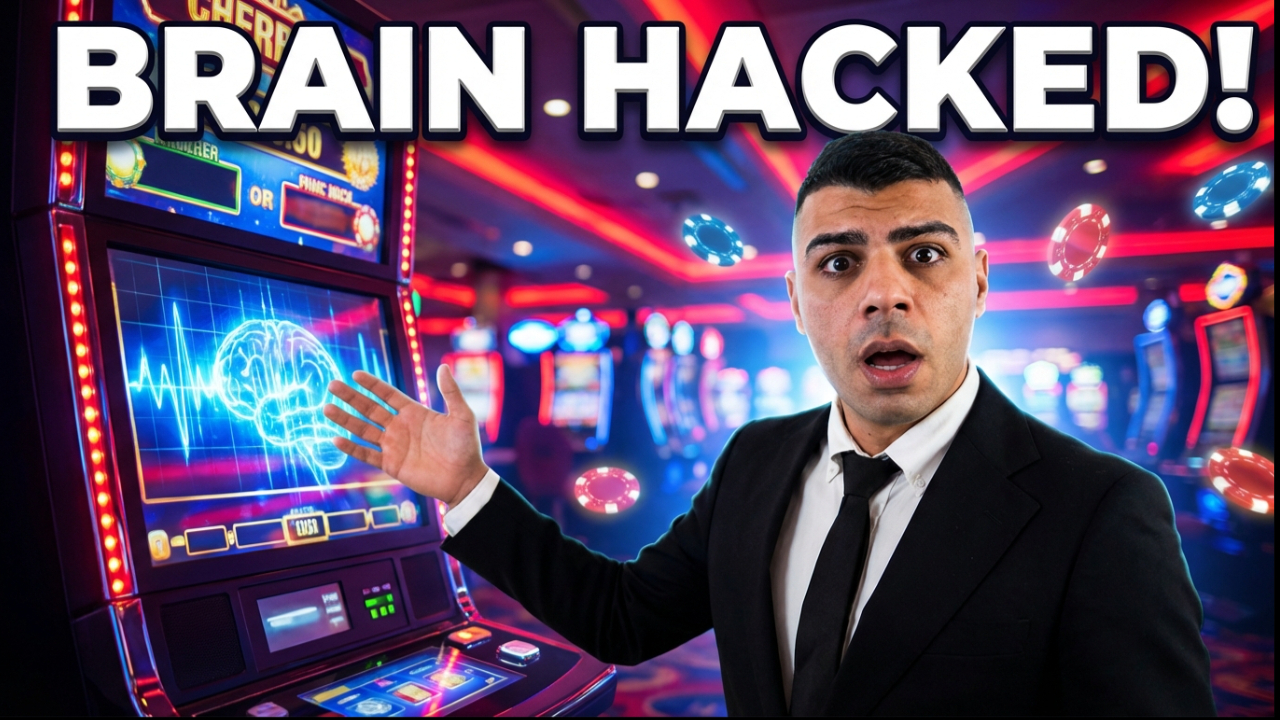
If the casino floor is the battlefield, the slot machine is the main weapon. These aren’t simple games of chance. Modern slots are sophisticated psychological instruments, engineered with a deep understanding of behavioral science to be as addictive as possible. They account for the vast majority of a casino’s profit for a reason: every single element is designed to hack your brain’s reward system.
The core principle behind their addictiveness is called a “variable ratio reinforcement schedule.” It sounds complex, but you’re already familiar with it. It’s the same thing that makes checking social media so compulsive. You know a reward—a ‘like’, a message, or in this case, a win—is coming, but you don’t know *when*. This unpredictability is what makes it so powerful. The brain finds random rewards far more compelling than predictable ones. This system triggers a strong dopamine response, creating a powerful craving to keep going. The small, unpredictable wins on a slot machine work exactly like this, creating an itch that can only be scratched by one more spin.
But the real genius of modern slot design is its ability to blur the line between winning and losing. One of the most deceptive tricks is the “near-miss” effect. Programmers can make the reels frequently show almost-winning combinations—like two jackpot symbols on the line, and the third one stopping just above or below it. You consciously know this is a loss. But studies show that to your brain’s reward system, a near-miss feels almost identical to an actual win. It triggers a similar rush of excitement and dopamine, creating the frustrating feeling that you’re “getting close” and that a real win is just around the corner. This pushes you to keep playing, to “fix” the miss.
Even more insidious is the concept of “losses disguised as wins,” or LDWs. On a modern multi-line slot, you might bet a dollar. On that spin, you might “win” fifty cents. The machine goes wild—lights flash, music plays—tricking your brain into feeling like you just had a victory. But you haven’t. You bet a dollar and got fifty cents back; you lost fifty cents. These LDWs are incredibly effective because the celebratory feedback overrides the rational financial reality. Studies have shown this causes players to seriously overestimate how often they’re winning, encouraging them to play on, even during a long losing streak.
These mechanics are wrapped in an overwhelming sensory package. The machine themes are often based on popular TV shows or movies, creating a sense of familiarity that encourages you to stay longer. Some designs even give you an “illusion of control” by letting you touch the screen to choose a bonus or stop the reels early. This makes you feel like your choices matter in a game of pure chance, deepening your engagement and making it harder to walk away. It’s all a carefully constructed lie, designed to keep you glued to the screen, feeding money into a system that is mathematically unbeatable.
### CTA
It’s clear these machines are more than just games; they are addiction engines, built on decades of psychological research. If you’re finding this look behind the curtain valuable, and you want to learn more about the hidden systems that shape our world, take a moment to subscribe. We’re dedicated to exposing how these things really work, and your support helps us do just that.
### Section 5: Hijacking Your Brain’s Reward System – The Dopamine Deception
At the heart of every tactic a casino uses is a single biological target: your brain’s dopamine system. Dopamine is a chemical messenger that plays a huge role in how we experience motivation and reward. Gambling doesn’t just entertain you; it actively hijacks this fundamental pathway, turning your own brain chemistry against you. It creates a cycle of craving and reinforcement that is strikingly similar to the one caused by addictive drugs.
For a long time, people thought dopamine was the “pleasure chemical,” released only when you experience something good. But modern neuroscience shows it’s more complicated, and more exploitable. A huge dopamine spike doesn’t just come from the reward itself; it comes from the *anticipation* of the reward. It’s the thrill of the moment *before* the reels stop spinning, *before* the final card is turned over. This is where the casino makes its money: on the power of “maybe.”
The unpredictability of gambling is what really fires up this system. Your brain is a prediction machine. When it predicts a reward and is surprised—either by not getting one (a loss) or getting an unexpected one (a win)—it creates what’s called a “prediction error.” This error makes the dopamine system fire even more intensely the next time, increasing your focus and your craving. This is why near-misses are so powerful. The brain anticipates a win, is surprised by the loss, and the resulting dopamine response makes you want to try again immediately to resolve that uncertainty. The system is built not on the joy of winning, but on the frustrating, dopamine-fueled desire to see what happens next.
As you keep gambling, your brain starts to adapt. The constant flood of dopamine begins to desensitize your reward pathways. The same small bet that once gave you a thrill no longer does the trick. To get that same rush, you have to raise the stakes—betting more money or playing for longer. This is the process of building tolerance, a hallmark of addiction. Compulsive gamblers aren’t necessarily chasing a win anymore; they’re chasing that initial feeling, a high that gets harder and harder to reach.
This can lead to the “machine zone,” that trance-like state where a player becomes completely absorbed in the game. In this state, logical decision-making, handled by your prefrontal cortex, starts to go offline. Brain activity shifts to more primitive reward circuits, which become hyper-responsive to gambling cues. Time, money, and responsibilities all fade away. The only thing that matters is the loop: bet, anticipate, resolve. The casino’s sensory overload—the lights and sounds—is specifically designed to get you into this state and keep you there.
The addiction is solidified by the fact that gambling is a behavioral addiction. There’s nothing to “take away.” As long as someone has access to money and an opportunity to bet, the temptation is there. What’s more, these brain chemistry changes can be long-lasting. Chronic gambling can eventually lower a person’s baseline dopamine levels, making it harder to feel pleasure from normal, everyday activities. This creates a vicious cycle where gambling becomes one of the only ways to feel good, reinforcing the compulsion to play despite the devastating consequences.
### Section 6: Exploiting Your Mind’s Flaws – Cognitive Biases
Beyond hacking your brain chemistry, casinos are masters at exploiting the built-in glitches in our thinking. These glitches, known as cognitive biases, are mental shortcuts our brains use to make quick judgments. But in the casino’s engineered environment, these shortcuts lead us directly into financial traps.
One of the most famous is the **Gambler’s Fallacy**. This is the mistaken belief that past events influence future random outcomes. In simple terms, it’s that gut feeling that you’re “due” for a win. You see this everywhere in a casino. Look at the digital displays next to a roulette wheel showing the last 20 results. That information is completely useless—each spin is an independent, random event. But the casino displays it because they know it feeds the fallacy. A player sees a long streak of “red” and thinks, “Black has to come up soon!” They increase their bets, convinced they’ve found a pattern in the randomness, when the odds haven’t changed at all.
Closely related is the **Illusion of Control**. This is our tendency to overestimate our ability to influence events that are pure chance. Casinos design games to give you a feeling of skill, even when none exists. When you blow on the dice and throw them yourself in a game of craps, or when you choose which icon to press for a slot machine bonus, you feel like your actions matter. This false sense of empowerment is intoxicating and keeps you engaged, believing your “strategy” will eventually pay off.
Another powerful bias is the **Sunk Cost Fallacy**. This is our tendency to stick with something once we’ve invested time, effort, or money into it. We don’t want to feel like our previous investment was a waste. In a casino, this is called “chasing your losses.” After losing a lot of money, the rational thing to do is walk away. But the Sunk Cost Fallacy whispers, “You’ve already lost so much, you can’t stop now. You have to win it back.” The casino environment, with its near-misses and losses disguised as wins, constantly reinforces the idea that you’re just one spin away from getting it all back.
Finally, casinos leverage **Social Proof**, our natural instinct to assume that what other people are doing is the correct behavior. This is why jackpot wins are such a public show. When someone hits a big win, the machine erupts with sirens and flashing lights. A crowd gathers. This whole performance isn’t just for the winner; it’s for everyone else on the floor. It’s a giant advertisement screaming, “See? It’s possible! They won, and you could be next!” This vivid, public display of a rare event makes it seem much more common than it really is, fueling the hope that keeps everyone else playing.
By understanding these biases, the casino turns your own mind into its greatest ally. You’re not just playing against the odds; you’re playing against the predictable flaws in human thinking.
### Conclusion
So what’s the takeaway? From the moment you walk into a casino, you’re stepping into a carefully crafted psychological arena. The building itself is a maze designed to confuse you and erase time. The air is filled with a symphony of lights, sounds, and scents, all tuned to manipulate your mood. The very idea of money is abstracted away with chips and credits, making it easier to let go of.
We’ve exposed how the slot machine isn’t a game of chance but an instrument of addiction, built on reward schedules that create powerful, compulsive habits. It deceives you with near-misses that feel like progress and losses that are disguised as wins, keeping you spinning even as your money disappears.
We’ve seen how these tactics hijack your brain’s dopamine system, creating a cycle of craving that mirrors substance addiction. And we’ve seen how casinos expertly exploit our own cognitive biases—the Gambler’s Fallacy, the Illusion of Control, and the Sunk Cost Fallacy—turning our mental shortcuts against us.
The unavoidable truth is that the casino isn’t really in the business of gambling. The house takes no risks; the math is always in their favor. Their real business is selling hope, packaged in an environment engineered to suspend your rational judgment. They have spent billions perfecting the art of keeping you in your seat, chasing a feeling, long after the fun has stopped.
So the next time you hear the siren of a jackpot or feel the thrill of a near-miss, remember what’s happening under the surface. You’re in a sophisticated system designed for one purpose. Because in the long run, the house doesn’t gamble. The house doesn’t hope. The house just wins.
If you or someone you know is struggling with gambling, please know that help is available. Resources and support groups exist to provide guidance and assistance. Acknowledging the power of these psychological systems is the first step toward reclaiming control.