
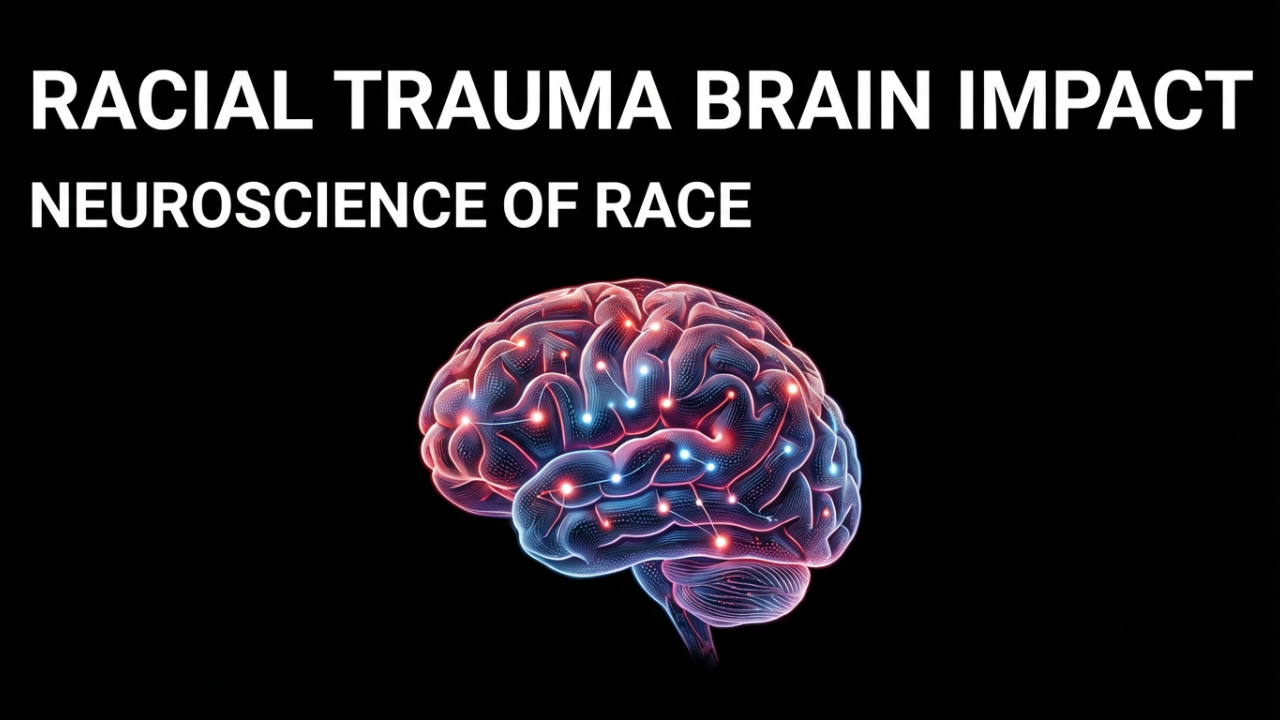
What if the stress from racism could physically rewire the very structure of your brain?
This isn’t a metaphor. It’s not just a turn of phrase. Shocking new neuroscience is showing how discrimination leaves a lasting, measurable impact on our biology, from childhood straight into adulthood. For decades, we’ve talked about racism as a social ill, a political problem, or a moral failing. But what if it’s also a neurological one? What if the constant weight of prejudice, the daily cuts of microaggressions, and systemic barriers are inflicting a hidden wound—a scar you can actually see on a brain scan?
Today, we’re going to explore the groundbreaking science that shows, with chilling clarity, how the experience of racism can alter our neural circuits, accelerate the aging of our cells, and even shape a child’s developing mind. This isn’t a story about politics; it’s a story about biology. It’s about understanding that the pain of discrimination isn’t just “in your head.” It’s physically and demonstrably imprinted upon the brain itself. We’ll uncover how this chronic stress gets biologically embedded, which brain regions are most vulnerable, and what these changes mean for our health, our minds, and even how long we live. But we’ll also look for a path forward, exploring the science of resilience and the hope that comes from truly understanding the problem. This is the neuroscience of injustice.

SON OF LORD
Section 1: The Brain Under Constant Threat
To get how racism harms the brain, we first need to get how our brains handle threats. Every one of us is equipped with an ancient survival system, often called the “fight-or-flight” response. Imagine you’re walking through a forest and a bear suddenly appears. Instantly, without you even thinking, a biological cascade kicks off. A tiny, almond-shaped region in your brain called the amygdala—your brain’s threat detector—screams “DANGER!”
This alarm blasts through your brain and body. Your adrenal glands flood your system with stress hormones like cortisol and adrenaline. Your heart pounds. You breathe faster. Your senses sharpen. In that moment, your body is primed to either fight the bear or run for your life. Meanwhile, your prefrontal cortex, the logical “CEO” of your brain, takes a temporary backseat. This is no time for careful deliberation; it’s a time for pure instinct. Once the bear is gone, your body is supposed to calm down. Stress hormones fade, your heart rate returns to normal, and the prefrontal cortex comes back online to make sense of what just happened.
This system is an evolutionary masterpiece, designed for short-term threats. But what happens when the threat isn’t a bear in the woods? What if the threat is chronic, pervasive, and unpredictable? What happens when the “bear” is the constant, grinding stress of racial discrimination? The experience of racism—an overt slur, being passed over for a promotion, the anxiety of being followed in a store—activates this exact same stress response. The problem is, for millions, this threat doesn’t just go away. It’s a low-humming, constant presence.
This leads to a state of chronic stress. The alarm system designed to save you never fully shuts off. Your body is perpetually marinating in stress hormones. This state is known as high allostatic load—the cumulative wear and tear on your body from being chronically stressed. Think of it like a faulty smoke detector. If it goes off during a fire, it’s a lifesaver. But if it beeps constantly, day in and day out, it stops being a helpful tool and becomes a source of debilitating stress. You can’t think clearly, you can’t rest, and eventually, the constant noise starts to damage your health.
This is what happens to the brain under the weight of racism. The amygdala, the brain’s threat detector, becomes persistently overactive. It learns to see potential threats everywhere, because experience has taught it that threats can come at any time. This hypervigilance is exhausting. It means the body and mind are perpetually braced for impact, unable to reach a state of true rest. This sustained activation is the foundational mechanism through which racism begins to leave its physical mark on the brain. It isn’t a psychological failing; it’s a predictable biological response to an unrelenting environmental threat.
Section 2: The Neurological Scars: How Racism Rewires Brain Connectivity
The long-term activation of the brain’s threat system does more than just make you feel stressed; it can physically reshape the intricate communication networks inside your brain. Neuroimaging research is now mapping these changes, providing stunning visual confirmation of what people have described for generations: that racism gets under the skin and into the brain.
A groundbreaking study focused on a group of Black women, asking them to report their experiences with racial discrimination. Researchers then used advanced MRI to look at how different parts of their brains were talking to each other. What they found was a powerful neurological signature of racism. The more discrimination a woman reported, the greater the functional connectivity between two specific brain regions: the locus coeruleus and the precuneus.
So, what does that mean? The locus coeruleus is a critical hub for initiating the body’s stress and panic response. The precuneus is deeply involved in self-reflection and memory. A stronger connection between them suggests the brain has created a well-worn highway between feeling stressed and thinking about oneself and one’s past experiences.
This heightened connectivity is the neurological basis for rumination—getting stuck in a loop of replaying negative events over and over. Instead of the stress response turning off, the brain keeps the experience alive, endlessly processing the threat and the emotional pain. This pattern is hauntingly similar to what neuroscientists see in brains of individuals with post-traumatic stress disorder (PTSD), where the threat-detection system is stuck in the “on” position.
And the impact may not stop there. Research links discrimination to changes in the brain’s physical structure. Studies have found that experiences of racial discrimination are associated with changes in white matter structure—the brain’s communication highways. Research has found lower integrity in critical pathways like the corpus callosum, which connects the brain’s two hemispheres, and the cingulum bundle. This is like having static on the line or a slow internet connection between crucial parts of your brain. This breakdown in communication can increase the risk for a host of mental health conditions. The neurological scars of racism aren’t just feelings; they are measurable changes in the very fabric of the brain, with consequences that can last a lifetime.
Section 3: The Toll on the Developing Brain: Racism’s Impact from Childhood
An adult’s brain is resilient but also fully formed. A child’s brain, however, is a construction site. During childhood and adolescence, the brain is exquisitely sensitive to the environment, rapidly forming and pruning connections in response to experiences. This is a window of incredible opportunity, but also profound vulnerability. And it’s here that the effects of racism can be especially devastating.
A landmark study, breathtaking in its scale, provided a stark look at this reality. Researchers analyzed MRI brain scans of over 9,000 children aged 9 and 10. When they compared the brains of Black children to white children, they found a disturbing pattern: on average, Black children displayed lower gray matter volumes in regions critical for healthy development. These weren’t random areas; they were the very regions most impacted by stress: the amygdala (threat detector), the hippocampus (memory and learning), and the prefrontal cortex (the brain’s executive in charge of decision-making and emotional regulation).
Now, it’s essential to be really clear about what this means—and what it *doesn’t* mean. For over a century, racist pseudoscience has tried to claim inherent biological differences in the brains of different racial groups. This study powerfully refutes that dangerous lie. The researchers were crystal clear: the differences they observed were not due to race. They were due to racism. The single most significant factor was the children’s exposure to adversity.
When scientists dug into the data, they found the Black children were disproportionately exposed to stressors rooted in structural racism: higher rates of poverty, neighborhood disadvantage, family conflict, and traumatic events. Household income was one of the most common predictors of these differences in brain volume. The study’s conclusion was unequivocal, providing “substantial evidence of the effects structural racism can have on a child’s developing brain.”
Think about the profound implications. A child growing up in a high-stress environment shaped by systemic inequity is having their brain’s very architecture altered. Lower gray matter volume in these areas can set the stage for anxiety disorders and challenges with focus, impulse control, and emotional regulation—the very skills needed to succeed in school and in life. These aren’t personal failings; they’re the neurobiological consequences of a childhood spent in the toxic stress of an unequal society. As lead author Dr. Nathaniel G. Harnett states, these disparities aren’t inevitable; they result from differential exposure to adversity, a finding that explicitly contradicts pseudoscientific claims. The tragedy is that this is a wound inflicted during a person’s most formative years, a neurological burden a child is forced to carry into their future.
Section 4: The Cellular Footprint: How Racism Accelerates Aging
The impact of racism doesn’t stop at brain structure. The chronic stress it creates seeps deeper, past the neural circuits and into the core of our biology: our DNA. Science is now showing that discrimination can accelerate the fundamental process of aging at a cellular level, making people biologically older than their calendar years.
This process works through something called epigenetics. If your DNA is the hardware of a computer, epigenetics is the software. It’s a layer of chemical marks that tell your genes when to turn on and off. These marks don’t change your genes, but they dramatically change how your genes are expressed. And crucially, these instructions can be altered by your experiences—including stress.
A powerful study published in 2023 brought this into sharp focus. Researchers looked at a group of Black women, measured their experiences with racial discrimination, and then analyzed their “epigenetic clocks.” These are sophisticated tests that calculate a person’s biological age. The results were staggering. Women who reported higher levels of racism showed significant acceleration of their epigenetic clocks. In other words, the stress of racism was literally making their cells age faster.
But the most compelling part was how the research connected this cellular aging back to the brain. The scientists found a direct link between the brain connectivity patterns we discussed earlier and this accelerated aging. Remember the heightened connection between the locus coeruleus (stress response) and the precuneus (self-reflection)? The study found that greater connectivity in this exact pathway was associated with faster epigenetic age acceleration.
This is a profound finding. It suggests a clear biological pathway: racism strengthens a brain circuit that keeps a person replaying threatening experiences. This sustained stress then sends signals that alter the epigenetic software, speeding up the aging process. As one researcher bluntly put it, the mental space that racist experiences occupy has a cost that can shorten lifespan.
The health implications of being biologically older are enormous. A higher epigenetic age is a strong predictor of vulnerability to age-related diseases like heart disease, diabetes, and cognitive decline. It helps explain at a molecular level why communities facing systemic discrimination also face stark disparities in health and life expectancy. The social injustice becomes written into the code of our cells. The feeling of being worn down isn’t just a feeling. It’s a biological reality—a process of accelerated decay driven by the chronic stress of an unjust world.
Section 5: The Memory of Trauma: Impaired Cognition and Emotional Dysregulation
Chronic stress acts like a corrosive acid on the parts of the brain responsible for memory and emotion. The constant hyperarousal and flood of stress hormones take a particular toll on the hippocampus and the amygdala, two partners in how we learn, remember, and feel. The result is a cascade of cognitive and emotional consequences that can make daily life profoundly difficult.
The hippocampus is the brain’s librarian. It forms and organizes new memories. It also helps contextualize them, helping you understand when a threat is real versus just a memory. The amygdala, our fear center, tags memories with emotional significance. Under normal conditions, they work in balance. But under the chronic stress of racism, that balance shatters. The cumulative “wear and tear”—the allostatic load—directly damages the hippocampus while making the amygdala even more sensitive.
What does this look like in real life? Damage to the hippocampus can impair memory and make it harder to learn. More insidiously, it can disrupt your ability to contextualize memories. A healthy hippocampus helps you recognize that a loud bang is a car backfiring, not a gunshot. When the hippocampus is compromised, memories of traumatic racist experiences don’t get filed away as “past.” They remain raw and easily triggered.
These emotionally charged memories get embedded in the nervous system. A seemingly minor event in the present—a dismissive tone, a passing glance—can trigger the full-blown physiological reaction of a past trauma. Your heart pounds, palms sweat, and a wave of fear or anger washes over you. Your body reacts as if the original trauma is happening all over again, because the part of your brain that should be saying “this is just a memory” is impaired.
This creates a vicious cycle. Because the brain’s threat detection is on high alert and its memory system is weakened, it can lead to a constant state of hyperarousal. This makes it incredibly difficult to feel safe. This state of chronic activation also impairs the prefrontal cortex, the part of the brain that helps regulate our emotional responses. The ability to calm down and think logically is diminished.
The result is emotional dysregulation. People may find themselves reacting with an intensity that feels out of proportion, not because they are “oversensitive,” but because their neurological systems are primed for threat and their regulatory capacity is exhausted. The trauma of racism rewires the brain to be hyper-vigilant, which leads to more stress, which further damages the very brain regions needed to cope with that stress.

This book is scientific documentary of the Kingdom of God.
Section 6: The Link to PTSD: When Stress Becomes Trauma
For a long time, PTSD was primarily associated with soldiers returning from war or survivors of a single, catastrophic event. But a growing body of research makes it clear that the chronic and repeated nature of racial discrimination can be a potent form of trauma, producing brain changes that mirror those seen in classic PTSD.
The connection starts in childhood. As we saw, adversity from structural racism alters the development of the amygdala, hippocampus, and prefrontal cortex in children. These are the exact same three brain regions most implicated in PTSD. A brain shaped by early life adversity is a brain more vulnerable to future trauma. The research on children confirmed this with devastating clarity: the Black children in the study who had these brain alterations also showed significantly greater PTSD symptom severity.
This suggests that early exposure to racism-related stressors wires a young person’s brain for threat. Their stress regulation systems are calibrated to a world that feels hostile. Then, when they encounter additional traumatic experiences later in life, their brains are already predisposed to developing the full-blown symptoms of PTSD.
The brain of someone experiencing racial trauma often looks just like the brain of someone with PTSD. The amygdala is overactive, constantly scanning for danger. The hippocampus is impaired, struggling to contextualize memories. The prefrontal cortex is underactive, weakening the brain’s ability to put the brakes on fear and anxiety. This isn’t an analogy; it’s a neurological parallel.
The very nature of racism makes it a unique and insidious form of trauma. Unlike a single event, it is ongoing. It can be ambiguous, as with microaggressions, leaving a person to question their own perceptions. And it is institutional, meaning the harm can come from an entire system, leading to profound feelings of powerlessness.
Recognizing racism as a legitimate cause of trauma is a critical step. It validates the immense burden millions of people carry. It reframes symptoms like hypervigilance, anxiety, and intrusive thoughts not as personal weaknesses, but as the brain’s understandable adaptation to an unceasing threat. The science tells us the invisible wounds of racism are, in fact, visible in the brain, and the language of trauma is not just appropriate, but scientifically accurate.
Section 7: Hope and The Path Forward: Solutions and Resilience
After exploring the deep and damaging neurological impact of racism, it can be easy to feel despair. But to stop here would be to tell only half the story. Alongside the science of how racism harms the brain, there’s an emerging science of how we can heal and build resilience. This offers a path forward, rooted in a clear-eyed understanding of the problem.
First, the ultimate solution isn’t for individuals to just get better at coping. The ultimate solution is to dismantle the source of the stress: structural racism. The research is unambiguous: the brain differences in children are a direct result of adversity created by systemic inequities. Therefore, any meaningful solution must involve systemic change—policies that address poverty, housing inequality, and educational disparities.
However, while we fight for that larger transformation, there are powerful, evidence-based strategies that can protect the brain and foster healing. The research itself points to one of the most powerful buffers against toxic stress: social support. Studies have found that strong social networks can help mitigate the impact of discrimination on the acceleration of epigenetic aging. This is a profound biological confirmation of a timeless human truth: we are stronger together.
Connection, community, and a shared sense of identity can be potent antidotes to the isolating effects of racism. Being in spaces where your experiences are understood and validated reduces the mental load of constantly defending your reality. It helps calm the brain’s overactive threat-detection systems. Collective action can also be a form of healing, transforming powerlessness into agency and purpose.
At the individual level, culturally competent and trauma-informed therapies are vital. Practices like mindfulness and meditation can help strengthen the prefrontal cortex’s ability to regulate the amygdala, effectively serving as physical therapy for the brain’s emotional circuits.
Perhaps most important is the power of validation. For generations, people of color have been told their reactions to racism were exaggerated or “all in their head.” This science is a definitive rebuttal to that gaslighting. It provides objective, biological proof that the exhaustion, anxiety, and trauma are real physiological responses to a real threat. This validation is itself a form of liberation. It allows for self-compassion, shifting the narrative from “What’s wrong with me?” to “This is what has happened to me, and this is my brain’s natural response.”
This science is a tool. It’s a tool for advocates demanding change, armed with neurological evidence of the harm being done. It’s a tool for healthcare providers to better treat the consequences of discrimination. And it’s a tool for individuals to understand their own bodies and minds, seek support, and know that their struggle is not a sign of weakness, but a testament to what they have endured.
Countless organizations are on the ground doing the vital work of fighting for racial justice and promoting mental health equity. Take a moment to look up and support these organizations in your area. Their work is a direct intervention against the harms we’ve discussed today.
Finally, this is a complex and personal topic. I encourage you to share your thoughts and reflections in the comments below. Let’s create a space for a respectful and constructive conversation, so we can all learn from one another.
Conclusion
So, where do we go from here? We’ve seen that racism is not a fleeting social interaction. It is a chronic environmental stressor that, when relentless, leaves a lasting mark. It rewires neural circuits, getting the brain stuck in a painful loop of rumination and hypervigilance. It inflicts damage on the developing minds of children by altering their very architecture. And it seeps into our biology at the most fundamental level, accelerating the aging of our cells.
The central, undeniable message from all of this science is this: racism is not just an abstract social or political concept. It is a neurobiological force with measurable, physical consequences for the brain and the body. It is a public health crisis. But in this difficult truth, there is also a powerful call to action. By understanding the science, we are no longer talking about hypotheticals; we are talking about tangible harm. This understanding validates the lived experience of millions, provides a new language for advocacy, and illuminates a path toward healing. It reminds us that fighting for a world free from racism is not just a fight for ideals. It’s a fight for the health of our brains, the length of our lives, and the future of our children.