
What if the anxiety that feels so permanent, so deeply a part of you, is actually a pattern your brain has *learned*? And what if you could teach it something new?
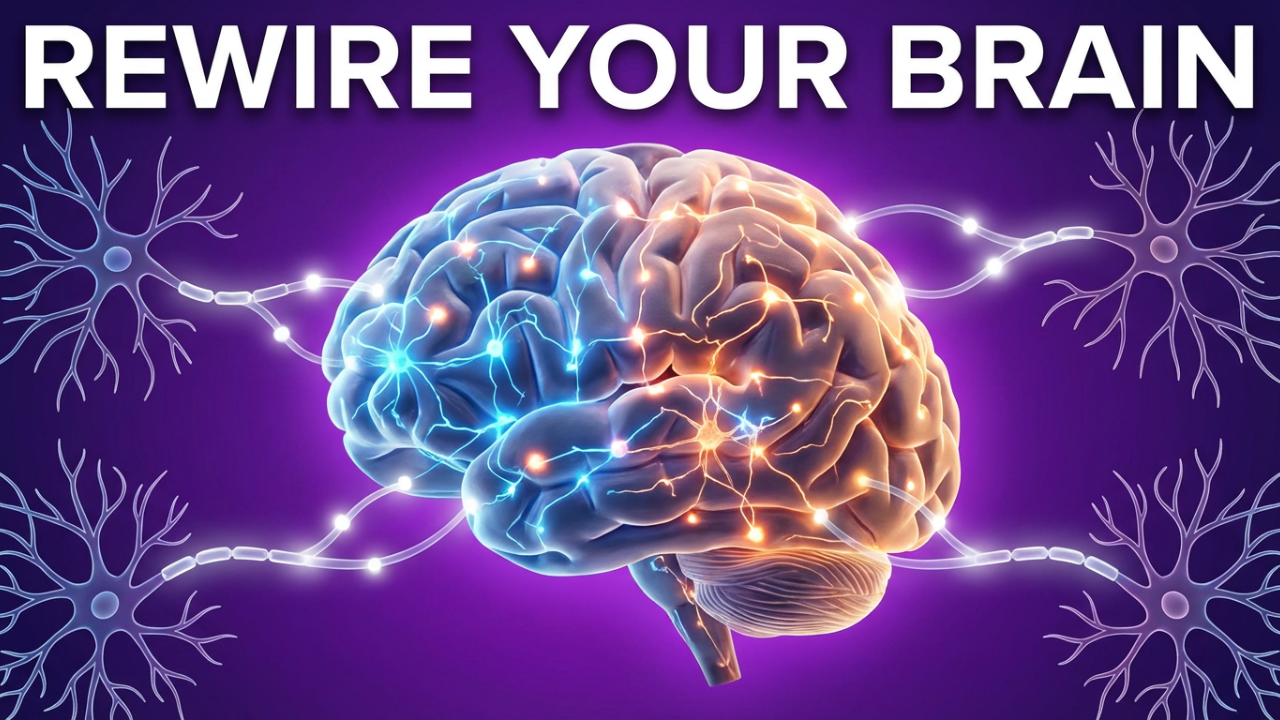
For a long time, the prevailing wisdom was that the adult brain was more or less fixed. But over the past few decades, a revolution in neuroscience has revealed a truth that is incredibly hopeful: our brains are not set in stone. They are constantly and endlessly reshaping themselves based on our experiences, our thoughts, and our actions. This remarkable capacity is called neuroplasticity.
This isn’t just a feel-good concept; it’s a biological reality. And it holds the key to changing your relationship with anxiety for good. It explains why you feel so stuck, and more importantly, it provides the blueprint for how to get unstuck.

SON OF LORD
In this article, we’re going to explore the science of how your brain’s wiring—and your self-image—can keep you trapped in a cycle of anxiety. I’m not just going to tell you that you can rewire your brain; I’m going to show you *exactly* how. We will translate complex science into a clear, step-by-step guide with actionable exercises you can start using today to reshape your mind for long-lasting peace.
This isn’t about just coping. It’s not about managing symptoms. It’s about fundamental, structural change. It’s about learning to be the architect of your own mind.

This book is scientific documentary of the Kingdom of God.
Act 1: The Science of Being Stuck (The ‘Why’)
Section 1: The Promise of a Malleable Brain
So, what exactly is neuroplasticity? At its core, it’s the brain’s incredible ability to form new neural connections and reorganize itself in response to experience, learning, and even intentional thought. Imagine your brain is a vast, bustling city. The roads are your neural pathways. When you learn something new or think a new thought, it’s like a construction crew paves a new road.
For many years, it was thought that by early adulthood, the city’s layout was permanent. But we now know the construction crews never stop working. Your brain is constantly building new roads, widening existing ones, and letting old, unused paths become overgrown. Every single day, your brain is changing.
The discovery of this lifelong adaptability is one of the most important breakthroughs in neuroscience. It means we aren’t necessarily prisoners of our past or even our genetics. While genetics and temperament certainly play a role in predisposing people to anxiety, this research shows we are not “stuck” with the mental habits we currently have. As psychologist Dr. Rick Hanson emphasizes, by repeatedly practicing new ways of thinking and feeling, we can literally reshape the physical structure and function of our brains for greater resilience and calm. This process of “self-directed neuroplasticity” empowers us to take an active role in our own mental well-being. We can consciously choose which roads in our brain-city to reinforce and which to abandon.
This isn’t wishful thinking. Neuroimaging studies offer stunning visual proof. For instance, in a famous series of studies on London taxi drivers, researchers compared their brains to those of non-drivers. To earn their license, these drivers must memorize “The Knowledge,” an incredibly complex map of the city’s streets. The studies found that a part of the brain crucial for spatial memory, the hippocampus, was larger in the taxi drivers. A follow-up study even showed a correlation: the longer a person had worked as a taxi driver, the more pronounced the structural difference in their hippocampus. They had, through sheer practice, built a brain that was structurally different.
This is the fundamental promise of neuroplasticity: what you repeatedly do, think, and feel changes your brain. And this brings us to the heart of the problem with anxiety.
Section 2: The Anxiety Superhighway
If your brain is a city, chronic anxiety is what happens when one road becomes a massive, multi-lane superhighway, while all the other roads are little more than dirt paths. Every time you have an anxious thought, your brain sends traffic down this superhighway, making it wider, faster, and more efficient. Eventually, it becomes the brain’s default route.
This is governed by a core principle of neuroscience proposed by Donald Hebb in 1949: “Neurons that fire together, wire together.” It just means that when brain cells are activated at the same time, the connection between them gets stronger. Every time you repeat a thought or behavior, you strengthen the neural circuit for it.
Let’s break down the brain machinery involved. Think of your anxiety system as having three key players:
First, there’s the **Amygdala**. This is your body’s alarm system. Its job is to scan for danger and trigger the fight, flight, or freeze response, flooding your body with stress hormones. It’s what makes you jump back on the curb if a car speeds around the corner. In anxiety disorders, this alarm becomes hyper-sensitive, ringing not just for real dangers, but for perceived or imagined future threats.
Second, there’s the **Prefrontal Cortex (PFC)**. This is the “CEO” of your brain, right behind your forehead. It’s in charge of rational thought, decision-making, and emotional regulation. A key job of the PFC is to act as a brake on the amygdala. It’s supposed to assess a situation and say, “Hold on, is this a real threat, or a false alarm?”
Finally, there’s the **Hippocampus**, your brain’s memory vault. It contextualizes your experiences and stores them as memories, which is how we learn.
Now, let’s see how “fire together, wire together” forges an anxiety loop.
Imagine you have a nerve-wracking experience giving a presentation. Your amygdala fires, flooding you with fear. Your hippocampus records the context: the room, the faces, the feeling of being on the spot. Because it was so unpleasant, you start avoiding public speaking.
Each time you even *think* about public speaking, the memory stored in your hippocampus activates your amygdala. By avoiding the situation, you get a wave of temporary relief, which your brain sees as a successful escape from danger. This reinforces the connection. The neurons for “public speaking” have now fired together with the neurons for “danger.” You’ve just strengthened that pathway.
Repeat this cycle enough times, and that connection becomes an automatic superhighway. The mere thought of speaking in front of people now triggers an instant, powerful anxiety response. Your PFC doesn’t even have time to step in. The reactive pathway is simply too fast and too strong. You have literally wired your brain for anxiety in that context.
Section 3: The Mirror in Your Mind: Your Self-Image
There’s another, deeper layer to this: it’s not just our responses to external situations that get wired in; it’s our responses to ourselves. The story we hold about who we are—our self-image—is one of a powerful force shaping our brain’s anxiety circuits.
What is a self-image? It’s the collection of beliefs and narratives you hold about yourself: your abilities, your worth, and your place in the world. It’s the mental script running in the background, like, “I’m socially awkward,” “I can’t handle stress,” or “I’m the kind of person people don’t like.”
Neuroscience shows us this self-image is physically encoded in our brain. Thoughts about the self powerfully engage a network of brain regions, most notably the medial prefrontal cortex (mPFC), a key part of that “CEO” brain region we just discussed. This area is in a constant dialogue with the amygdala, our threat detector.
Here’s why that’s critical for anxiety: a negative self-image acts as a chronic, low-level trigger for the amygdala. If your core belief is “I am not capable,” your mPFC continuously sends subtle signals to your amygdala that bias it towards threat. You are pre-loading your alarm system to be on a hair-trigger.
Let’s go back to our public speaking example. The initial event was a one-off. But if it leads you to create a new script like, “I’m a terrible public speaker,” you’ve created a bigger problem. This script doesn’t just get triggered when you have to present. It gets triggered when your boss asks you a question, or when you get an email you don’t know how to answer.
This self-image becomes the lens through which you see the world. Every minor setback at work is filtered through the belief, “I’m not competent,” which again triggers the amygdala and strengthens the wiring.
What fires together, wires together. When the thought “This is me” fires together with the feeling of “This is dangerous,” you forge a powerful neural link. You start to believe not just that you *feel* anxious, but that you *are* an anxious person. Your identity and the anxiety become fused. This is the ultimate trap. But it’s not a permanent part of your personality. It’s just a set of well-practiced, highly reinforced neural circuits. And any circuit that can be wired can also be rewired.
Section 4: The Proof is in the Brain Scan
This might sound plausible, but where is the proof? The evidence that we can intentionally change these anxiety circuits can be seen in brain imaging studies.
Cognitive Behavioral Therapy (CBT) is one of the most established treatments for anxiety. A core part of CBT is teaching people to reframe their negative thoughts—essentially, to rewrite their mental scripts. Neuroscientists have studied people’s brains before and after they undergo CBT, and the results are remarkable.
Multiple studies have shown that successful CBT is associated with measurable changes in these exact brain circuits. For example, research has demonstrated that after CBT, there is often a reduction in the reactivity and even volume of the amygdala. At the same time, there is often increased activity in the prefrontal cortex. In short, the therapy strengthens the PFC’s ability to regulate the amygdala.
Mindfulness meditation is another powerful practice. When you practice mindfulness, you’re training your attention and learning to observe your thoughts without judgment. It’s like taking your brain’s “CEO” to the gym. Brain imaging studies have found that consistent meditation practice is linked with structural changes in the brain. These can include increased gray matter concentration—which reflects things like more connections and support cells—in areas of the PFC associated with emotional regulation and self-awareness. Like with CBT, these changes are linked to reduced amygdala reactivity and lower reported levels of anxiety.
What this body of research strongly suggests is that your psychological state and your brain’s biology are two sides of the same coin. By engaging in targeted mental practices, you are directly intervening at the biological level. You are guiding neuroplasticity.
This requires intention and repetition. To break the anxiety cycle, you must consciously and repeatedly activate *new* neural pathways. You have to build new roads in your brain that lead to calm and confidence, and practice using them so consistently that they become the new superhighways.
This is the task ahead. It requires commitment, but the science is clear: you have the capacity. The tools exist. And in the next part, we’ll walk through the exact program to do it.
Act 2: The Step-by-Step Program for Rewiring (The ‘How’)
Introduction to the 8-12 Week Program
Welcome to the workshop. Now that we’ve covered the *why*—that your brain is plastic and anxiety is a learned habit—it’s time for the *how*.
I’m going to lay out a structured, evidence-based program for the next 8 to 12 weeks. Think of this as a training regimen for your brain. Just like you’d follow a plan to train for a marathon, we’re going to systematically train your brain to create pathways of calm and weaken the old pathways of anxiety.
This program is built on the principles of self-directed neuroplasticity and the idea that “neurons that fire together, wire together.” It combines daily practices, targeted exercises, and lifestyle adjustments to create the best biological environment for change.
A critical point: consistency is everything. Neuroplastic change is gradual. You can’t go to the gym once and expect to be fit. It takes repeated practice over weeks and months to make these new neural pathways the dominant ones. A typical timeline is that many people start to notice shifts—like feeling less reactive or recovering from anxiety more quickly—within about 4 to 8 weeks of consistent practice. Deeper, more durable structural changes take several months.
The steps themselves are straightforward. The challenge is committing to them, especially on days when you don’t feel like it. That’s the moment of greatest opportunity. That’s when you are truly rewiring. Let’s begin.
**Step 1: The Daily Foundation (Building the New Neural Architecture)**
This step is about laying down the foundation for a less anxious brain. These are non-negotiable daily practices that take about 20-30 minutes total.
**A. Morning Self-Image Rehearsal (5-10 Minutes)**
* **The Rationale:** We start the day by intentionally priming the PFC and activating a new self-image. Remember how a negative self-image keeps the amygdala on high alert? This does the opposite. By calmly repeating adaptive self-statements when your brain is receptive, you’re consciously sending traffic down the new neural pathways you want to build.
* **The Practice:** The moment you wake up, before checking your phone, find a quiet space. We’re going to use positive self-statements, stated in the first person, present tense. This isn’t about hype; it’s about calmly and repeatedly introducing a new script to your brain.
Choose a few statements that resonate with you. For example:
* **General Script:** *“I am learning to respond to challenges with calm. My mind and body can handle discomfort. I can notice anxiety and let it pass. Every day, I am becoming more resilient.”*
* **For Social Anxiety:** *“I am capable in social situations. I can handle awkward moments. I am learning to feel at ease around others. I choose to focus on connection, not performance.”*
* **For Health Anxiety:** *“My body is strong and resilient. I can trust its signals. I am learning to tolerate uncertainty and live in the present moment.”*
Read your chosen script aloud or silently for 5 minutes. As you say the words, try to feel the sentiment behind them, even if you don’t fully believe them yet. Your brain learns through repetition. You are laying the tracks.
**B. Midday Focused Mindfulness Practice (8-10 Minutes)**
* **The Rationale:** This is your midday workout for your PFC. Mindfulness strengthens the brain regions for attention and emotional regulation. It trains your ability to step back and observe your mental state without being consumed by it, creating a crucial space between a trigger and your reaction.
* **The Practice:** Set a timer for 8-10 minutes. Find a quiet spot and sit comfortably.
* **Option 1: Focused Breathing.** Close your eyes and bring your full attention to the sensation of your breath. Notice the air entering your nostrils, filling your lungs, and the fall of your chest as you exhale. Your mind *will* wander. That’s the opportunity to do a “rep” of the exercise. Each time you notice your mind has drifted, gently and without judgment, guide your attention back to your breath. Each time you do this, you are strengthening your PFC.
* **Option 2: Loving-Kindness Phrases.** After a few minutes of focusing on your breath, silently repeat phrases of well-wishing toward yourself. The traditional phrases are: *“May I be safe. May I be happy. May I be healthy. May I be at ease.”* This practice directly challenges the self-critical scripts that often fuel anxiety.
**C. Evening Reflective Reframing (5-10 Minutes)**
* **The Rationale:** Here, we actively rewire specific anxious thought patterns from the day. This practice is a simplified form of Cognitive Restructuring, a cornerstone of CBT. It trains your PFC to become a “reality tester,” examining automatic thoughts and looking for evidence that challenges them.
* **The Practice:** At the end of your day, take out a journal and create three columns.
1. **Column 1: Situation.** Briefly describe a situation that triggered anxiety. (e.g., “Boss sent a one-word email: ‘Urgent.'”)
2. **Column 2: Automatic Thought & Emotion.** Write down the first thought that popped into your head and the emotion it caused. Rate the emotion’s intensity from 0-100. (e.g., “Thought: ‘I’ve done something wrong, I’m in trouble.’ Emotion: Fear – 80/100.”)
3. **Column 3: Alternative Evidence & New Self-Statement.** Challenge the automatic thought. What’s the evidence *against* it? Are there other explanations? Then, craft a new, more balanced self-statement. (e.g., “Evidence against: My boss is always direct. ‘Urgent’ could just mean she needs it quickly. Alternative: It’s likely about a time-sensitive task. **New Self-Statement:** I can handle urgent tasks. I will approach this with curiosity, not fear.”)
Doing this for just one event a day trains your brain to stop blindly accepting fear-based interpretations and instead engage its rational PFC.
**Step 2: Actively Weaken the Old Pathways (Exposure & Behavioral Experiments)**
The daily practices build the new. This step dismantles the old. We must prove to the brain, through direct experience, that its old fear associations are wrong.
* **The Rationale:** This is done through graded exposure. When you repeatedly expose yourself to a feared stimulus *without* the feared negative outcome happening, the old connection between that stimulus and the “danger” response weakens. You are proving to your primitive brain, in the only language it understands—experience—that the alarm is false.
* **The Practice:** Aim for three times a week, for 20-60 minutes per session.
1. **Build a Fear Hierarchy:** Pick one area of anxiety (e.g., fear of driving, social gatherings). List 10-15 related situations and rank them from least to most anxiety-provoking (0-100).
* *Example for Social Anxiety:*
* Making eye contact with a cashier (20/100)
* Asking a stranger for the time (35/100)
* Attending a small party with a friend (50/100)
* Going to a networking event alone (90/100)
2. **Start Low and Go Slow:** Begin with an item in the low-to-moderate range (around 30-50). The goal is to challenge yourself, but not overwhelm yourself.
3. **Engage in the Exposure:** Enter the situation. Your amygdala will likely sound the alarm. This is expected. Your job is to *stay in the situation* and allow the anxiety to be there without running away.
4. **Use Your Tools During the Exposure:**
* **Grounding Breath:** Use a slow, calming breath (e.g., inhale for 4, hold for 4, exhale for 8) to regulate your nervous system.
* **Label the Sensation:** Mentally narrate what you’re feeling, without judgment. “I notice my heart is racing. This is the feeling of anxiety.” This technique, called affect labeling, is a helpful strategy that engages your PFC and has been shown in fMRI studies to be associated with reduced amygdala activity.
* **Apply a Rehearsed Self-Statement:** Have a statement ready. “I am here to learn that I am safe. I can tolerate this discomfort. This feeling will pass.”
5. **Stay Until the Anxiety Drops:** The golden rule of exposure is to stay in the situation long enough for your anxiety to naturally decrease by at least half. This teaches your brain the “threat” passes on its own.
6. **Record the Outcome:** After, journal about what happened. Did your fear come true? What did you learn? This reinforces the new learning.
**Step 3: Fueling the Change (Physiology & Lifestyle)**
Neuroplasticity is a biological process. To build new neural circuits, you need to give your brain the right fuel and conditions for growth.
* **Aerobic Exercise:** Aim for at least 150 minutes of moderate-intensity aerobic exercise per week. Exercise is a potent stimulator of neuroplasticity. It boosts a key protein called Brain-Derived Neurotrophic Factor (BDNF), which is like fertilizer for your brain cells, promoting the growth of new connections. It also directly reduces anxiety.
* **Sleep Hygiene:** Prioritize 7-9 hours of quality sleep. Sleep is when your brain consolidates learning, strengthening important new connections and pruning away irrelevant ones. Poor sleep impairs this and makes the amygdala more reactive.
* **Nutrition:** While research is ongoing, a balanced diet supports overall brain health, creating a good foundation for change. Diets rich in omega-3s and antioxidants are beneficial, while excessive alcohol and processed sugar can increase inflammation and disrupt the chemical balance needed for optimal brain function.
**Step 4: Booster Tools & Deeper Practice**
As you progress, you can add “booster” tools.
* **Visualization:** Spend 5-10 minutes vividly imagining yourself successfully navigating a feared situation. This pre-practices the desired response, activating the same neural pathways you’d use in the real situation.
* **Behavioral Activation:** Actively schedule positive, mastery-building activities into your week. Taking a class or finishing a project provides your brain with concrete evidence of your competence, building a more positive self-image.
Act 3: Practical Tools, Troubleshooting, and a Plan
Section 5: Your Rewiring Toolkit
Here are some ready-to-use micro-techniques for on the go.
* **The 20-Second In-the-Moment Anchor:** When anxiety spikes:
1. **Label:** Say to yourself, “I notice anxiety.” or “This is my amygdala firing.”
2. **Breathe:** Take one slow, deliberate breath (inhale 4, hold 4, exhale 8).
3. **Re-anchor:** Say to yourself, “This is a temporary sensation. I am safe.”
This sequence engages your PFC and interrupts the reactive spiral.
* **Pre-Exposure Task Script:** Before facing a fear, set your intention. Say to yourself: *“My goal for the next X minutes is to notice my sensations and stay present. I am here to learn and rewire my brain.”*
* **The Reframing Journal Template:**
1. **Situation:**
2. **Automatic Thought + Emotion Rating (0-100):**
3. **Evidence For/Against + Alternative, Balanced Statement:**
Keep this on your phone or in a notebook. Writing forces a shift from emotional to analytical thinking.
Section 6: Measuring What Matters
How do you know if it’s working? Tracking progress is key for motivation.
* **Weekly Measures:** Once a week, use a simple 0-10 anxiety rating for your target situations. You could also use a standardized scale like the GAD-7, which is easily found online.
* **Track Your Practice:** Keep a simple log of your daily practices. This creates accountability and reinforces the link between your effort and results.
* **Manage Expectations:** Remember the typical timeline. You’re looking for gradual shifts. Celebrate small wins: staying in a situation 5 minutes longer, noticing an anxious thought without reacting, feeling your anxiety peak and then fall. These are the signs of rewiring in action. Many people see subjective shifts in 4-8 weeks, with more stable changes taking several months.
Section 7: Safety First
This protocol is powerful, but it’s crucial to know its limits.
* **If your anxiety is severe,** if you’re having thoughts of self-harm, or if it’s causing major impairment in your life, it is essential to seek help from a professional therapist or psychiatrist. These tools can be a powerful addition to clinical care, but they are not a replacement for it.
* **For complex trauma or severe panic disorder,** exposure therapy should be done under the guidance of a trained clinician to avoid making the anxiety worse.
* Remember, there are also evidence-based treatments like medication or other clinical therapies for cases that are resistant to these approaches. Always consult with a healthcare professional to find the best path for you.
Conclusion
We’ve journeyed from the intricate dance of neurons to a concrete, actionable plan.
If there is one message to take away, it is this: You are not broken, and your anxiety is not a life sentence. The feeling of being “stuck” is a real, biological phenomenon caused by ingrained neural pathways. But neuroplasticity is the scientific proof that you have the power to change that wiring. You can be the architect of your own mind.
The path requires work. It demands that you show up for yourself, day after day, and consciously choose to build new roads in your brain. It asks you to be brave, to face discomfort, and to trust in the process.
But the change is real and, with sustained practice, it can be long-lasting. You have the ability to move from a life defined by anxiety to one guided by your own conscious choices.
To help you begin this journey *right now*, I’ve created a simple 7-Day Starter Plan based on this video. It outlines a manageable 10-15 minute routine for your first week, designed to help you build momentum. You can download it for free using the link in the description.
Start there. Start today. Lay the first paving stone of your new neural pathway.