
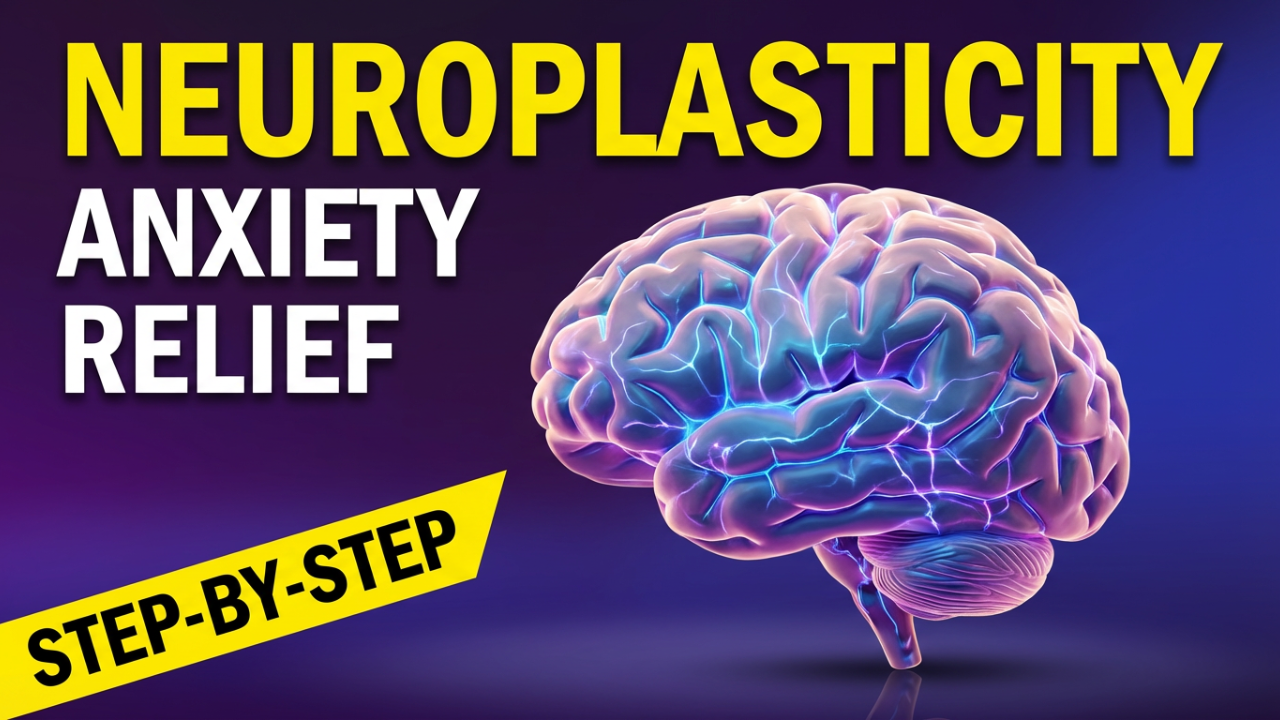
What if you could physically change your brain to reduce anxiety? Not just cope with it or manage it, but actually rewire the anxious circuits that can feel like they’re stuck on a loop? For a long time, we’ve approached anxiety from many angles, including the psychological—as a disorder of thoughts and feelings. But now, incredible new tools like neuroimaging are giving us a window into the anxious brain in action. More importantly, this science shows us how we can use targeted techniques to create positive change. This isn’t science fiction. This is the science of neuroplasticity, and it represents one of the most hopeful and empowering discoveries in modern mental health.
At its core, neuroplasticity simply means that your brain isn’t hardwired. It has a remarkable, lifelong ability to reorganize itself by forming new neural connections in response to your experiences, thoughts, and actions. Every time you learn something new, you’re physically changing your brain. Every time you practice a skill, you’re strengthening specific pathways. And every time you intentionally choose a new response to an old trigger, you’re taking on the role of a neuro-sculptor, actively carving out new pathways for calm and resilience.
In this article, I’m going to give you a step-by-step guide, grounded in neuroscience, to using specific techniques that have been shown to help physically change the brain’s structure and function. We’ll explore the evidence that proves this is possible and break down exactly how you can apply these tools to weaken anxiety’s grip and build a more lasting peace of mind. You have the power to influence your brain. Let’s begin.

(Section 1: The “Why” – Understanding Your Anxious Brain)
Before we can start rewiring, it helps to understand the existing wiring. What’s actually going on inside your brain when you feel that familiar dread, that racing heart, that spiral of worry? With tools like functional magnetic resonance imaging, or fMRI, we can now see the signatures of anxiety in the brain’s activity. What we often see is a brain that has become, through no fault of your own, exceptionally good at detecting and responding to threats.
Think of your brain’s neural pathways like roads. The thoughts and behaviors you repeat most often become neural “superhighways”—they’re wide, fast, and easy to travel down. When you live with chronic anxiety, you’ve inadvertently built a highly efficient superhighway for fear. A trigger happens—a critical email from your boss, a strange noise at night—and your brain instantly defaults to this well-worn path. This is the anxiety cycle.
At the heart of this cycle is a small, almond-shaped structure called the amygdala. The amygdala is your brain’s threat detection system. Its job is to scan for danger and, when it perceives a threat, to sound the alarm, triggering the fight-or-flight response. When a real threat is present, the amygdala is your best friend.
In many anxiety disorders, however, this alarm system becomes hypersensitive. Neuroimaging studies show strong and consistent evidence that for people with anxiety, the amygdala is often hyper-reactive. It’s like a smoke detector that goes off not just for a fire, but every time you make toast. It screams “DANGER!” even when the threat is purely psychological, like the fear of being judged or a worry about the future. While some studies have reported an increased amygdala volume in individuals with anxiety, these findings on structural size are more mixed and can vary across different disorders and studies.
But the amygdala doesn’t act alone. A second key player is the prefrontal cortex, or PFC, located right behind your forehead. This is your executive control center, responsible for rational thinking and emotional regulation. The PFC is the part of your brain that should be able to look at the screaming amygdala and say, “Hey, it’s just toast. No fire here.” It provides the “top-down” regulation that keeps our emotional responses in check.
In the anxious brain, this relationship can become dysfunctional. While the amygdala is in overdrive, the connection and communication from the rational PFC can be weak or inefficient. It’s like the CEO is on a coffee break while a panicked intern is making company-wide decisions. The logical part of your brain struggles to override the primal fear signals, leaving you stuck in a state of high alert. This helps explain why you can’t just “think your way out” of a moment of intense anxiety; the emotional, reactive part of your brain has temporarily hijacked the system.
Other brain regions are involved, too. The anterior cingulate cortex (ACC) and the insula, which help process the emotional and physical sensations of anxiety, can also show hyperactivity. This is why anxiety isn’t just a mental experience; you feel it in your body as a tight chest or a knot in your stomach. And in many people with anxiety, a brain network called the Default Mode Network (DMN), active when our minds wander, can become overactive, contributing to cycles of rumination and worry.
So, to summarize the pattern: the anxious brain often shows a hyper-reactive amygdala (the alarm) and altered communication from the prefrontal cortex (the regulator). This imbalance can create a state of chronic threat detection and emotional dysregulation. This isn’t a personal failing; it’s an observable pattern of neural activity. And because it’s a pattern, it can be influenced. The very mechanism that created these pathways—experience-dependent plasticity—is the same one we can use to build new ones.

(Section 2: The Bridge of Hope – Neuroplasticity is Your Superpower)
This is where the story pivots from problem to promise. For most of history, the adult brain was thought to be more or less fixed. But over the past few decades, a revolutionary concept has overturned that old idea: neuroplasticity.
Neuroplasticity is the brain’s fundamental ability to change its structure and function in response to experience. It’s the biological basis of all learning and memory. Your brain isn’t hardwired; it’s “livewired.” Think of it not as a static blueprint, but as a dynamic landscape of neural connections. Pathways that are used frequently become stronger and more automatic, like a path in a forest turning into a road. Pathways used less often weaken and fade. This is happening every moment of your life.
This is the key to managing anxiety. While chronic stress can nudge the brain in a negative direction—research suggests prolonged stress is linked to volume reduction and synaptic changes in areas like the hippocampus and prefrontal cortex—the reverse is also true. Through targeted practices, we can intentionally drive positive neuroplastic changes. We can actively weaken the “fear highway” and build a new “calm highway.”
How does this work? It involves a few key mechanisms.
First is functional plasticity. This is the brain’s ability to strengthen connections to become more efficient. In our case, it means reinforcing the prefrontal cortex’s ability to regulate the amygdala. When you practice a technique like mindfulness, you’re essentially sending a “calm down” message from your PFC to your amygdala. At first, that message might be weak. But with repetition, the neural pathway between them gets stronger. The PFC gets better and faster at calming the alarm.
Second is structural plasticity. This refers to observable changes in the brain’s physical structure. This is the most stunning part. For example, neuroimaging studies on therapeutic interventions, like Cognitive Behavioral Therapy (CBT), have found that treatment can lead to measurable changes. This research has shown decreased amygdala reactivity after therapy, and some studies even suggest structural changes in brain regions involved in emotional regulation, which correlate directly with a reduction in symptoms. This is concrete evidence: your choices and practices can physically sculpt your brain.
Third, these changes are supported at the molecular level by proteins like Brain-Derived Neurotrophic Factor, or BDNF. It’s often called “Miracle-Gro for the brain.” While its role in the brain is complex, BDNF is a powerful protein that helps promote the growth of new neurons and synapses. Chronic stress has been shown to decrease levels of BDNF, but many of the techniques we’re about to discuss—like exercise and learning new skills—are proven to significantly increase it. When you do these activities, you’re creating the fertile ground necessary for new, healthy neural pathways to grow.
The profound implication is that recovery from anxiety isn’t just about coping with symptoms. It’s about influencing the underlying neural architecture that generates those symptoms. Your brain has simply adapted to your experiences. Now, you can give it new experiences—of safety, regulation, and intentional focus—so it can adapt to a state of calm. This is your biological capacity. You can be an architect of your own brain. Now, let’s pick up the tools.
(Section 3: The “How” – Your Step-by-Step Brain Rewiring Guide)
This is the practical core of our guide. We’ll now walk through evidence-based techniques that leverage neuroplasticity to rewire your brain away from anxiety. Remember, consistency is more important than intensity. The goal is to make these practices a regular part of your life, gently paving new neural roads.
**Step 1: Mindful Awareness – Turning on the Brain’s Observing Self**
* **What It Is:** Mindfulness is paying attention to the present moment—your thoughts, feelings, and bodily sensations—with an attitude of non-judgmental curiosity. It’s not about stopping your thoughts; it’s about changing your relationship to them.
* **How to Do It (The 3-Minute Breathing Space):**
1. **Acknowledge:** For one minute, just ask, “What is my experience right now?” Notice any thoughts, emotions, or physical sensations without trying to fix them.
2. **Gather:** For the second minute, gently shift your full attention to the physical sensation of your breath. Feel the air moving in and out. When your mind wanders (and it will), kindly guide it back to the breath.
3. **Expand:** For the final minute, expand your awareness from your breath to your whole body. Feel your posture, the contact with your chair, the air on your skin. Hold this spacious awareness for a moment before opening your eyes.
* **The Neuroplastic Effect:** Mindfulness is a powerful workout for your prefrontal cortex. When you observe anxious thoughts without getting swept away, you strengthen your PFC’s regulatory circuits. You’re activating the part of your brain that can look at the amygdala’s alarm and say, “I see this fear signal, but I don’t have to react to it.” Brain imaging studies on long-term meditators are linked with increased gray matter in the PFC and insula, and reduced amygdala reactivity. You are literally building a stronger regulator and a less reactive alarm.
**Step 2: Name It to Tame It – The Power of Labeling Emotions**
* **What It Is:** A simple yet profound technique, popularized by neuroscientist Dr. Dan Siegel. It involves just putting words to your emotional experience. When you feel a wave of anxiety, the practice is to simply label it: “This is anxiety,” or “I am feeling fear.”
* **How to Do It:** The next time you feel that surge of anxiety, pause. Take a breath. Internally, say to yourself, “This is anxiety.” Or, “I’m noticing panic in my chest.” You can even get more specific: “I’m having the thought that I will fail.” The key is to be a neutral observer, simply naming what’s happening.
* **The Neuroplastic Effect:** Research on this process, known as affect labeling, shows it can have a powerful effect. The act of labeling an emotion is associated with decreased activity in the amygdala and increased activity in parts of the prefrontal cortex—your brain’s regulatory system. Essentially, putting language to a feeling engages the thinking part of your brain, which in turn helps apply the brakes to the emotional part. This practice, repeated over time, strengthens the pathway that allows your PFC to effectively modulate your amygdala.
**Step 3: Cognitive Reframing – Rewriting Your Anxious Stories**
* **What It Is:** A core technique of Cognitive Behavioral Therapy (CBT), cognitive reframing is the process of identifying, challenging, and changing the unhelpful thought patterns that fuel anxiety. Anxiety isn’t just a feeling; it’s often a story you tell yourself. Reframing helps you write a more balanced one.
* **How to Do It (The 3 Cs):**
1. **Catch It:** Become aware of your automatic negative thoughts. When anxiety spikes, ask: “What story am I telling myself right now?” Maybe it’s a “catastrophizing” story (“This headache is a brain tumor”) or “mind-reading” (“Everyone thought my idea was stupid”). Write it down.
2. **Challenge It:** Look at the thought and question it like a detective. “Where is the evidence for this? Is there evidence *against* it? What’s a more realistic way of looking at this?”
3. **Change It:** Create a new, more balanced thought. It doesn’t have to be blindly positive, just more realistic. For example, “Everyone thought my idea was stupid” could be reframed as, “I don’t know what everyone was thinking. I shared my perspective, and that’s what I can control.”
* **The Neuroplastic Effect:** Cognitive reframing directly targets the communication between the amygdala and PFC. Anxious thoughts act as fuel for the amygdala. By systematically challenging these thoughts, you cut off the fuel supply. With repetition, you weaken the old, negative neural pathways while carving out a new, more balanced one. This enhances the “top-down” control of the PFC over the amygdala. Studies show that CBT leads to decreased amygdala hyperactivity and increased PFC-related activity, literally remodeling the brain for less anxiety.
**Step 4: Focused Attention & Skill Building – Creating New Pathways**
* **What It Is:** Intentionally shifting your attention away from anxious rumination and onto a task that requires focus, especially learning a new skill. This could be anything: learning an instrument, studying a language, knitting, or working on a puzzle.
* **How to Do It:** Schedule 15-30 minutes each day for “focused learning.” Choose something challenging but not overwhelming that you find interesting. During this time, immerse yourself in it. If your mind wanders to anxious thoughts, gently guide it back to the task.
* **The Neuroplastic Effect:** Learning a new, complex skill drives robust neuroplasticity by forcing your brain to create new neural networks. This has a dual effect. First, it strengthens frontal lobe function, improving your brain’s overall executive control. Second, it provides a powerful “competing pathway.” You can’t ruminate and focus on a new guitar chord at the same time. By repeatedly engaging this “focus pathway,” you actively weaken the “rumination pathway.” This process is supercharged by the release of dopamine when you make progress and BDNF, which is stimulated by novel learning.
**Step 5: Gradual Exposure – Un-learning Fear**
* **What It Is:** Exposure is the process of gradually and systematically confronting the things you fear in a safe way. Avoidance is the fuel of anxiety. Every time you avoid something you fear, you tell your amygdala: “See? That was dangerous. We were right to be afraid.” Exposure does the opposite. It teaches your amygdala that what it perceives as a threat is actually safe.
* **How to Do It (The Fear Ladder):**
1. **Identify Your Fear:** Pick one specific fear (e.g., social anxiety, fear of driving).
2. **Build a Ladder:** Create a list of 10-15 situations related to that fear, ranked from least to most scary. For social anxiety, the bottom rung might be “making eye contact with a cashier,” a middle rung “making small talk with a coworker,” and the top “giving a presentation.”
3. **Climb the Ladder:** Start with the easiest step. Do it repeatedly until your anxiety naturally decreases (this is called habituation). Don’t move to the next rung until the current one causes only mild anxiety. The goal is to teach your brain that you are safe even when you feel anxious.
* **The Neuroplastic Effect:** Exposure is a direct way to rewire fear circuits. When you confront a feared stimulus without the bad outcome happening, you create a new “safety memory.” This new memory competes with and inhibits the old fear memory. This process, called fear extinction, involves strengthening pathways from the PFC and hippocampus to the amygdala, which actively suppress the fear response. It’s important to know that this doesn’t erase the old memory, but instead builds a stronger, new response pathway. This is why consistency is key.
**Step 6: Physical Exercise – The Brain’s Reset Button**
* **What It Is:** Regular physical activity, especially aerobic exercise, is one of the most powerful tools for reducing anxiety and promoting brain health.
* **How to Do It:** Aim for 30 minutes of moderate-intensity exercise, like brisk walking, jogging, or swimming, most days of the week. Find something you enjoy so you’ll stick with it. Even a 10-minute walk when you’re feeling anxious can make a difference.
* **The Neuroplastic Effect:** Exercise works on multiple levels. It immediately boosts mood-improving neurotransmitters. Crucially for neuroplasticity, exercise is the single most reliable way to increase the production of BDNF, that “Miracle-Gro” for your brain. This surge in BDNF supports the growth of new neurons and synapses, especially in the hippocampus, a brain region vital for mood regulation that can be negatively affected by chronic stress. By moving your body, you’re creating an internal environment primed for positive brain change.
**Step 7: Prioritize Sleep – The Brain’s Housekeeping Service**
* **What It Is:** Sleep isn’t a luxury; it’s a biological necessity for emotional regulation. During sleep, your brain consolidates memories, clears out metabolic waste, and resets its emotional circuits.
* **How to Do It:** Cultivate good “sleep hygiene.” This means consistency (going to bed and waking up around the same time), a dark, cool, quiet environment, and a wind-down routine. Avoid screens for at least an hour before bed, as the blue light can suppress the sleep hormone melatonin.
* **The Neuroplastic Effect:** Sleep is critical for locking in the new pathways you’re trying to build. It’s when the brain consolidates learning. Crucially, studies have shown that a single night of poor sleep can lead to a 60% amplification in amygdala reactivity. Lack of sleep leaves your emotional brain hyper-reactive. Prioritizing quality sleep is non-negotiable for ensuring your PFC has the resources it needs to regulate your amygdala and keep your emotional responses in balance.
By integrating these seven steps into your life, you’re no longer a passive victim of your anxiety. You are an active participant in your own well-being. You are using your experiences to intentionally sculpt a brain that is structurally and functionally more resilient and calmer.
Conclusion & CTA
We started by asking if you could physically change your brain to stop anxiety. The answer is that you absolutely have the power to influence it. Through the incredible process of neuroplasticity, you can act as the architect of your own mind.
We’ve learned that the anxious brain isn’t a life sentence; it’s often a pattern—a pattern of a hyper-reactive amygdala and less effective regulation from the prefrontal cortex. But patterns can be rewritten. Every time you practice mindful awareness, you strengthen your brain’s regulator. Every time you challenge a negative thought, you weaken a fear circuit. Every time you face a fear, learn a new skill, move your body, and get a good night’s sleep, you are laying down new neural pathways for calm.
This journey isn’t about finding a magic bullet. It’s about the cumulative power of small, consistent actions. By practicing these steps, you aren’t just managing anxiety; you are actively guiding your brain’s remodeling process for a calmer, more resilient state of being. The science is clear, and the path is laid out. The power to change is, and always has been, within you.
If you found this guide helpful, please share it with your friends and family members.