
What if you could flip a switch in your brain? A switch that didn’t just force you to do hard things, but actually made you *crave* them. What if that constant, nagging feeling of procrastination—that guilt that follows you to bed after another day lost to distraction—isn’t just a moral failing? It’s easy to think you’re just lazy, but what if it’s a sign that your brain’s powerful, ancient reward system is working against your modern goals?
This isn’t science fiction, and it’s not just a motivational speech. This is the science of neuroplasticity. It’s the discovery that your brain isn’t a fixed block of concrete, but a dynamic, living network of connections that you can actively remodel. In this article, I’m going to give you a step-by-step protocol—a user manual for your own mind—to take back control and rewire your brain to actually *enjoy* discipline. We’re going to turn the very thing you dread into something your brain starts to seek out. And it all starts by understanding the biggest myth we’ve all been told about what discipline even is.
Section 1: The Great Myth About Discipline
For most of our lives, we’ve been told a myth: that discipline is a personality trait. Something you either *have* or you *don’t*. We look at high achievers, athletes, and successful entrepreneurs and assume they were born with a reserve of superhuman willpower that we just don’t possess. We see their success and our own struggles as proof that we’re on the wrong side of the genetic lottery. That is one of the most disempowering beliefs you can hold, and it misses a huge part of the picture.
While disposition and personality play a role, discipline is also very much a skill. More accurately, it’s a set of trained neural pathways in your brain that anyone can develop.
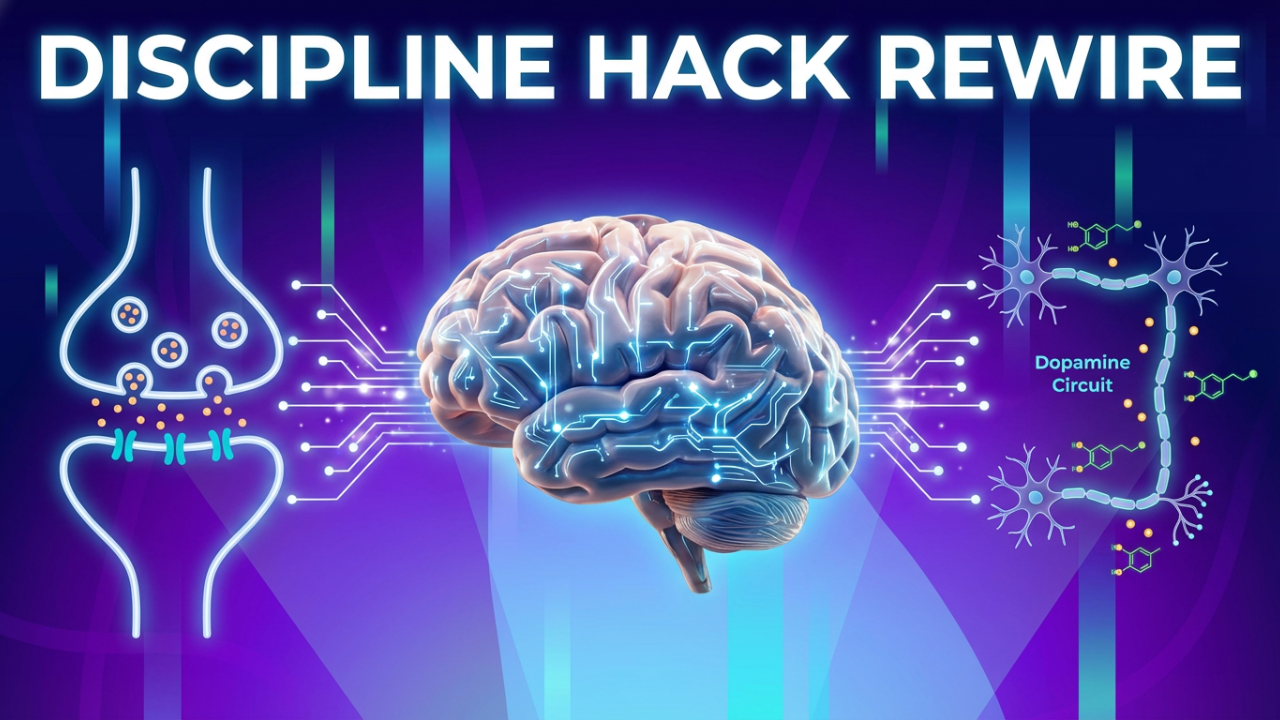
This is possible because of a fundamental property of your brain called neuroplasticity. Neuroplasticity is the brain’s incredible ability to reorganize its own structure and function based on experience. Think of it like a muscle. When you go to the gym and lift weights, you create micro-tears in your muscle fibers. Your body responds by not just repairing them but making them stronger to handle that load in the future. Your brain works in a remarkably similar way.
Every time you perform an action or think a thought, a specific set of neurons fire together, creating an electrical circuit. A famous saying in neuroscience, Hebb’s Law, puts it simply: “neurons that fire together, wire together.” The more you repeat a behavior—whether it’s practicing a guitar chord or mindlessly scrolling on your phone—the stronger that specific neural pathway gets. The connection becomes faster, more efficient, and more automatic.
This strengthening process is physical. The brain can wrap frequently used pathways in a fatty sheath called myelin, which acts like insulation on a wire, making the signal travel significantly faster. This is why your bad habits feel so effortless and automatic; they’re running on neurological superhighways you’ve been paving for years. For many people, procrastination isn’t a conscious choice they make every time; it’s simply the most well-paved road in their brain.
What this really means is that the person you are today is a direct result of the thoughts and actions you’ve repeated in the past. But it also means you have the power to become a different person tomorrow by intentionally choosing what you repeat today. This is the core idea behind self-directed neuroplasticity: the ability to consciously change your brain’s wiring through focused attention and repetition.
You can intentionally build the brain of a more disciplined person. You can create new pathways and strengthen them, turning disciplined actions into your new default. It’s not about fighting your brain with brute force. It’s about understanding the rules of how your brain operates and using them to your advantage. To do that, we first need to understand the ancient programming that might have you in its grip right now.

SON OF LORD- Scientific Institute
Section 2: Your Brain’s Ancient Survival Code (The “Why”)
If you feel like you’re constantly fighting a battle against yourself, you’re not wrong. But you need to know who you’re up against. It’s not you. It’s a 200,000-year-old survival mechanism that’s often out of its depth in our modern world.
At its core, your brain is programmed with two simple directives: one, seek pleasure and reward; and two, avoid pain and effort. This is the fundamental operating system that kept our ancestors alive. Pleasure—food, connection, rest—meant survival. Pain—injury, exertion—meant a threat to survival. Your brain evolved to be incredibly good at steering you toward one and away from the other, and it uses a powerful chemical messenger to do it: dopamine.
Dopamine is often called the “pleasure molecule,” but that’s not quite right. It’s more accurately the “motivation molecule.” Its primary job is to drive you to *seek* things your brain predicts will be rewarding. It’s the chemical that makes you want, crave, and pursue.
This whole system often runs on autopilot through something called the “Habit Loop.” It has three parts: a Cue, a Routine, and a Reward.
1. **The Cue:** This is the trigger. It could be a time of day (like 3 PM), a place (your desk), or an emotional state (boredom, stress, anxiety).
2. **The Routine:** This is the action you take, like opening a textbook or opening social media.
3. **The Reward:** This is the satisfying outcome that tells your brain, “Hey, that was a good call. Let’s remember that for next time.”
When you repeat this loop enough, the connection becomes deeply encoded in parts of your brain like the basal ganglia, a key area for habit formation. The action becomes automatic. It’s how you learn to brush your teeth without thinking, but it’s also how you learn to procrastinate.
Let’s look at the procrastination loop. The Cue is often a negative feeling: being overwhelmed by a big project, anxious about failing, or just bored by a tedious task. This feeling is a form of ‘pain’ your brain wants to avoid. The Routine is the act of avoidance—picking up your phone, opening a new tab, or suddenly deciding to clean the kitchen. The Reward is immediate and powerful: a feeling of relief. You’ve successfully escaped the discomfort. Plus, you get a quick, easy hit of stimulation from the novel content on your phone.
Every time you complete this loop, you strengthen the pathway that says: “When I feel this discomfort, the solution is distraction.” You are, in effect, training your brain to be undisciplined. You’re teaching it that the fastest way to feel better is to run away from the hard thing. This is why it feels like your brain is hijacked. A powerful, automatic system has taken over, running a program that clashes with your conscious goals. Trying to beat this with willpower alone is like trying to stop a runaway train by standing in front of it. You need a smarter strategy. You need to understand the fuel that powers this train: dopamine.
Section 3: The Dopamine Deception: How Your Brain Gets Hooked on “Cheap” Rewards
Dopamine is the engine of your motivation, but our modern world can corrupt that engine. Our environment is a minefield of what neuroscientists call “supernormal stimuli”—exaggerated versions of the rewards our brains evolved to seek.
Think about our ancestors. A dopamine-triggering reward might come from finding a bush of ripe berries. It took effort, and the reward was moderate. Today, you can get a far more intense stimulation just by picking up your phone. Social media notifications, endless video streams, hyper-palatable junk food, video games—they are all engineered to deliver intense, immediate, and unpredictable bursts of dopamine-related reward signals.
This creates a potential problem. When you constantly expose your brain to a firehose of high-intensity stimuli, it can adapt to protect itself from being overstimulated. One way it does this is by becoming less sensitive to lower levels of stimulation.
This means two things can happen. First, it can take more and more of the high-dopamine activity to feel the same level of satisfaction. This is a mechanism seen in tolerance and addiction. Second, and this is crucial for discipline, your baseline level of motivation and enjoyment can feel lower.
When your brain gets used to the 10-out-of-10 stimulation of a video game or social media feed, a normal, healthy activity that might have been a 3-out-of-10 can now feel like a zero. The “pain” of discipline—the effort it takes to study or do deep work—feels amplified. It’s not because the task is inherently more painful, but because the *opportunity cost* for your brain seems so high. Your brain knows there’s a source of instant, high-octane reward just a click away, and it screams for it. The effort required for disciplined work doesn’t offer a big enough reward signal to compete.
Think of it this way: cheap, instant gratification is like a battery. It gives you a quick jolt but drains fast, leaving you needing another hit. Meaningful, disciplined work is more like a generator. It takes effort to start, but once it’s running, it produces its own sustainable power through deep satisfaction and fulfillment. When you get used to the quick jolt of the battery, you never want to put in the effort to start the generator.
The first step to rewiring your brain for discipline is to fix this imbalance. You have to let your reward pathways recalibrate so that your brain can once again feel pleasure from normal, healthy, and productive activities. This isn’t about a full-blown “dopamine detox” where you stare at a wall for a week. It’s simply about becoming a conscious curator of your stimulation. You have to reduce the noise of cheap rewards to re-sensitize your brain to the satisfaction of earned ones.
This sets the stage for the actual rewiring process. By understanding how your brain works, you can start using its own rules to your advantage. It’s time to learn the rulebook.
Section 4: The Neuroplasticity Rulebook: 5 Rules to Remodel Your Mind
If you want to be the architect of your own brain, you need to know the laws of construction. Neuroplasticity isn’t random; it follows a predictable set of rules. Understand these, and you can move from being a passive resident of your mind to its active designer. Here are five fundamental rules for guiding your own neuroplasticity.
Rule 1: Repetition is King.
This is the most fundamental law. Neural pathways are carved through repetition. Each time you repeat an action, you make that circuit a little stronger and more efficient. Think of it like creating a path in a dense forest. The first time, it’s incredibly hard. You have to push through thick undergrowth. But the second time, the path is a little clearer. After a hundred times, it’s a well-worn trail you can walk down with ease. Small, frequent repetitions are far more effective for building habits than rare, intense bursts. A 10-minute workout every day is neurologically more powerful for habit formation than a two-hour workout once a week. Consistency beats intensity.
Rule 2: Focus Magnifies.
Attention is the chisel of neuroplasticity. Where you direct your focus determines which circuits get activated and strengthened. If your attention is scattered, you’re not providing the focused signal needed for significant rewiring. This is why multitasking is the enemy of deep learning and habit formation. Emotion also acts as a highlighter. When an action is paired with a strong feeling—like pride or satisfaction—the brain flags that event as important, and the resulting neuroplastic change is more profound. You can leverage this by consciously focusing on the feeling of accomplishment after a disciplined act, no matter how small.
Rule 3: Timing is Everything.
For your brain to learn an action is worth repeating, the reward should be linked closely to the effort. The release of rewarding chemicals needs to happen during or right after the desired behavior to create the strongest association. While humans can certainly learn from delayed rewards like a paycheck or good grades, immediate rewards are especially powerful for forging new, automatic habits. This is why the relief from procrastination is so addictive—it’s immediate. To build disciplined habits, you must find ways to introduce small, immediate rewards right after the effort.
Rule 4: Build, Don’t Break.
It’s incredibly difficult to simply “delete” a bad habit. That neural pathway exists. Instead of trying to demolish the old road, your goal is to build a new, better, more appealing superhighway right next to it. When you stop using and rewarding the old pathway, it will gradually weaken from a process called synaptic pruning. But your primary focus should be on construction, not destruction. You do this by creating a new, positive routine to perform in response to the old cue. When you feel the cue for procrastination (like anxiety), instead of reaching for your phone, you perform a new, tiny routine.
Rule 5: Context is the Trigger.
Habits aren’t isolated actions; they are responses to cues in your environment. Your brain is an association machine, linking your behaviors to the time, place, and feelings that trigger them. This is why changing your environment is one of the most powerful ways to change your habits. If you want to stop snacking at night, the most effective strategy isn’t willpower; it’s getting the junk food out of the house. If you want to read more, put a book on your pillow. You don’t rise to the level of your goals; you fall to the level of your systems. By consciously designing your context, you make the cues for desired habits obvious and the cues for bad habits invisible.
These five rules are the theoretical foundation. Now, let’s turn them into a practical, step-by-step plan.

This is the Scientific Documentary of the Kingdom of God
Section 5: The Protocol: Your 4-Step Guide to Engineering Enjoyable Discipline
This is where theory meets the road. This isn’t just a list of tips; it’s a systematic protocol based on everything we’ve discussed. Follow these four steps to actively rewire your brain and build the habit of discipline.
Step 1: Lower the Noise (Reward Pathway Recalibration)
Before you can learn to enjoy the subtle satisfaction of hard work, you have to clean your palate. You need to reduce the constant influx of high-intensity stimulation that makes disciplined effort feel dull and unrewarding. The goal is to re-sensitize your reward pathways.
* **Schedule Your Distractions:** You don’t have to eliminate social media or entertainment, but you must shift from mindless consumption to intentional engagement. Instead of grabbing your phone every three minutes, create specific “distraction blocks” in your day. For example, check social media for 15 minutes at lunchtime and 30 minutes in the evening. Outside of those blocks, it’s off-limits.
* **Create Friction for Bad Habits:** Make it harder to access your sources of cheap, easy stimulation. Move the social media apps off your phone’s home screen. Use website blockers during work hours. Put your phone in another room when you need to focus. Every barrier you place between yourself and a distraction is a victory for your future self.
* **Embrace Moments of Quiet:** The next time you’re standing in line, resist the urge to pull out your phone. Just be. Let your mind wander. Boredom isn’t a problem to be solved; it’s the fertile ground where creativity and deep thinking can begin. It’s in these quiet moments that your brain begins to readjust its expectations.
This step might feel uncomfortable at first. Your brain will crave its usual fix. But after a few days, something remarkable can happen. The world starts to seem more interesting. A conversation or a walk outside feels more engaging. You’re giving your brain a chance to appreciate the normal rewards of life again. This prepares the ground for Step 2.
Step 2: Define Your New Loop (Target and Design)
You can’t change everything at once. The key to successful neuroplasticity is to focus your resources on a single, specific target.
* **Pick ONE Habit:** Choose one, and only one, disciplined habit you want to build. Be specific. “Get healthy” isn’t a habit. “Go for a 20-minute walk after lunch” is.
* **Map Your Current Procrastination Loop:** For the habit you’ve chosen, become a scientist of yourself. For the next couple of days, whenever you find yourself procrastinating on it, notice what’s happening:
1. **The Cue:** What time was it? Where was I? What was I feeling right before I got distracted? (e.g., “Felt overwhelmed by the blank page.”)
2. **The Routine:** What specific action did I take? (e.g., “Opened Twitter and scrolled for 25 minutes.”)
3. **The Reward:** What did I get out of it? (e.g., “Felt relief from the anxiety of starting; was entertained.”)
* **Design Your New Loop:** Now, design a new, productive loop to replace the old one. The cue stays the same, but you’ll change the routine and the reward.
* **The Cue:** The feeling of overwhelm or anxiety before the task.
* **The New, Tiny Routine:** This is the most critical part. Your new routine must be absurdly small. So easy you can’t say no. It’s often called the “Two-Minute Rule.” Your goal isn’t to complete the task; it’s simply to *start*.
* If your goal is “write a report,” the new routine is “open the document and write one sentence.”
* If your goal is “study for an exam,” the new routine is “read one page.”
* If your goal is “go to the gym,” the new routine is “put on your workout clothes.”
The point is to bypass your brain’s threat response. A big, intimidating task triggers resistance. A tiny, laughable one does not.
* **The New, Immediate Reward:** Right after you complete your tiny routine, you must give yourself an immediate reward. This is non-negotiable for the first few weeks. We’ll cover exactly how to do this in Step 4.
Step 3: Attach and Stack (The Power of Anchors)
The easiest way to insert a new habit into your life is to tether it to an existing one. This is called “Habit Stacking.” Your brain already has strong pathways for your current daily routines. You can use these as a launchpad.
* **Identify a Solid Anchor:** Look at your day and find a habit you already do consistently without fail. Things like brushing your teeth, making your morning coffee, or sitting down at your desk.
* **Create Your Habit Stack Formula:** The formula is simple: “After [CURRENT HABIT], I will [NEW, TINY HABIT].”
* “After I pour my morning coffee, I will meditate for one minute.”
* “After I brush my teeth at night, I will lay out my gym clothes.”
* “After I sit down at my desk, I will write one sentence of my report.”
This strategy uses the momentum of your old habit to carry you into the new one. The completion of the anchor habit becomes the cue for the new routine. By keeping the new habit incredibly short, you minimize friction and make it easy to build the initial neural pathway. You can increase the duration later, but for the first few weeks, the goal is not progress; it is *consistency*. You are just laying down the tracks.
Step 4: Reward the Effort (Manufacturing Dopamine)
This is the step that transforms discipline from a punishment into a reward. You are going to consciously and deliberately attach a rewarding feeling to the act of doing hard things. This is how you learn to *enjoy* the process.
There are two types of rewards you’ll use: extrinsic and intrinsic.
* **Extrinsic (External) Micro-Rewards:** Immediately after completing your new tiny routine, give yourself a small, positive reward. It should be something you actually enjoy but also brief so it doesn’t become a new procrastination tactic.
* Listen to one of your favorite songs.
* Stand up and stretch for 60 seconds.
* Have a sip of a nice tea or coffee.
The key is that the reward is immediate and consistently delivered *after* the effort. You’re teaching your brain: “Effort leads to a good feeling.”
* **Intrinsic (Internal) Rewards:** This is the real goal, and it’s the most powerful technique of all. After you perform your tiny habit, take ten seconds to consciously acknowledge what you just did. This is a form of cognitive restructuring.
* Close your eyes and mentally replay the fact that you showed up.
* Say to yourself, out loud or in your head: “I did it. I said I would open the document, and I did. That was me. I am in control.”
* Focus on the feeling of competence and satisfaction, however small. You’re generating your own reward. You are training your brain to get a satisfying hit not from an external source, but from the act of keeping a promise to yourself.
* Using a habit tracker or checklist is another powerful form of intrinsic reward. Ticking a box provides a visual confirmation of completion and progress, which itself can feel very rewarding.
By combining these four steps, you are using the brain’s own rules of neuroplasticity and reward to systematically build the pathways of discipline. You’re not fighting your brain; you’re guiding it.
Section 6: Overcoming the Wall: Rewiring Your Relationship with Discomfort
Even with the perfect protocol, you will hit “the wall.” You’ll feel that familiar, heavy blanket of resistance—that primal urge to escape. This is a critical moment. Your reaction right here determines whether you strengthen the old procrastination pathway or the new discipline pathway.
That feeling of resistance is not a command. It is simply a signal. It’s the ghost of your old habit loop firing. It’s your brain’s ancient survival code screaming, “This is effort! Abort!”
Your job is to change your relationship with that feeling. Instead of seeing it as a stop sign, you must learn to see it as the starting gun.
The most effective technique for this is called “labeling.” It’s a simple mindfulness practice. When you feel that wave of resistance, mentally step back and label it. Say to yourself, “Ah, this is the feeling of resistance. This is my brain wanting to avoid a task.”
This simple act of naming the feeling does two profound things. First, it separates “you” from the feeling. The feeling isn’t you; it’s a transient event in your brain. This creates psychological distance and stops you from being swept away by it. Second, it shifts activity from the reactive, emotional parts of your brain to the thoughtful, observant part, the prefrontal cortex. You move from being the actor in the drama to being the audience.
Once you have labeled the feeling, your next move is to activate your new, tiny routine. The rule is: the feeling of resistance is now the cue for the smallest possible step forward.
* Feel the urge to procrastinate on your workout? That feeling is the signal to put on one shoe.
* Feel the dread of starting your paper? That feeling is the signal to open the document.
* Feel the overwhelm of your to-do list? That feeling is the signal to pick one item and write down the very first physical action required.
Your goal in this moment is not productivity. It’s not to finish the task. Your sole objective is to rewire what that feeling of discomfort triggers. For years, discomfort has triggered avoidance. You are now training it to trigger engagement, however small.
Every time you do this—feel the resistance, label it, and take one tiny action—you rob the old habit of its power and you cast a vote for a new association. You are teaching your brain a new, more empowering lesson: “When I feel this discomfort and move toward it, I get a reward.” The reward is the tiny victory of having shown up.
Over time, you will fundamentally change what discomfort means to you. It transforms from a threat into an opportunity. It becomes the very trigger that launches you into disciplined action. This is the heart of learning to enjoy hard things: you find the reward not in escaping the effort, but in meeting it.
Section 7: The Identity Shift: Becoming a Disciplined Person
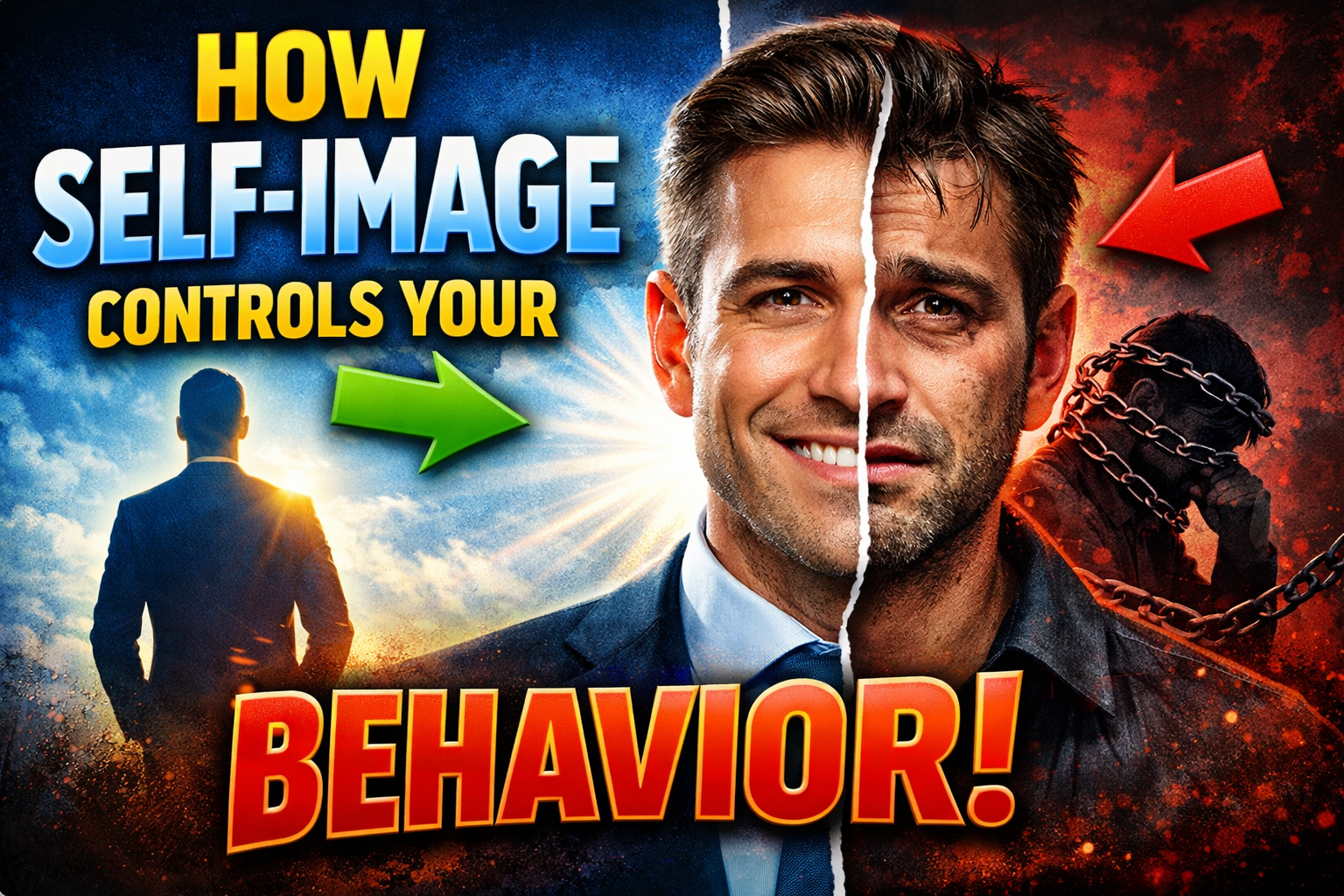
The final and most crucial layer of this process is the shift in your identity. Lasting change doesn’t come from just changing your behaviors; it comes from changing your beliefs about yourself.
Your brain is a prediction machine that trusts evidence. You can’t just look in the mirror and tell yourself, “I am a disciplined person,” if all your actions scream the opposite. Your brain will dismiss it, because it trusts your behavior far more than your words.
This is why starting small is so powerful. Every time you complete your two-minute habit, you aren’t just performing an action; you are casting a “vote” for a new identity.
* When you put on your running shoes, you cast a vote for “I am a runner.”
* When you write one sentence, you cast a vote for “I am a writer.”
* When you meditate for one minute, you cast a vote for “I am a calm and focused person.”
A single vote won’t change the election. You won’t believe you’re a disciplined person after one day. But the evidence starts to accumulate. Day after day, tiny victory after tiny victory, you provide your brain with concrete proof. Eventually, the pile of evidence becomes so large that your brain starts to update its internal model of who you are.
You can accelerate this with how you frame your actions. This means changing the story you tell yourself.
* Instead of thinking, “I *have* to work out,” think, “It’s time to act like the kind of person who takes care of their body.”
* Instead of, “This is so hard,” think, “This is the feeling of my brain getting stronger.”
* Instead of, “I need to stop being lazy,” think, “I am building a system that makes discipline easier.”
This isn’t just empty positive thinking. It’s deliberately framing your actions in the context of the identity you want to build. You are attaching meaning to the effort. This meaning provides a deeper, more sustainable form of motivation than fleeting pleasure ever could.
This is the ultimate goal: to reach a point where your disciplined actions are no longer something you *do*, but a reflection of who you *are*. You no longer need to negotiate with yourself every morning to go for a run, because you’re a runner, and that’s what runners do. The behavior becomes an effortless expression of your identity.
Conclusion
The central message here is one of profound hope and empowerment. You are not broken or fundamentally undisciplined. You may simply be running on old software—an ancient survival code that is poorly adapted to our modern world. But your brain is not fixed hardware. It is infinitely adaptable.
We’ve covered the entire process. We dismantled the myth that discipline is purely an inborn trait and replaced it with the scientific truth of neuroplasticity. We exposed how your brain’s reward system can get desensitized by the cheap, easy stimulation of the modern world, making hard work feel impossible. We laid out the five fundamental rules of brain change: repetition, focus, timing, building over breaking, and context.
And most importantly, we gave you a concrete, 4-step protocol: Lower the dopamine noise to re-sensitize your brain. Define a single, tiny new habit loop. Stack that habit onto a solid anchor. And most critically, learn to manufacture your own reward by celebrating the effort itself.
This journey is not about becoming a perfect, robotic productivity machine. It’s about closing the gap between your intentions and your actions. True freedom isn’t the ability to do whatever you want in the moment; it’s the ability to choose your own path and have a brain that works *for* you to walk it, not against you.
The process of rewiring your brain never truly ends, because every moment is a choice. But it gets easier. The path becomes clearer. And eventually, you’ll find that the satisfaction you get from pushing your limits and from keeping the promises you make to yourself is a far more powerful and lasting reward than any cheap distraction could ever offer. The change starts now. Not tomorrow. Pick your tiny habit, and cast your first vote.