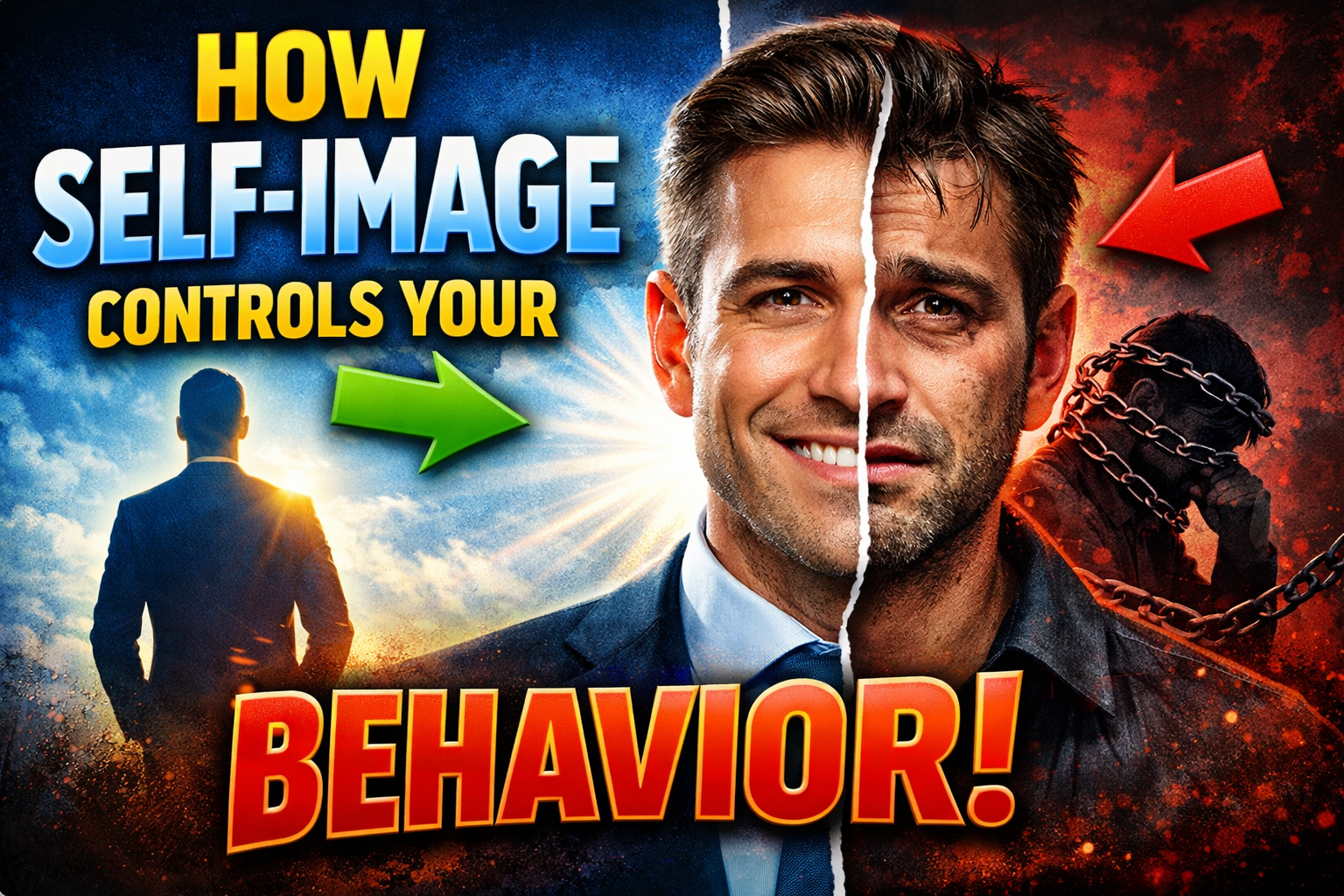

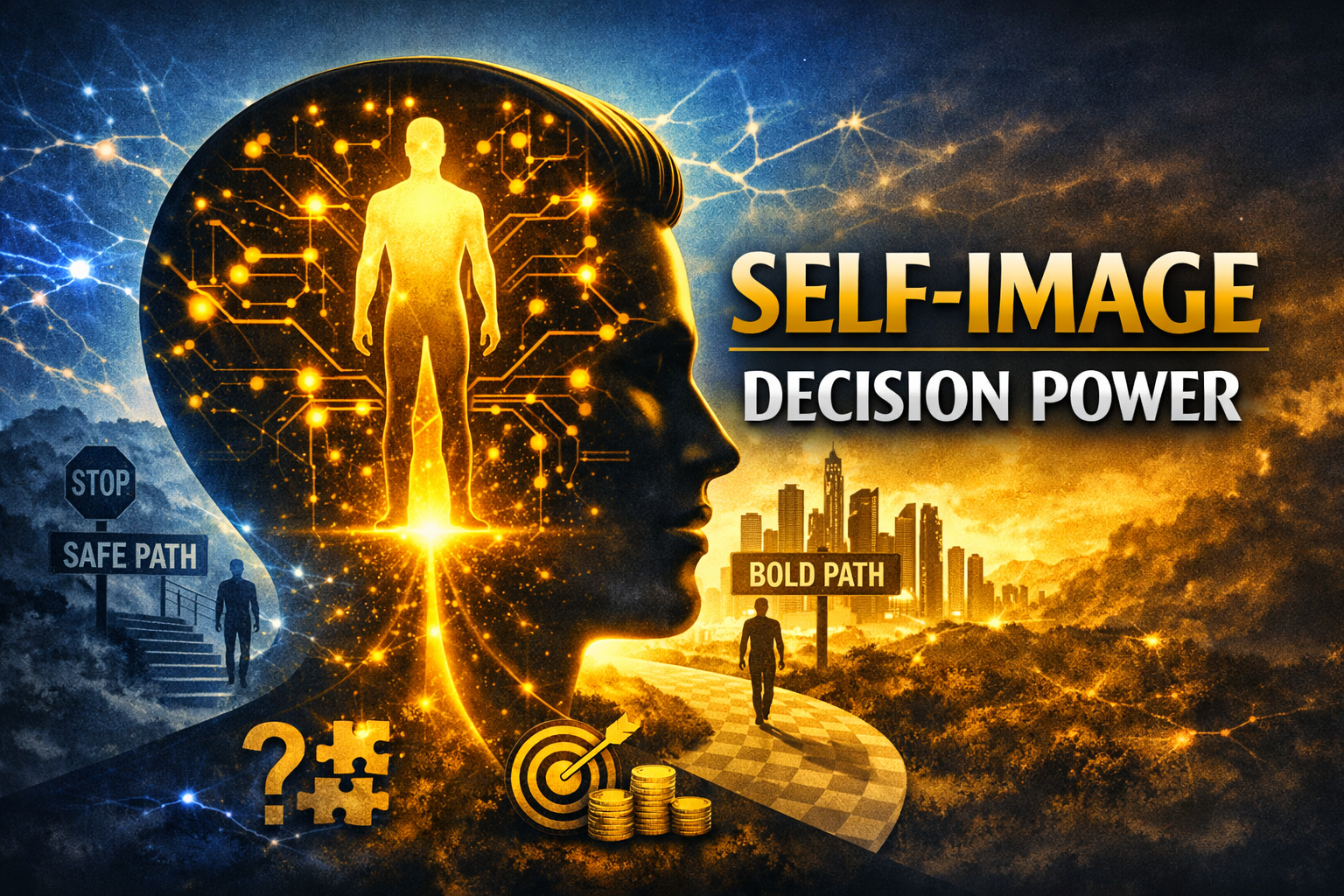
Your self‑image is more than a belief about who you are. It is a neural identity model stored deep in your brain, silently influencing your thoughts, emotions, and every decision you make. Modern neuroscience shows that your brain begins making decisions before you consciously realize it, and those decisions are guided by one thing: the identity you believe you are. Understanding this mechanism is the key to changing your behavior, your results, and your future.
Your self‑image lives in the brain’s Default Mode Network (DMN) — the system responsible for identity, self‑reflection, and internal narratives. This network shapes how you interpret situations, how you react emotionally, and what choices feel “natural” or “possible” for you. In simple terms, your self‑image becomes the operating system behind your decisions.

Your Self‑Image Filters Every Decision Before You Make It
Before you consciously choose anything, your brain performs a rapid identity check: “What would someone like me do?” This happens in a fraction of a second, long before logical thinking activates. If your self‑image is strong, you naturally choose bold, confident actions. If your self‑image is weak, you choose safe, small, or avoidant actions. Intelligence does not drive decisions — identity does.
Your Self‑Image Controls How You Interpret Reality
Two people can face the same situation but make completely different decisions because their identities interpret the situation differently. A strong self‑image sees challenges as opportunities. A weak self‑image sees the same challenges as threats. Your brain is not reacting to reality; it is reacting to your identity filter. This filter determines whether you take action or hesitate, speak up or stay silent, try again or give up.
Your Self‑Image Sets Your Internal Limits
Your brain has a powerful rule: “I cannot behave in a way that contradicts who I believe I am.” This creates an identity ceiling — the upper limit of what you allow yourself to achieve. If you see yourself as a €2,000‑per‑month person, you will unconsciously reject €10,000 opportunities. If you see yourself as “unlucky,” you will sabotage good situations. Your identity sets the boundaries of your decisions long before you notice them.
Your Self‑Image Shapes Your Emotional Reactions
Emotions drive decisions, and self‑image drives emotions. A strong self‑image produces calmness, clarity, and confidence. A weak self‑image produces fear, hesitation, and overthinking. Your emotional life is not random — it is identity‑generated. This is why two people with the same skills can perform at completely different levels: their identities create different emotional states, which lead to different decisions.
Your Self‑Image Controls Your Habits and Daily Behavior
Habits are not behavior problems; they are identity problems. You act in alignment with who you believe you are. If you see yourself as disciplined, you behave accordingly. If you see yourself as lazy, you behave accordingly. Your daily micro‑decisions — what you eat, how you work, how you speak, how you respond — all follow your identity blueprint.
Your Self‑Image Predicts Your Long‑Term Future
Because decisions accumulate, your self‑image becomes your income, your relationships, your health, your confidence, your opportunities, and your lifestyle. Your life is the sum of identity‑driven decisions. Change the identity, and the decisions change automatically.
The Neuroscience Behind Self‑Image and Decision‑Making
Three major brain systems shape your decisions:
- The Default Mode Network (DMN) stores your identity and internal narrative.
- The Prefrontal Cortex handles logical decisions — but only after the DMN filters the options.
- The Basal Ganglia executes habits that match your identity.
Identity decides. Logic justifies. Habits execute.
Changing Your Decisions by Changing Your Self‑Image
This is the foundation of Self‑Image Engineering™. To change your decisions, you must change the identity that makes them. The process involves:
- Identity Reconstruction
- Neural Pathway Rewiring
- Cybernetic Self‑Direction
When the identity changes, the decisions change automatically — without force, discipline, or motivation.