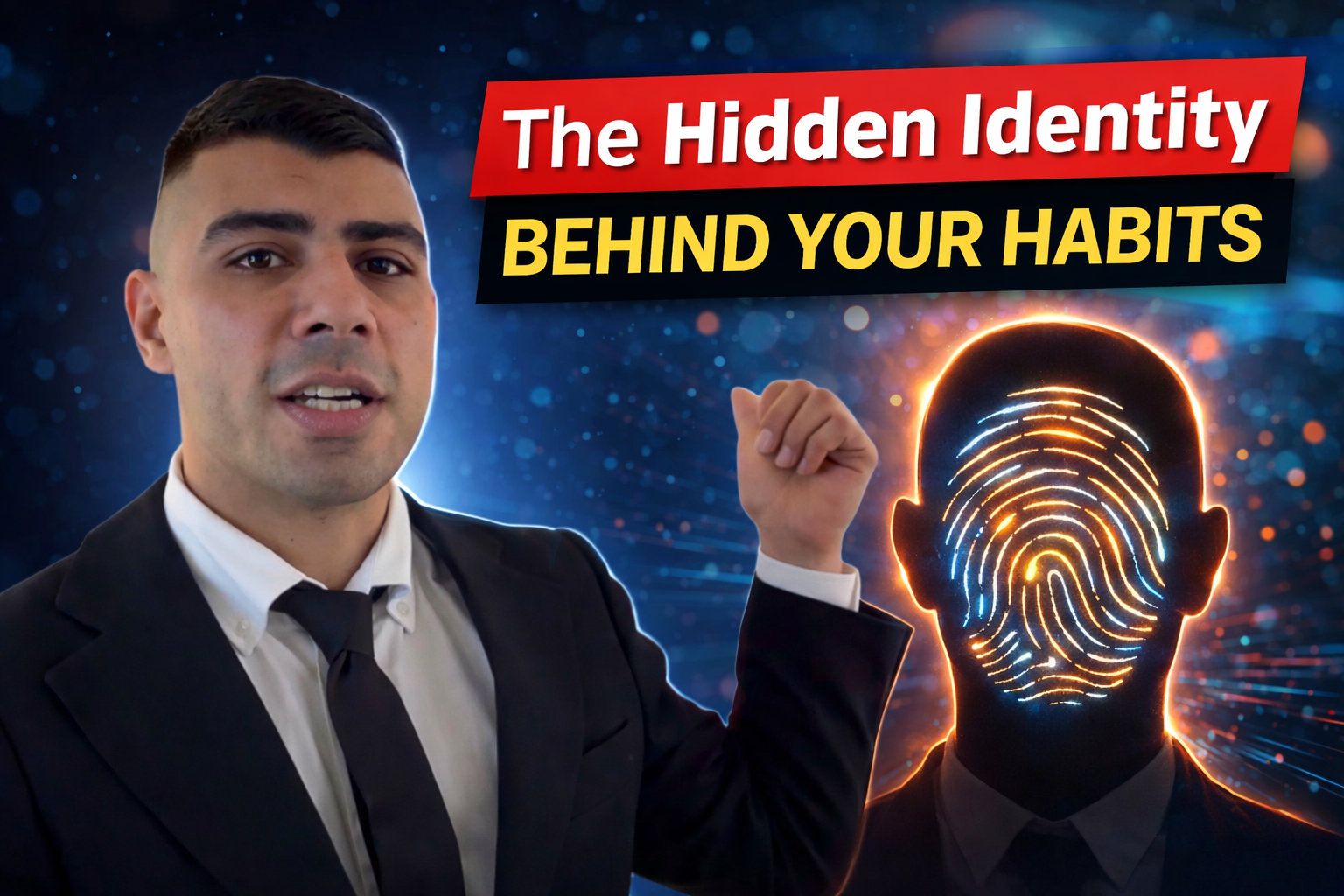
The Hidden Identity Behind Your Habits

The Hidden Identity Behind Your Habits

Let’s discover the hidden identity behind your habits. You wake up, filled with a resolve that feels different this time. Today is the day you start eating healthy, finally write that first chapter, or stop hitting snooze and actually greet the sunrise. You have a plan. You have the motivation. You believe you are in control of your actions.

But what if you’re not?

What if the decisions you think you’re making are just echoes of choices made long ago? What if your life isn’t a product of your conscious will, but a performance directed by a script you don’t even know you’re reading?

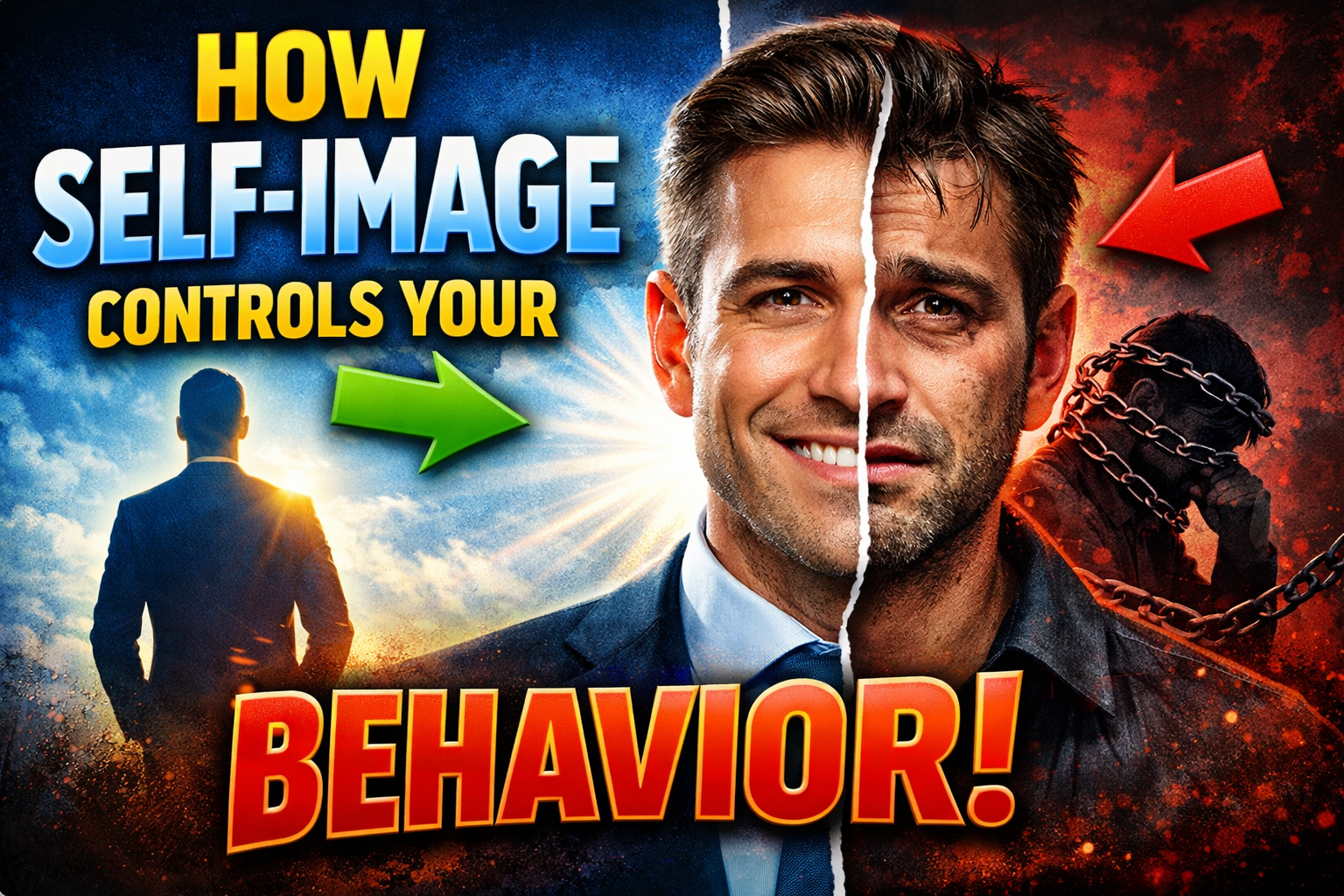
You’ve been told that to change your life, you need to change your habits. But what if that’s only part of the story? What if your habits are just symptoms, and the real driver of your success or failure is a hidden identity secretly running the show? Most of us spend our lives trying to change the symptoms—fighting against procrastination, poor health, and self-doubt—armed with nothing but willpower. But in this video, we’ll reveal the subconscious scripts that dictate your life, and show you how to take back the pen to rewrite your future.


Section 1: The Willpower Trap

Let’s start with a story you might find a little too familiar. It’s the story of Alex. Alex is smart, capable, and wants to improve. Every Sunday night, Alex lays out gym clothes, packs a healthy lunch, and sets an alarm for 5:30 AM. The intention is pure. Monday goes perfectly. Tuesday is pretty good. By Wednesday, hitting snooze feels a bit too tempting. By Friday, the gym clothes are back in the drawer, and a takeaway menu is on the counter.

The weekend is spent in a fog of guilt, followed by the promise that “next week will be different.” But it rarely is.

If this sounds familiar, you’re not alone. And you’re not weak. You’ve just fallen into the willpower trap. We’re taught that change is a matter of brute force. That if we just *try harder*, we can bend our behavior to our will. We see discipline as a muscle; if we fail, it must be because ours isn’t strong enough.

But this is a common misunderstanding of how we work. A popular model in psychology once described willpower as a finite resource, like a phone battery that drains with every decision you make—what to wear, how to respond to a stressful email, choosing a salad over fries. While the idea of “ego depletion” is now debated, with some studies failing to replicate it and others refining the theory, the core experience is real. Constant decision-making and self-control are exhausting.

By the end of a long, stressful day, your capacity to make good choices is diminished. It’s in that moment of depletion that your old habits—the comfortable, easy routines—come rushing back. It’s not a moral failing; it’s a matter of mental fatigue. Trying to build a new life purely on willpower is like trying to build a skyscraper on sand. It’s bound to collapse under pressure.

This is the source of so much frustration. It’s the feeling of being “stuck.” You know what you *should* do, and you might desperately *want* to do it. Yet you find yourself doing the opposite, wondering, “Why can’t I just get it together?” This gap between our intentions and our actions can lead to a deep sense of shame, making us feel like we’re fundamentally flawed.

But the problem isn’t you. It’s the strategy. You’ve been trying to treat the symptoms—the procrastination, the unhealthy eating—without understanding the root cause.

That hidden cause is what we’re here to talk about. It’s the invisible force that makes change feel so hard. It’s what we call your hidden identity. To truly understand your habits, you have to stop looking at *what* you’re doing and start looking at *who* you believe you are.


The Hidden Identity Behind Your Habits

Section 2: The Revelation – Unmasking Your Hidden Identity

What if every action you take is a vote for the type of person you believe you are? This isn’t just a metaphor; it’s a core principle of behavior change. Author James Clear did a fantastic job popularizing the concept of identity-based habits in his book “Atomic Habits.” While the idea has deep roots in psychology, like in self-perception theory, Clear articulated it brilliantly for a modern audience. He argues that change happens on three levels: outcomes, processes, and identity.

Most of us start at the wrong level. We focus on the *outcome* (“I want to lose 20 pounds”) or the *process* (“I’m going to the gym three times a week”). But the most powerful change happens at the deepest layer: *identity*. It’s the shift from wanting to *do* something to wanting to *become* someone.

So, what is this “hidden identity”?

Simply put, it’s the collection of beliefs you hold about yourself. It’s the story you tell yourself, woven from childhood experiences, past successes, and especially past failures. The word “identity” comes from the Latin word *identitas*, meaning “sameness.” One helpful way to think about this is as your “repeated beingness.” The person you are is a result of what you have repeatedly done and believed.

This identity acts like your mind’s operating system, running quietly in the background. You can try to install a new habit, but if it’s incompatible with that operating system, it will eventually be rejected. A behavior that doesn’t line up with the self won’t last.

Think of someone who says, “I’m just not a morning person.” This isn’t a fact; it’s a statement of identity. Because they believe this, their actions will align with it. They’ll hit the snooze button and feel groggy in the morning. Each time, they cast another vote for that identity, reinforcing the belief and making it even harder to change. Their habits reflect their self-image.

This is grounded in how our brains work. Our brains crave consistency. When our actions are out of sync with our beliefs, it creates mental discomfort known as cognitive dissonance. To relieve this tension, the brain will almost always seek the path of least resistance. It’s far easier to go back to a familiar behavior that confirms our identity than it is to change who we believe we are.

This is why someone might quit smoking but still identify as a “smoker who is trying to quit.” That identity creates a constant internal battle. But when the identity shifts to “I am a non-smoker,” the decision-making changes. An offer of a cigarette is no longer a temptation to resist; it’s as irrelevant as offering meat to a vegetarian.

Neuroscience offers some clues here. Brain regions like the ventromedial prefrontal cortex (vmPFC) are central to our sense of self and value-based decisions. Research suggests this part of the brain is involved in processing what is valuable and personally relevant. When a behavior is aligned with our identity, our brain may assign it a higher “value,” making it feel more rewarding and easier to do. Lasting change isn’t just about overpowering desire; it’s about changing what you desire by changing your identity.

This brings us to a powerful insight: every action you take is a vote for the type of person you wish to become. When you go for a run—even a short one—you’re casting a vote for your identity as a “runner.” When you write one paragraph, you’re casting a vote for your identity as a “writer.”

These aren’t just small actions; they are small pieces of evidence you’re presenting to your own mind. You are providing your brain with the proof it needs to update its core operating system.

Your identity isn’t set in stone. It’s malleable. You can forge a new identity with your future habits. The key is to stop focusing on the finish line and start focusing on becoming the person who would naturally achieve those things. The real goal is not to run a marathon; the real goal is to become a runner.

Section 3: The Secret Scripts That Run Your Life

Once we understand the power of hidden identity, our self-defeating behaviors start to make more sense. Those stubborn habits that won’t go away? They aren’t random. They are logical actions that serve a hidden purpose: to preserve your current identity. They are lines you feel compelled to speak because they are written in your character’s script.

This idea can be unsettling, but it’s also liberating. It means your patterns aren’t proof that you’re broken; they’re proof that your identity-behavior system is working perfectly. The system is just working to reinforce an identity you no longer want.

Let’s explore some of these secret scripts.

Consider the identity of “The Procrastinator.” Why do we do it? One hidden script might be, “I work best under pressure.” Another could be a deeper fear: “If I give my best effort and fail, it will prove I’m not good enough.” Procrastination then becomes a brilliant self-protection strategy. By waiting until the last minute, you can always say, “If only I had more time, I could have done better.” You never have to truly test your limits, so your identity as a capable person remains intact.

Or take the identity of “The People-Pleaser.” Their script often says, “My value comes from being needed. Saying ‘no’ risks abandonment.” This fear might be rooted in early experiences where love and safety felt conditional. So, they overcommit and burn out managing everyone else’s emotions. Each act of people-pleasing, while draining, confirms their identity as a “good” and “helpful” person, keeping the subconscious fear of rejection at bay.

What about health? Someone struggling with weight might hold an identity like, “I’m just not an athletic person.” Each time they choose the couch over a walk, it’s an action that aligns perfectly with who they believe they are. To start exercising and eating clean would be to act out of character, creating that uncomfortable cognitive dissonance. It’s often easier to remain consistent with the familiar, even if it’s unhealthy.

Some psychoanalytic theories describe this as “repetition compulsion,” a concept from Freud suggesting we unconsciously repeat past patterns, even painful ones, because they feel familiar and predictable. A person who repeatedly dates unavailable partners might be replaying a childhood dynamic, hoping that *this time* they can “fix” it and finally earn the love they crave.

The comfort of a familiar struggle can feel safer than the uncertainty of change. Breaking these patterns is hard because it can feel like a form of identity death. You’re not just changing what you do; you’re changing who you are.

Of course, not every habit is a deep, existential drama. The route you take to work or the way you tie your shoes are often just efficient mental shortcuts. But the habits that define your life—your health, your relationships, your happiness—are often deeply connected to your identity. To change them, you have to look at the keystone.

The first step is awareness. Become an archaeologist of your own mind. Ask yourself: What identity does this habit serve? What story does this action confirm? When you repeat a negative pattern, instead of asking, “What’s wrong with me?” try a more curious question: “What belief about myself is this behavior trying to protect?” That single question can begin to turn shame into insight.


Section 4: Rewriting Your Future – The Solution

So, how do we consciously rewrite the code of our being? It’s a practice, not a quick fix. But it’s a practice you can begin right now, and it involves four key steps.

Step One: Decide Who You Want to Be.

This is the most critical step, and the one most people skip. Before you think about what you want to *achieve*, define who you want to *be*. Get specific. Don’t just say, “I want to be healthy.” What does a healthy person do, think, and believe?

Maybe a healthy person sees food as fuel, not just comfort. Maybe they enjoy moving their body every day. Maybe they prioritize sleep for mental clarity. Write these identity traits down. “I am the type of person who is energized by challenges.” “I am a writer who shows up every day, even for fifteen minutes.” “I am a present parent who puts my phone away when my child is talking.”

These aren’t goals; they are identities to inhabit. This decision is your North Star.

Step Two: Prove It to Yourself with Small Wins.

An identity isn’t built on thought alone; it’s forged in action. Once you’ve decided who you want to be, start gathering evidence to support that new identity. This is where casting “votes” becomes your most powerful tool.

Your goal isn’t a grand gesture. It’s to make the next vote for your new identity so small, so easy, that you can’t say no.

If you want to be a reader, don’t commit to a book a week. Read one page. Just one. Afterward, consciously tell yourself, “I just cast a vote for being a reader.”

If you want to be a writer, don’t aim for 1,000 words. Write one sentence. That’s your vote. You have embodied the identity of a writer in that moment.

If you want to exercise regularly, don’t buy a year-long gym membership. Just put on your running shoes. That’s it. That’s the vote. You’ve provided evidence that you are the type of person who gets started.

The purpose of these tiny habits isn’t the outcome; it’s identity reinforcement. Each small win is tangible proof you’re presenting to your brain. With enough evidence, the verdict on who you are will begin to change.

Step Three: Link Your Habits to Your Core Values.

Habits are more likely to stick when they feel meaningful. Research in psychology shows that connecting a habit to a core value makes the motivation to maintain it much more powerful.

Take a moment for reflection. Why do you want this new identity? Go beyond the surface. You don’t just want to lose weight. Why? Maybe you value *vitality* and want the energy to play with your kids. Maybe you value *longevity* and want to be healthy for your family.

Now, reframe your habit around that value. You’re not “forcing yourself to go to the gym.” You are “honoring your value of vitality.” You’re not “depriving yourself of junk food.” You are “making a choice that aligns with your value of long-term health.”

This reframing connects a simple action to a profound purpose. It elevates a habit from a chore you *have* to do into an expression of who you *are*.

Step Four: Audit and Reframe Your Self-Talk.

Your hidden identity is narrated into existence by your internal monologue. The things you say to yourself are either reinforcing your old script or helping write a new one.

Become an observer of your thoughts. When you catch yourself in negative self-talk—”I’m so lazy,” “I always mess things up”—gently challenge it.

This isn’t about toxic positivity. It’s about being fair. Instead of “I’m so lazy,” you could reframe it as, “I’m feeling low on energy today. I’ll start with just five minutes.” Instead of “I always mess things up,” try, “That didn’t go as planned. What can I learn for next time?”

This conscious reframing does two things. First, it interrupts the automatic reinforcement of a negative identity. Second, it builds the muscle of self-compassion, which is essential for long-term change. You start to treat yourself not as a project to be fixed, but as a person to be understood.

CTA & Conclusion

For years, you may have felt like a puppet, pulled by forces you couldn’t see. You’ve wrestled with habits and wondered why lasting change always felt out of reach.

The truth is, you might have been fighting the wrong war. True change doesn’t come from forcing new actions, but from forging a new identity. Your habits are simply a lagging measure of who you believe you are. To change the shadow, you must move the object.

Your life operates on a feedback loop: your identity shapes your habits, and your habits reinforce your identity. For most of us, this loop has been running on autopilot. But you have the power to step in and consciously hijack it. You can choose a new identity and then build the habits that will make that identity your reality.

The person you are today is a result of your past. But the person you will become is determined by the identity you choose to build right now, one small, intentional vote at a time. The old script may have been written for you, but you hold the pen now. The power to write the rest of your story has always been in your hands.

But most importantly, let’s make it real. The first step is a declaration.


YouTube Channel